Bad flushes waste water, time, and patience.
This guide shows how to pick a no-clog, low-water toilet. We explain sizes, flush systems, MaP scores, bowl shapes, heights, cleaning, costs, and easy install checks so your choice works on day one.
Keep going. You will buy once, install once, and flush with confidence.
What does a 12-inch toilet rough-in mean?
Small layout errors become big plumbing costs.
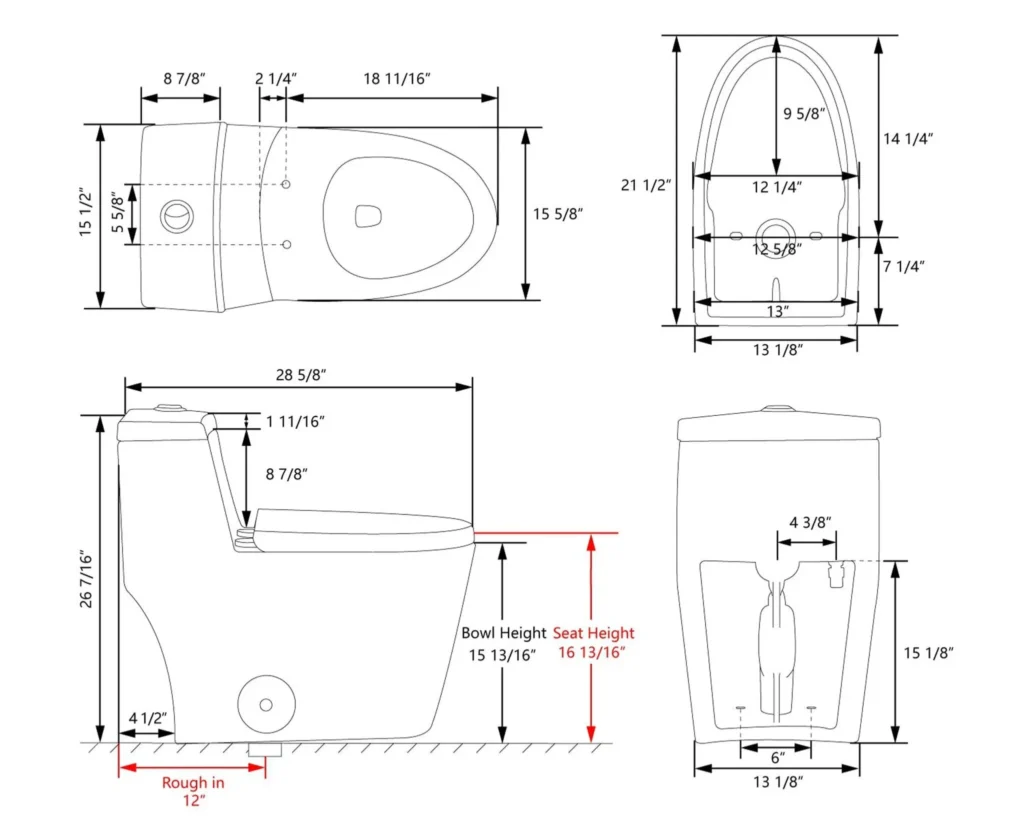
A 12-inch rough-in is the distance from the finished wall to the center of the drain flange. Most homes use 12″. Some older homes use 10″ or 14″; measure before you buy.
How to measure
Measure from the finished wall (not baseboard) to the bolt cap center. If there are two bolts, measure to the centerline between them. For skirted toilets, check the spec drawing because bolt positions can hide.
Rough-in quick chart
| Rough-in | Where it shows up | Your options |
| 10″ | Older small baths | Buy 10″ model or use offset flange |
| 12″ | Most homes | Widest model selection |
| 14″ | Some older homes | Buy 14″ model or use deep tank adapter |
If your measure is 11½″ to 12″, you are fine. Under 11½″, plan for a 10″ option or an offset flange. Do not force a 12″ bowl into an 11″ space; it will hit the wall, crack, or leak at the wax ring.
Elongated or round toilet bowls: which is more comfortable?
Shape affects comfort and space.
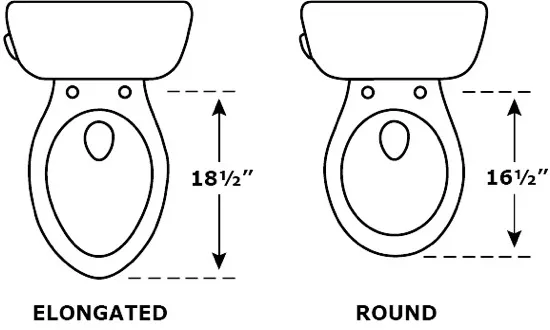
Elongated bowls support thighs better and feel roomier. Round bowls save space in tight baths. If you can spare two extra inches, elongated is the comfort winner for most adults.
Compare at a glance
| Feature | Elongated | Round |
| Length | ~18½″ | ~16½″ |
| Comfort | Higher | Moderate |
| Fits small baths | Sometimes | Best |
| Seat options | Broad | Moderate |
Elongated seats often pair with taller bowls (“comfort height”). Round seats work well in powder rooms and kids’ baths. If doors swing close to the bowl, check clearances. For mobility needs, the extra front length helps with transfers and balance. Test-sit if possible; comfort is personal.
How many GPF should low-flow toilets use?
Water use sets long-term bills.
Standard low-flow toilets use 1.6 gallons per flush (GPF). High-efficiency models use 1.28 GPF or less. Ultra-high-efficiency models can drop to 1.0 GPF; pair them with strong MaP scores.
GPF tiers
| Tier | Typical label | Notes |
| 1.6 GPF | “Standard” | Good balance of force and rim wash |
| 1.28 GPF | “High-Efficiency” | Common sweet spot; WaterSense eligible |
| ≤1.0 GPF | “Ultra-High-Efficiency” | Needs proven trapway design and MaP score |
Lower GPF does not mean weak flushing when the bowl and trapway are well-designed. Focus on the whole system: jet size, rim wash, and trapway geometry. If you live in drought-prone areas, 1.28 GPF offers fast payback with fewer performance trade-offs.
Do WaterSense toilets really save water bills?
Labels can feel like marketing. This one matters.
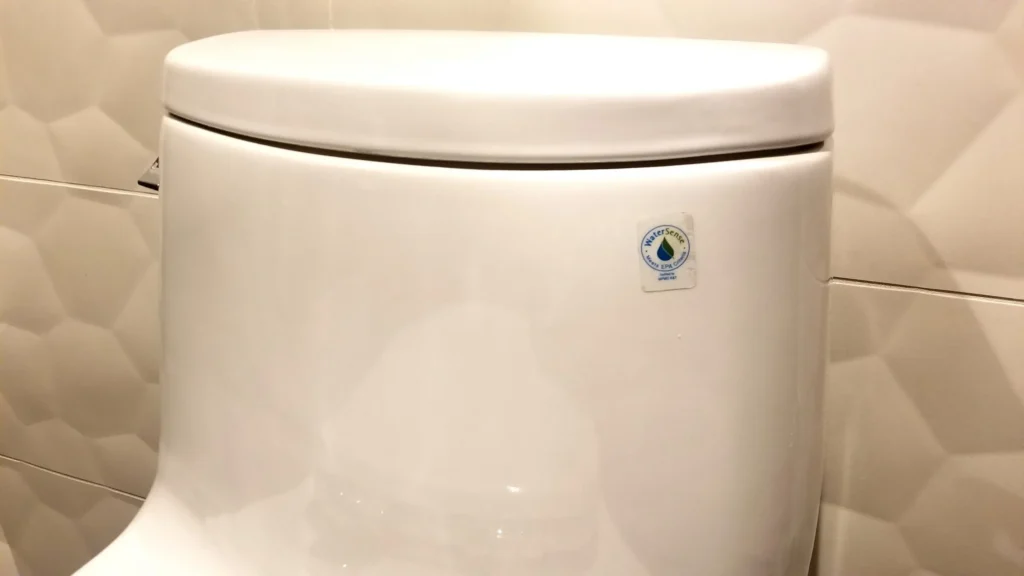
Yes. WaterSense toilets use 1.28 GPF or less and pass third-party tests for flush performance. In normal households, they cut thousands of gallons per year without daily double-flushes.
Why WaterSense helps
WaterSense aligns makers to a clear target: use less, still clear the bowl. The spec covers bulk removal and bowl rinse. On city water, the savings stack fast. In rural homes with wells or septic, fewer gallons mean fewer pump cycles and less tank load.
Tip
Combine WaterSense with good MaP scores (see below). That pairing delivers real-world savings and fewer clogs.
Single or dual-flush toilets: which saves more water?
Two buttons look efficient; habits decide the winner.
Dual-flush saves most when users choose the half-flush often. Single-flush 1.28 GPF is simpler and still saves. Pick dual if the household uses the “small flush” correctly.

Pros and cons
| Type | Pros | Cons |
| Single 1.28 | Simple, reliable | Same volume each time |
| Dual 0.8/1.6 | Can save more | Misuse, valve complexity |
In busy homes or rentals, single 1.28 reduces user error and maintenance. In owner-occupied homes with engaged users, dual-flush can cut water use further. Keep buttons labeled and adjusted. If half-flush leaves debris often, switch to single or tune the valve.
Gravity or pressure-assisted toilets: which flush better daily?
Force feels nice, noise does not.
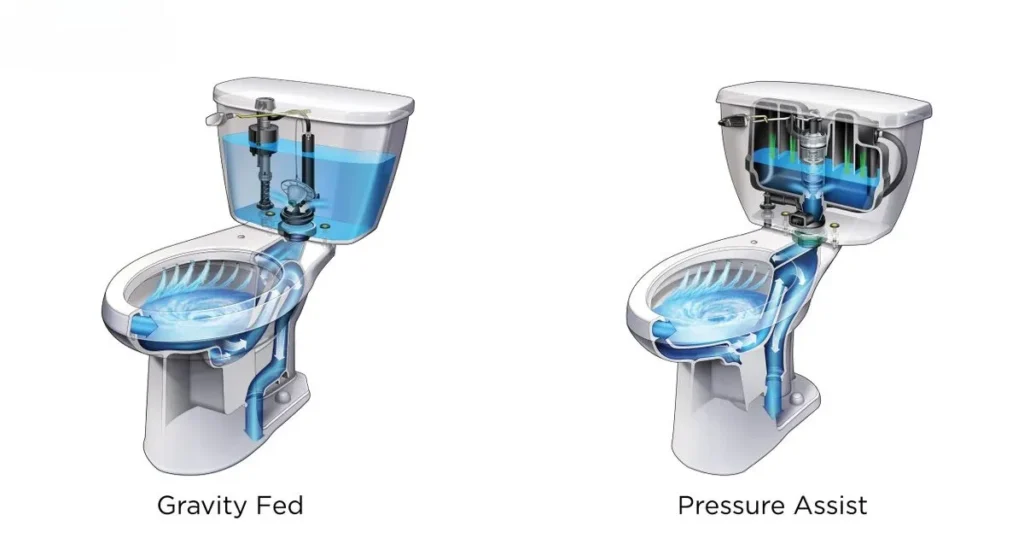
Gravity-flush bowls are quiet, simple, and fine for most homes. Pressure-assisted bowls blast clogs better in heavy use but run louder and cost more to service.
H3 — Daily experience
| System | Noise | Clog resistance | Maintenance |
| Gravity | Low | Good with right MaP | Low |
| Pressure-assisted | High | Very high | Medium |
Gravity models with optimized jets and trapways now rival old 1.6 GPF performance at 1.28 GPF. Pressure-assisted systems shine in public spaces, basements, and large households. If you flush at night near bedrooms, gravity wins on peace and quiet.
What MaP toilet score best prevents clogs?
Numbers cut through marketing.
Aim for a MaP score of 600–1,000 grams. These bowls clear real-world solids with low water. Below 500 grams, clogs rise. Above 1,000, gains feel minor in most homes.
H3 — MaP bands
| MaP score (g) | Real-world read |
| < 500 | Skip unless special use |
| 600–800 | Solid everyday performance |
| 900–1,000 | Premium margin against clogs |
MaP tests measure how much synthetic waste a bowl clears in one flush. Use the score to shortlist models. Then confirm bowl rinse (cleaning) and splash control. A high score without good rinse still leaves streaks and repeat flushes.
What trapway size reduces clogs the most?
Bigger is not always better; shape matters too.
A full-glazed, well-shaped 2⅛″–2⅜″ trapway resists clogs better than a rough 3″. Smooth glazing and consistent radius keep flow fast and reduce hang-ups at turns.
What to check
- Full glazing: Inside surface should be smooth end-to-end.
- Wide radius turns: No tight corners that slow flow.
- Outlet alignment: Jet stream should aim directly into the trapway.
Pair trapway design with a strong MaP score and proper venting in the home. Poor venting makes any bowl feel weak and can mimic a clog.
Do rimless toilets clean faster with less splatter?
Clean rims mean less brush time.
Yes. Rimless bowls use directed water channels instead of a hidden rim. They rinse more evenly and cut places for grime to hide. Properly designed channels limit splash outside the bowl.

Cleaning notes
Rimless rims reduce bacteria build-up and make wipe-downs quick. Look for even sweep around the bowl, not two thin streams. If splash is a concern, test-flush in a showroom or read third-party tests. Good designs balance strong rinse with controlled flow paths.
What toilet height meets comfort and ADA needs?
Seat height changes comfort and access.
Standard seats sit ~15–16″ from floor. “Comfort height” (or ADA height) sits ~17–19″. Taller seats ease standing but can feel high for shorter users and small kids.
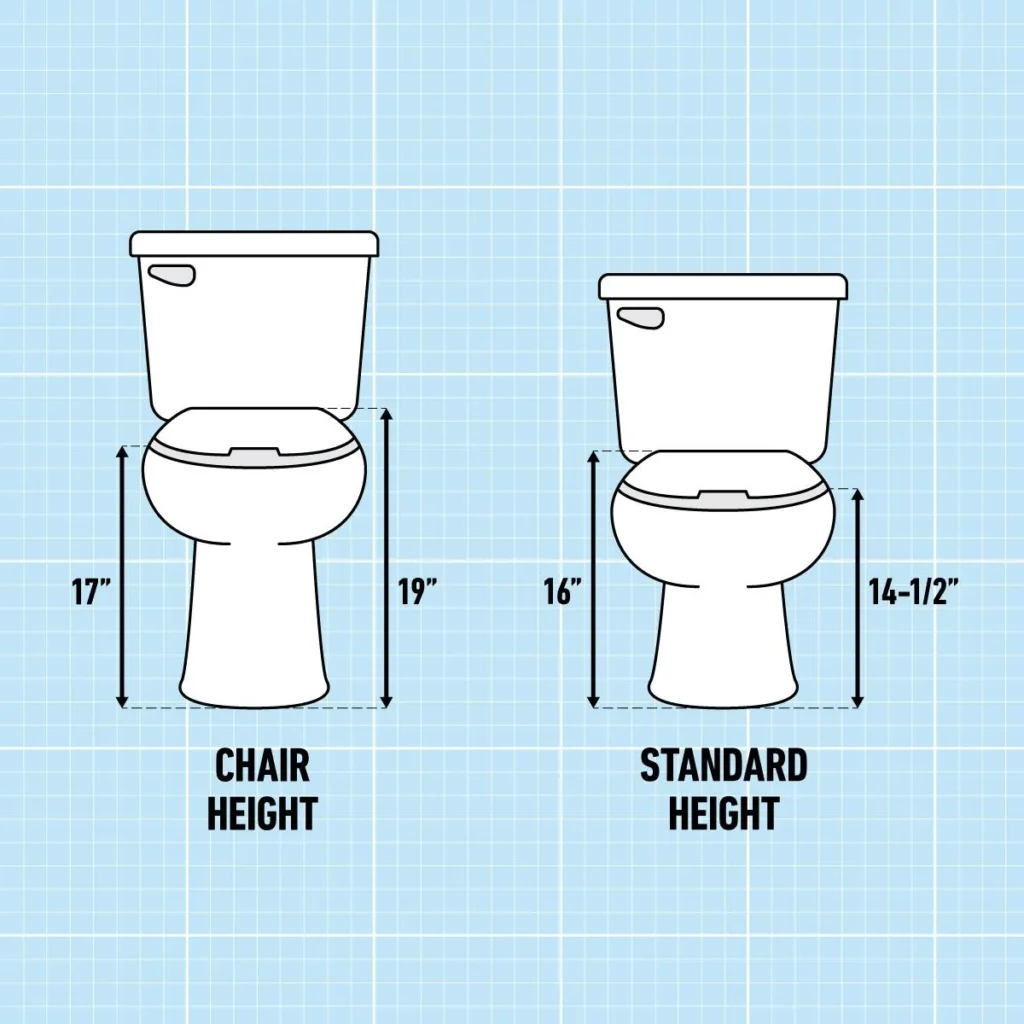
H3 — Height guide
| Seat height | Use case |
| 15–16″ (Standard) | Traditional look, kids’ baths |
| 17–19″ (Comfort/ADA) | Easier standing, mobility needs |
For shared homes, consider a comfort-height bowl in main baths and standard height in kids’ baths. Pair height with bowl shape for best ergonomics. Add a soft-close seat to reduce slams and pinches.
Are smart toilets worth it over bidet seats?
Clean and comfort can come two ways.
Bidet seats add wash, warm water, and heat to a standard bowl at lower cost. Smart integrated toilets add auto-flush, self-clean, and sleek design, but they cost more and need power and service.
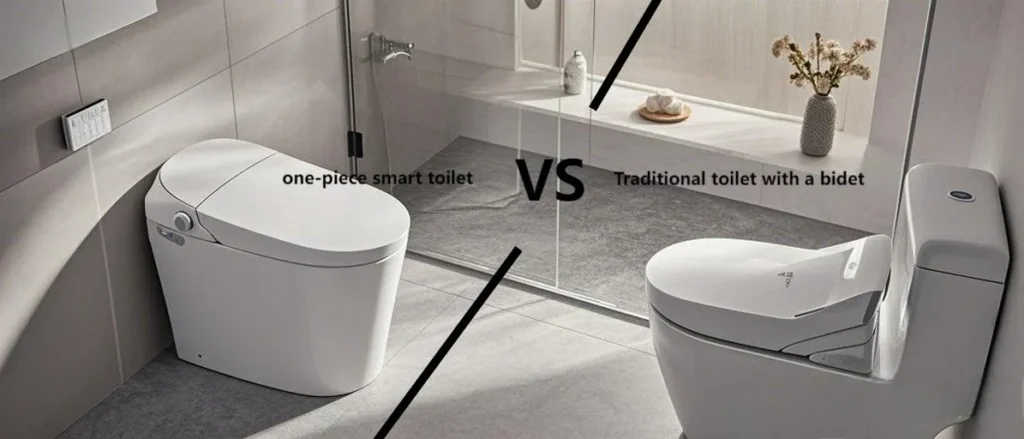
Compare
| Option | Pros | Cons |
| Bidet seat + standard bowl | Low cost, easy retrofit | Exposed cords/hoses, less sleek |
| Integrated smart toilet | Clean look, more features | Higher price, pro service |
If you rent or want fast upgrades, pick a bidet seat. If you remodel and can run power and supply lines cleanly, a smart unit fits the plan. Either way, confirm rough-in and seat compatibility.
How much do low-flow toilets cost installed?
Budget shapes the shortlist.
Expect $180–$650 for a basic low-flow toilet and $150–$400 for standard installation. Smart or pressure-assisted units and complex installs can reach $1,000+ with labor.

Ballpark ranges (USD)
| Type | Unit price | Typical installed |
| Gravity 1.28 GPF | $180–$350 | $330–$650 |
| Dual-flush 1.28/0.8 | $220–$450 | $380–$750 |
| Pressure-assisted | $350–$700 | $550–$1,000 |
| Smart integrated | $900–$2,500+ | $1,200–$3,500+ |
Complexity adds cost: flange repair, shutoff replacement, tight spaces, or tile drilling. Save labor by having the room clear, the water off, and a clean path from door to bath.
Conclusion
Measure rough-in right, match bowl shape and height to users, choose proven MaP scores at 1.28 GPF, and install with care. Do this, and every flush is quiet, clean, and water-smart.
FAQ
Is 1.28 GPF enough for a strong flush?
Yes, if the bowl and trapway are well designed. Pair 1.28 GPF with a MaP score of 600 g or higher for reliable clears.
What is a good MaP score for home toilets?
Aim for 600–1,000 grams. Below 500 grams, clogs become more likely. Above 1,000, benefits are small for most households.
How often should I replace the wax ring?
Only when you pull the toilet or see leaks/odor. A new wax ring is cheap insurance during a replacement or flange repair.
Do rimless toilets splash more?
Good rimless designs control flow with channels, so splash stays low. Check real tests or flush in-store to confirm.
What seat height is best for seniors?
Comfort height (17–19″) helps standing and reduces knee strain. Combine with an elongated bowl for better support and transfers.
Can dual-flush save more water than single 1.28?
Yes, when users pick the half-flush often and valves are tuned. If misuse is common, a single 1.28 GPF is simpler and still efficient.
Is a pressure-assisted toilet too loud for homes?
Many find them loud at night. They excel in heavy-use spaces. For quiet bedrooms, a well-designed gravity 1.28 GPF is a better fit.