

Homeowners and contractors often face the same question — should you buy RTA cabinets or pre-assembled cabinets for your next project? Prices, shipping, and installation all play a role. Choosing the wrong type can waste time, money, and even cause costly logistics problems.
Based in Foshan, China’s global manufacturing hub, our one-stop building material supply team provides complete interior solutions — from kitchens and wardrobes to bathrooms, flooring, lighting, tiles, and wall panels. We serve homeowners, designers, developers, and builders with integrated 3D design services, coordinated full-house packages, and export logistics that reach every continent.
RTA (Ready-to-Assemble) cabinets offer easier shipping and lower prices, while pre-assembled cabinets save time on site. The best choice depends on your project size, timeline, and labor costs.
Let’s explore which type truly saves more for global projects.
What are RTA cabinets and how do they work?
RTA cabinets come in flat packs, ready for assembly upon arrival. Each piece — panels, doors, drawers, and hardware — is packed separately for compact transport.

They are often favored by importers, developers, and contractors managing large-scale projects because they reduce shipping volume and cost. Instead of paying for air inside a bulky box, buyers only pay for the material.
Most RTA cabinets use cam lock or dowel joints, allowing quick assembly using simple tools like screwdrivers or drills. This method is similar to how modular furniture works. According to Wikipedia’s article on Knock-down Fittings, these connectors were developed to simplify shipping and assembly in global trade.
RTA cabinets are commonly made from plywood or medium-density fiberboard (MDF), which provides a balance between affordability and strength. Finishes vary — melamine, UV lacquer, or thermofoil coatings — allowing the same aesthetic as pre-assembled versions but at lower cost.
Are pre-assembled cabinets better quality than RTA?
Pre-assembled cabinets are delivered fully built, glued, and screwed at the factory. This offers solid structure and consistency across units.
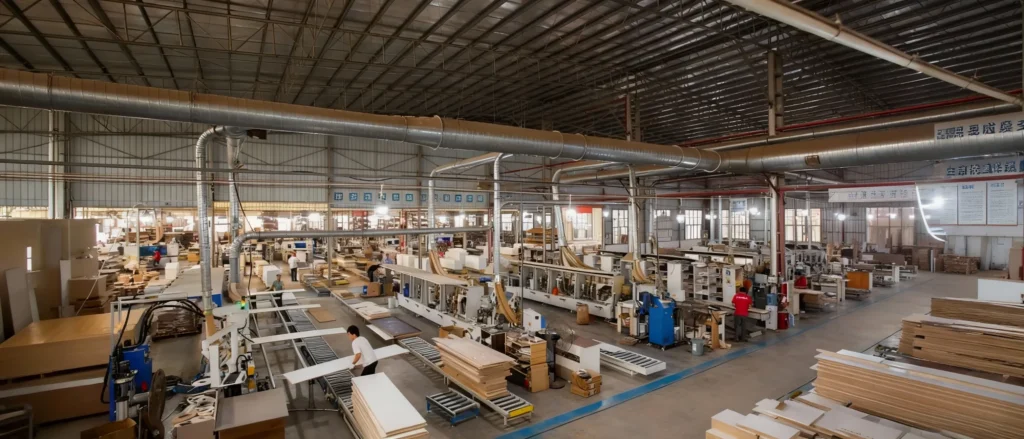
The biggest benefit is time — installers can simply place the cabinet, level it, and secure it to the wall. There’s no need for on-site assembly or multiple parts tracking. However, because they ship in full form, the transport volume is much larger, increasing freight and storage costs.
Quality-wise, both RTA and pre-assembled can meet the same standard if produced by professional factories. What differs is the construction process, not necessarily durability. Pre-assembled units are often tested for squareness and stability before packaging, which can slightly reduce the risk of misalignment.
In summary: RTA offers flexibility and cost savings; pre-assembled ensures convenience and precision. The “better” option depends on your project needs, budget, and available installation labor.
Which option is easier to ship for global projects?
For international projects, RTA cabinets are far easier and cheaper to ship.

Because RTA cabinets are packed flat, a 40-foot container can hold nearly three times more sets than pre-assembled cabinets. This makes a huge difference for global logistics — especially for projects in Africa, the Middle East, or South America.
Pre-assembled cabinets, while faster to install, take up excessive space. Shipping one kitchen might require an entire container. In contrast, RTA versions let importers consolidate multiple project orders in one shipment.
To ensure smooth delivery, professional factories provide per-room packaging labels, assembly manuals, and hardware kits. Many also offer digital installation guides or 3D previews, so overseas contractors can install with ease.
How much money can RTA cabinets actually save?
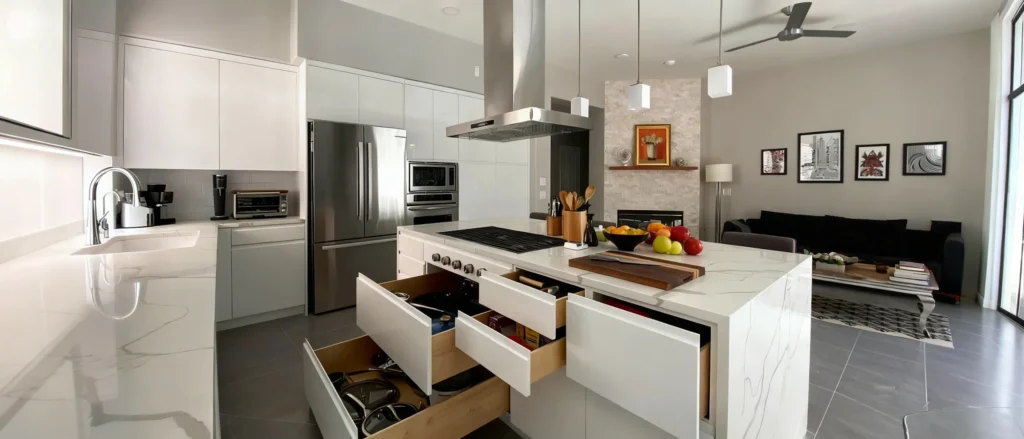
The savings can be significant — often 25–50% compared to pre-assembled options.
| Expense Category | Pre-Assembled Cabinets | RTA Cabinets | Savings |
| Factory Price | High | Medium to Low | 20–30% |
| Shipping Volume | Large | Compact | 30–50% |
| Labor Cost | Low | Medium | – |
| Storage Space | Requires warehouse | Stackable | 20–40% |
| Total Project Cost | $$$ | $$ | 25–50% less |
While pre-assembled cabinets can save some on installation time, RTA cabinets typically provide overall savings — especially for overseas buyers who must manage container costs and customs duties.
When working on multi-unit projects like apartments or villas, the total freight difference can easily reach thousands of dollars.
Do RTA cabinets take longer to install?
Yes, they require additional time on site, but modern systems make assembly simpler than ever.

Most installations follow a straightforward process: attach panels, secure base frames, and mount doors. A skilled carpenter can assemble one standard kitchen within one working day.
For global projects, this extra labor is offset by the freight savings. Some buyers even choose a hybrid approach — having large units like islands pre-assembled at the factory while keeping smaller ones RTA to save container space.
In reality, installation time depends more on planning and crew experience than cabinet type. Once the system is standardized, RTA can be just as efficient for bulk installations.
Which type is better for contractors and builders?
Contractors often prefer RTA cabinets for flexibility, logistics efficiency, and budget control.
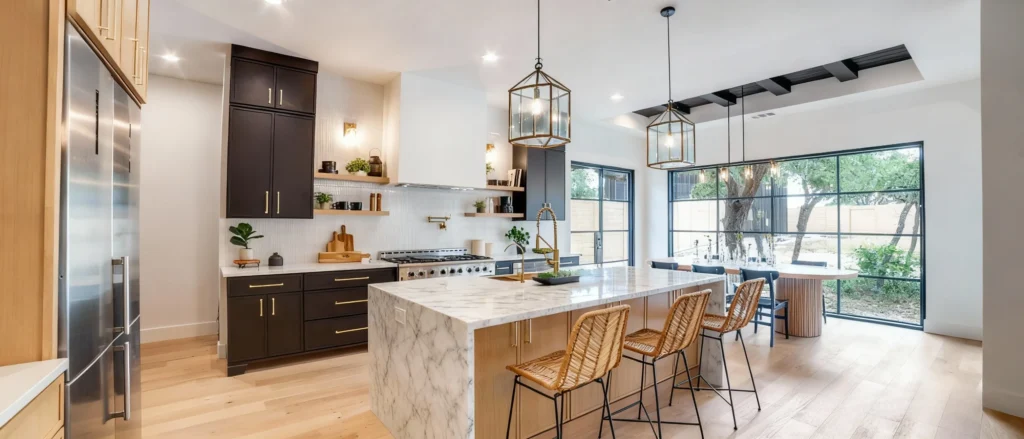
RTA allows phased delivery — shipping cabinets per floor or per project section. This avoids overcrowding job sites and supports ongoing construction schedules. Builders can store flat packs on-site and assemble only when each area is ready.
Pre-assembled cabinets, however, are ideal for high-end residential projects with tight deadlines and adequate logistics support. They minimize site handling and ensure precise factory alignment.
Both types have value; the decision depends on project scale, lead time, and budget. For developers managing hundreds of units, RTA is the most cost-effective solution.
Are RTA cabinets durable enough for export projects?
Yes. When made with strong core materials and proper finishes, RTA cabinets meet the same performance standards as pre-assembled models.
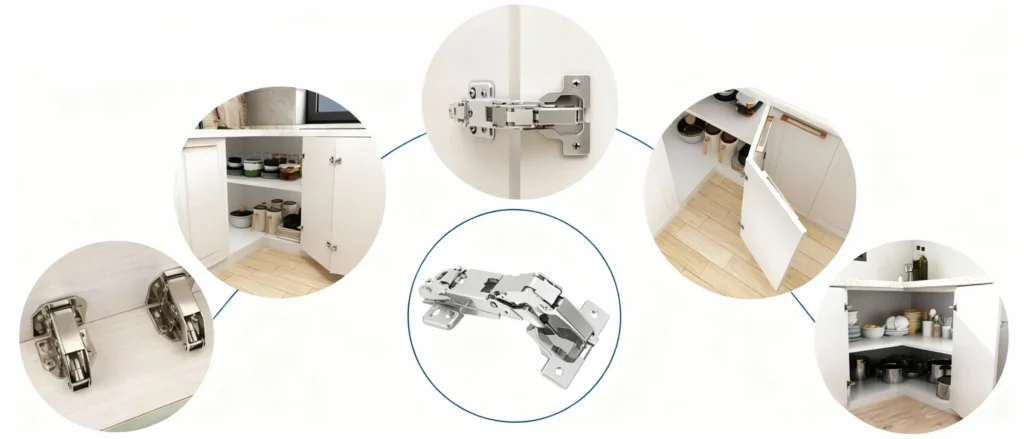
Durability depends on the material core — plywood, MDF, or particleboard — and the joinery system. For export projects, many factories use cam locks and confirmat screws, both known for high load capacity.
RTA cabinets also undergo drop and vibration testing before shipment to ensure they withstand long-distance transport. Finishes like UV paint or laminate surfaces protect against humidity and scratches during shipping.
In many international developments, RTA cabinets have proven reliable for hotels, apartments, and villas — combining easy assembly with strong, lasting construction.
What factors should I consider before choosing between them?
Before deciding, consider shipping costs, project scale, timeline, and available labor.
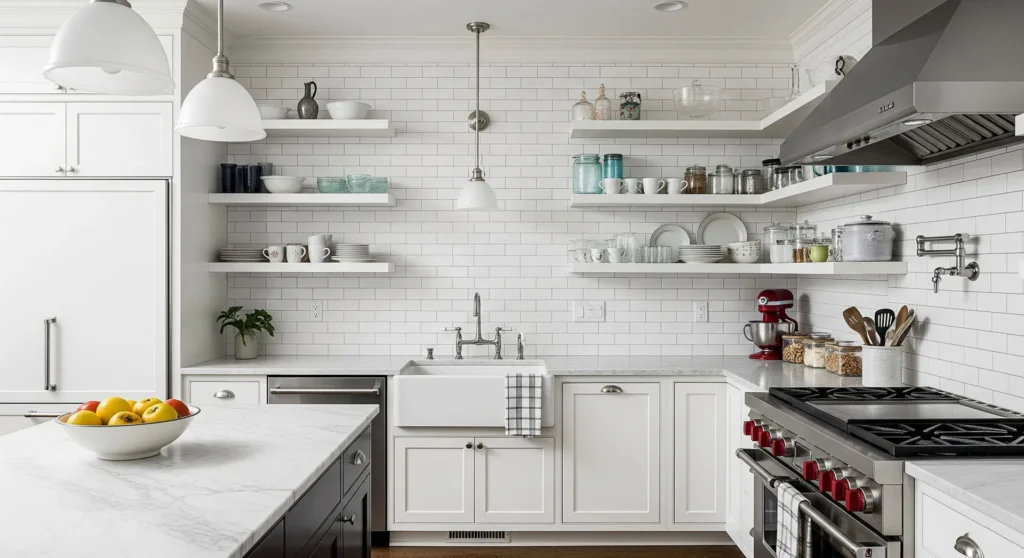
| Criteria | RTA Cabinets | Pre-Assembled Cabinets |
| Shipping Cost | Low | High |
| Labor Time | More | Less |
| Storage Space | Minimal | Large |
| Damage Risk | Low (flat packed) | Medium |
| Customization | Flexible | Limited after assembly |
| Ideal For | Export, bulk orders | Small projects, urgent builds |
For overseas buyers, RTA is almost always the practical choice. But for local renovations or showroom displays, pre-assembled units deliver instant results.
How do RTA and pre-assembled cabinets compare in design options?
Both offer similar door styles, finishes, and customization levels, depending on the manufacturer.
【Cabinet door samples in various colors and finishes | Google Image: “cabinet door style samples”】
RTA cabinets now feature the same range of finishes — solid wood veneer, matte lacquer, PET, or melamine — as high-end pre-assembled ones. Advanced CNC (Computer Numerical Control) cutting allows precise door patterns and edge profiles. Learn more about CNC machining from Wikipedia’s article.
The biggest difference lies in packaging and delivery, not aesthetics. Modern factories can even pre-drill holes and label panels for faster on-site installation. This makes it easy to achieve custom looks without heavy logistics.
Which cabinet type offers the best long-term value?
For global projects, RTA cabinets usually offer higher long-term value due to logistics efficiency and scalability.
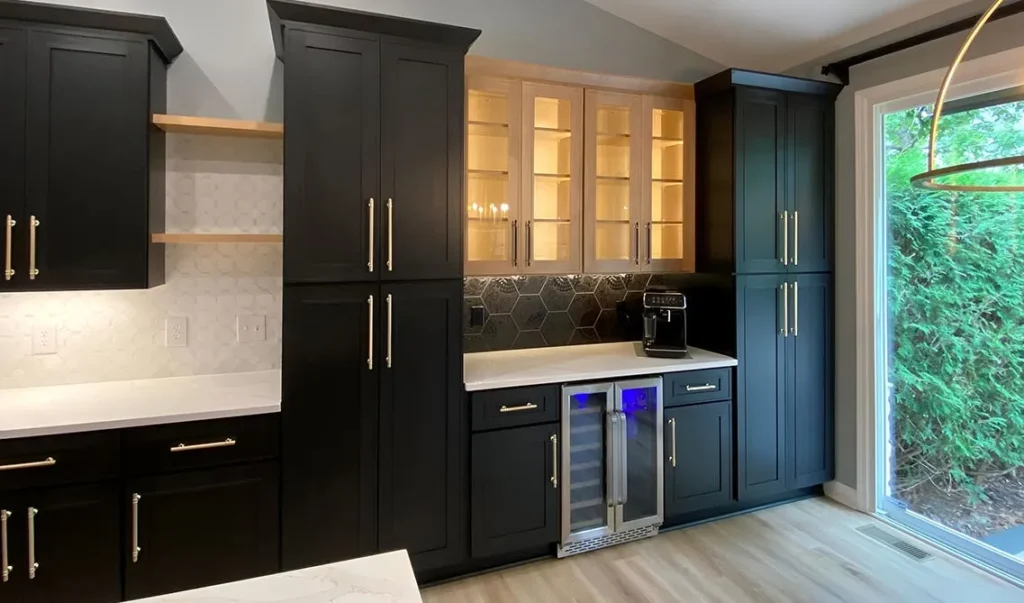
Their modular design allows for replacements or updates without replacing the entire system. Contractors can reorder panels or doors to match previous batches.
Pre-assembled cabinets are great for one-time residential installations where convenience outweighs cost. But for export-scale developments, RTA cabinets maximize cost control and flexibility — making them the preferred choice for builders and importers worldwide.
Conclusion
Both RTA and pre-assembled cabinets have their strengths. But for global projects, RTA often saves more in freight, storage, and total budget without sacrificing quality.
Final CTA
If you’re planning an overseas kitchen or full-house project, send us your floor plan. We’ll help you choose the best cabinet type and provide a quick factory quote.
Ready to start? Just send us your layout today.