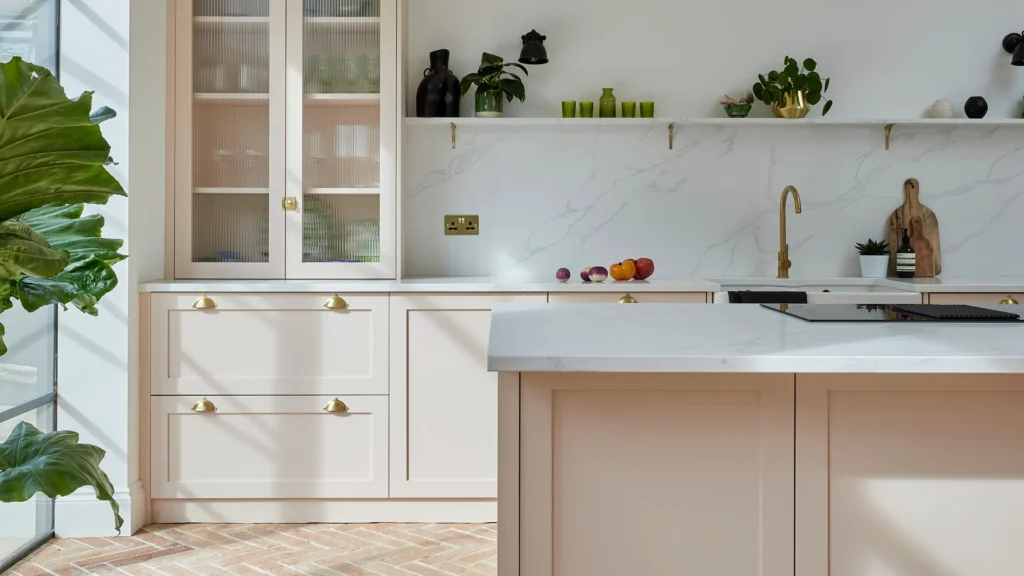
Many homeowners wonder if Shaker cabinets have finally had their time. After all, design trends change fast — what’s timeless today might feel dated tomorrow. But designers agree: Shaker cabinets are not going anywhere.
Based in Foshan, we serve international homeowners, developers, and designers through one-stop building material solutions. Our work covers kitchens, wardrobes, bathrooms, tiles, windows, flooring, lighting, and wall panels. From 3D design service to project coordination and export logistics, we help overseas clients achieve complete, consistent home design with ease.
Shaker cabinets remain in style because they balance modern simplicity with classic structure. Their clean geometry adapts to new finishes, colors, and hardware trends every year, ensuring they never look old-fashioned.
Let’s explore why 2025 continues to love the Shaker style — and how you can make it your own.
Why Are Shaker Cabinets Considered Timeless?
The Shaker style originated from the Shaker religious community in the 18th century, emphasizing simplicity, honesty, and craftsmanship. That design philosophy is what makes it timeless.
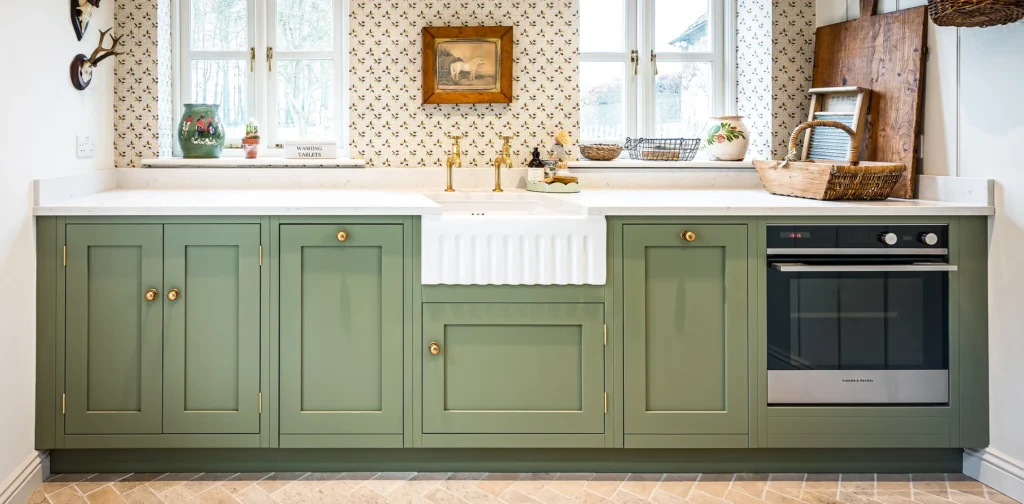
Unlike trendy cabinet designs that rely on elaborate ornamentation, Shaker doors focus on proportion and purpose. Their five-piece frame construction has stayed relevant for centuries because it fits both modern and traditional interiors.
Shaker design resists obsolescence because it values balance over excess. Minimalist interiors, Scandinavian homes, and transitional projects all draw inspiration from this same design DNA.
If you want to understand the full origin and structure of this cabinet style, visit our main guide — What Are Shaker Cabinet Doors? A Timeless Style Explained.
What Trends Keep Shaker Cabinets Popular in 2025?
Shaker cabinets adapt quickly to evolving design movements without losing their soul.
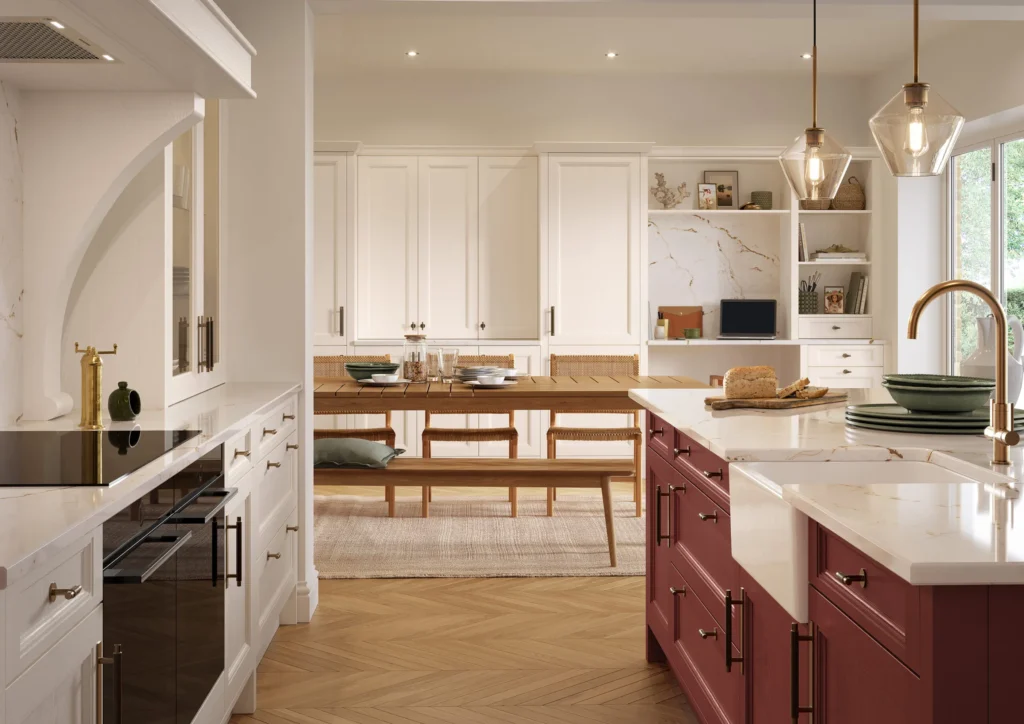
Key 2025 Trends Supporting the Shaker Look
| Trend | Description |
| Warm Minimalism | Combines simplicity with warmth through neutral palettes and soft edges. |
| Two-Tone Finishes | Mix of contrasting upper and lower cabinet colors adds visual interest. |
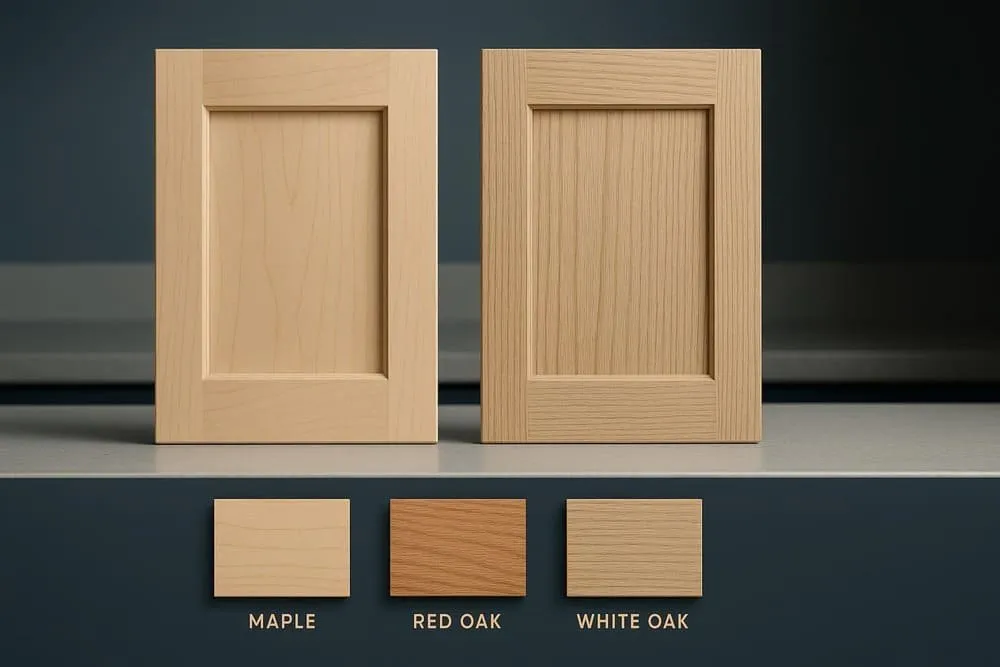
| Natural Wood Revival | Oak, walnut, and ash reintroduce texture and authenticity. |
| Matte Hardware | Brushed brass or black handles modernize the classic frame. |
| Sustainable Materials | Designers favor low-VOC paints and FSC-certified wood. |
Shaker doors serve as a perfect backdrop for these updates. The clean frame allows designers to experiment with tone, handle style, or lighting — without overwhelming the space.
Which Colors and Finishes Dominate Shaker Cabinets in 2025?
In 2025, homeowners are moving away from stark whites toward softer, warmer neutrals.
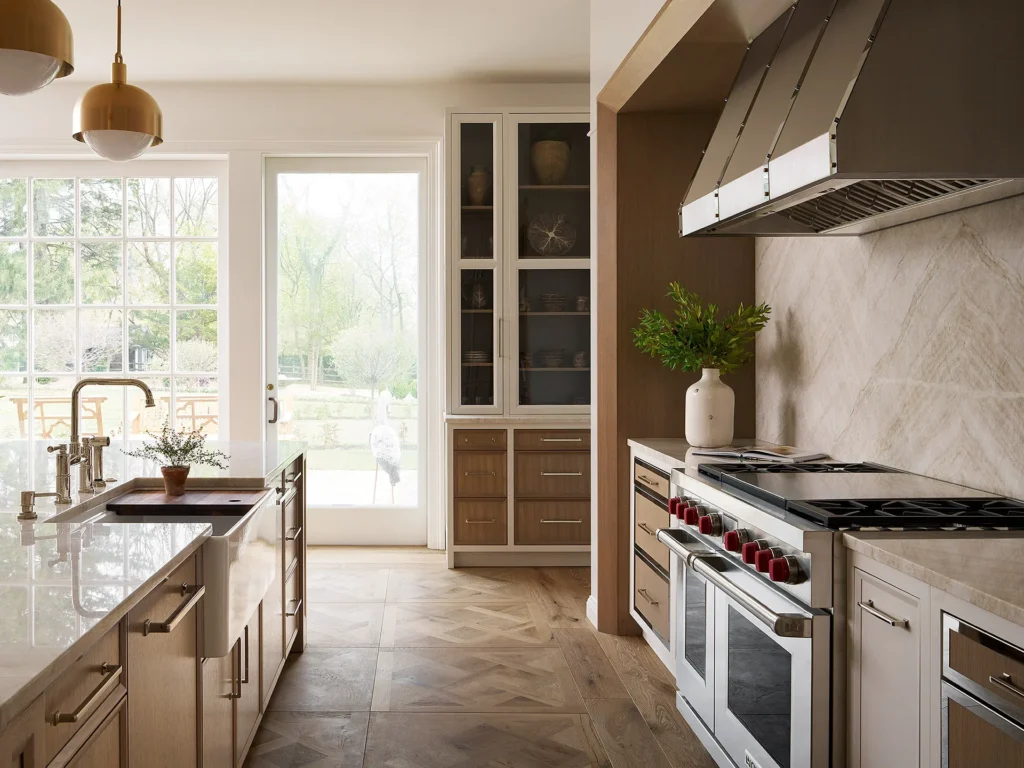
Most Popular Color Directions
- Greige & Taupe: Neutral, cozy tones that suit any lighting condition.
- Navy Blue: Adds contrast and elegance to island or lower cabinets.
- Forest Green: Reflects biophilic design and natural calmness.
- Soft Black or Charcoal: Creates a moody, sophisticated feel.
- Natural Wood Grain: Highlights craftsmanship and texture.
Finishes also evolve — matte paints and low-sheen coatings replace glossy looks. These surfaces feel more natural, tactile, and sustainable.
For those considering cost or durability factors between materials, check our resource — Best Materials for Shaker Cabinet Doors — MDF, Plywood, or Solid Wood?.
How Are Designers Modernizing Shaker Cabinets?
Modern interpretations focus on subtle refinements — slimmer frames, hidden handles, and integrated lighting.
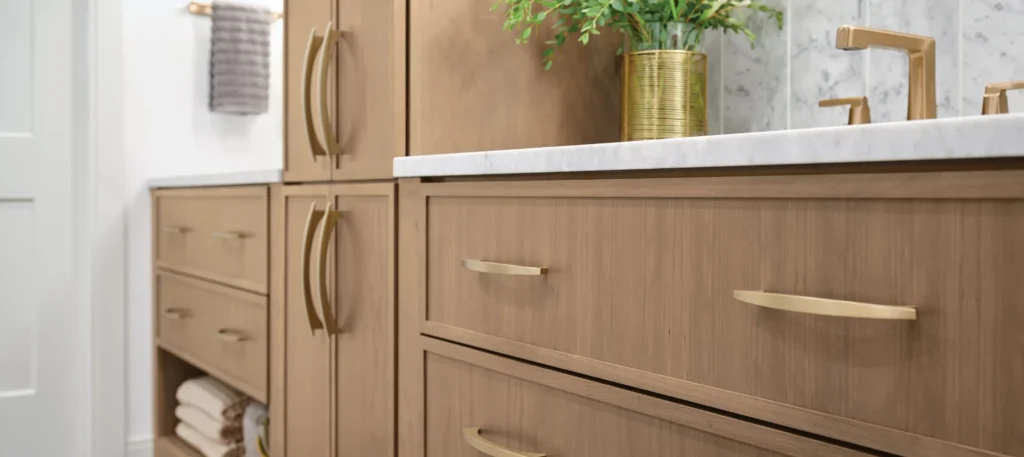
Designers now blend Shaker frames with modern textures like fluted glass or reeded panels. Some extend cabinet doors to the ceiling for a seamless, built-in effect. Others use push-to-open systems to remove hardware entirely, creating an ultra-clean aesthetic.
Modern Customizations in 2025
| Update Type | Effect |
| Slim Rail Shaker | Feels sleek and contemporary. |
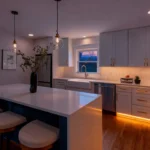
| Integrated Lighting | Adds depth and warmth. |
| Handle-Free Design | Emphasizes minimalism. |
| Open Shelving Mix | Keeps spaces airy and dynamic. |
These adaptations prove Shaker design is not static — it evolves while keeping its essence.
How Do Shaker Cabinets Compare to Other Styles in 2025?
When comparing to slab or raised panel cabinets, Shaker remains the middle ground: minimal but not cold, classic but not ornate.
| Feature | Shaker | Raised Panel | Slab |
| Look | Simple framed panel | Decorative depth | Flat and plain |
| Style Fit | Transitional | Traditional | Ultra-modern |
| Cleaning | Easy | Moderate | Very easy |
| Cost | Moderate | High | Low to moderate |
This balance is what designers call “transitional adaptability.” It lets you change wall colors, flooring, or lighting without replacing cabinets entirely.
For a complete comparison of structure and appearance, explore — Shaker vs Raised Panel Cabinets — The Real Difference Explained.
What Kitchen Layouts Highlight Shaker Cabinets Best?
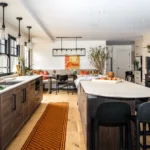
Shaker cabinets work especially well in open-concept and transitional kitchens.
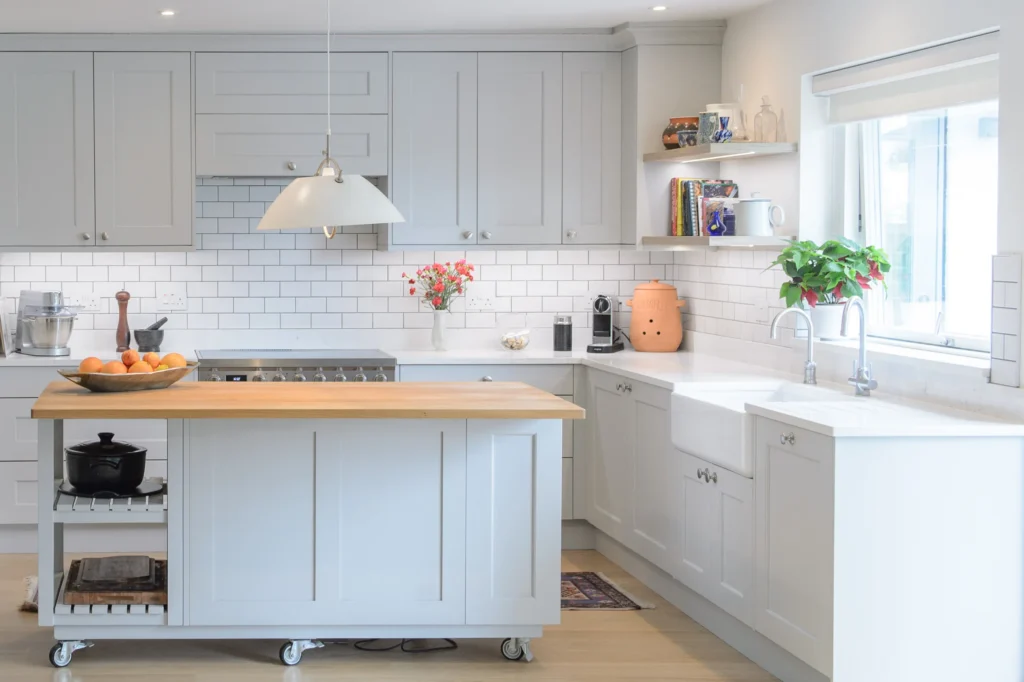
Their neutral form allows seamless blending between the kitchen and living areas. They can also ground bold architectural details — beams, arches, or statement lighting.
Recommended Layouts
- U-Shaped Kitchens: Offers balance and symmetry.
- L-Shaped Layouts: Maximizes flow for open spaces.
- Island-Centered Designs: Adds depth and storage versatility.
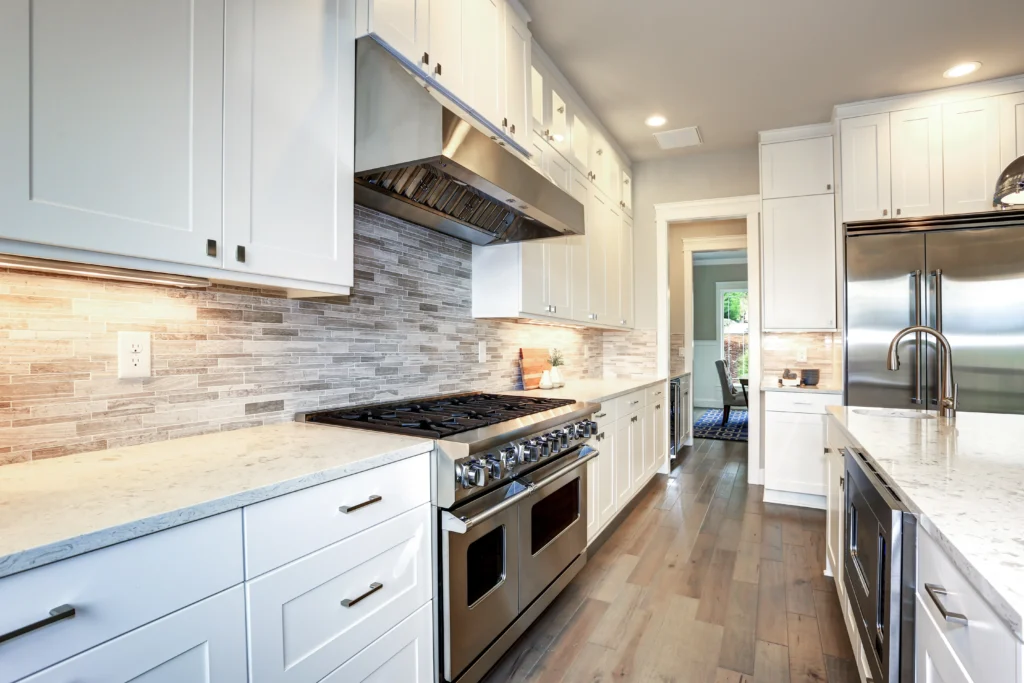
- Galley Kitchens: Keeps visual weight light and organized.
The Shaker frame’s clean edges reflect light evenly, making even small kitchens appear larger.
Will Shaker Cabinets Ever Go Out of Style?
It’s unlikely. Trends may shift around them, but Shaker remains the framework many designers return to.

Why? Because its proportions are mathematically balanced and its function universal. Whether paired with stone, metal, or glass, it maintains relevance.
Unlike ornate cabinet styles that require specific settings, Shaker’s restraint gives it longevity. Its history parallels design movements like Modernism — evolving through subtle reinterpretation, never reinvention.
How Much Do Shaker Cabinets Cost in 2025?
Costs depend on materials, finish, and customization level.
| Material | Average Cost (per door) | Notes |
| MDF | $50 – $90 | Great for smooth paint finishes. |
| Plywood | $80 – $150 | Balance of strength and price. |
| Solid Wood | $150 – $300 | Premium texture, highest durability. |
For a detailed cost comparison including regional pricing, check — How Much Do Shaker Cabinet Doors Cost in 2025? (Full Price Guide).
Conclusion
Shaker cabinets remain timeless not because they resist change, but because they adapt to it. Their geometry, practicality, and warmth make them fit for 2025 — and likely decades ahead.
Share Your Plan, Get Ideas
If you’re planning a kitchen remodel or full-house project, send us your floor plan or style reference. We’ll help you visualize layouts, finishes, and materials tailored to your budget and taste.
Ready to begin? Just share your floor plan with us.