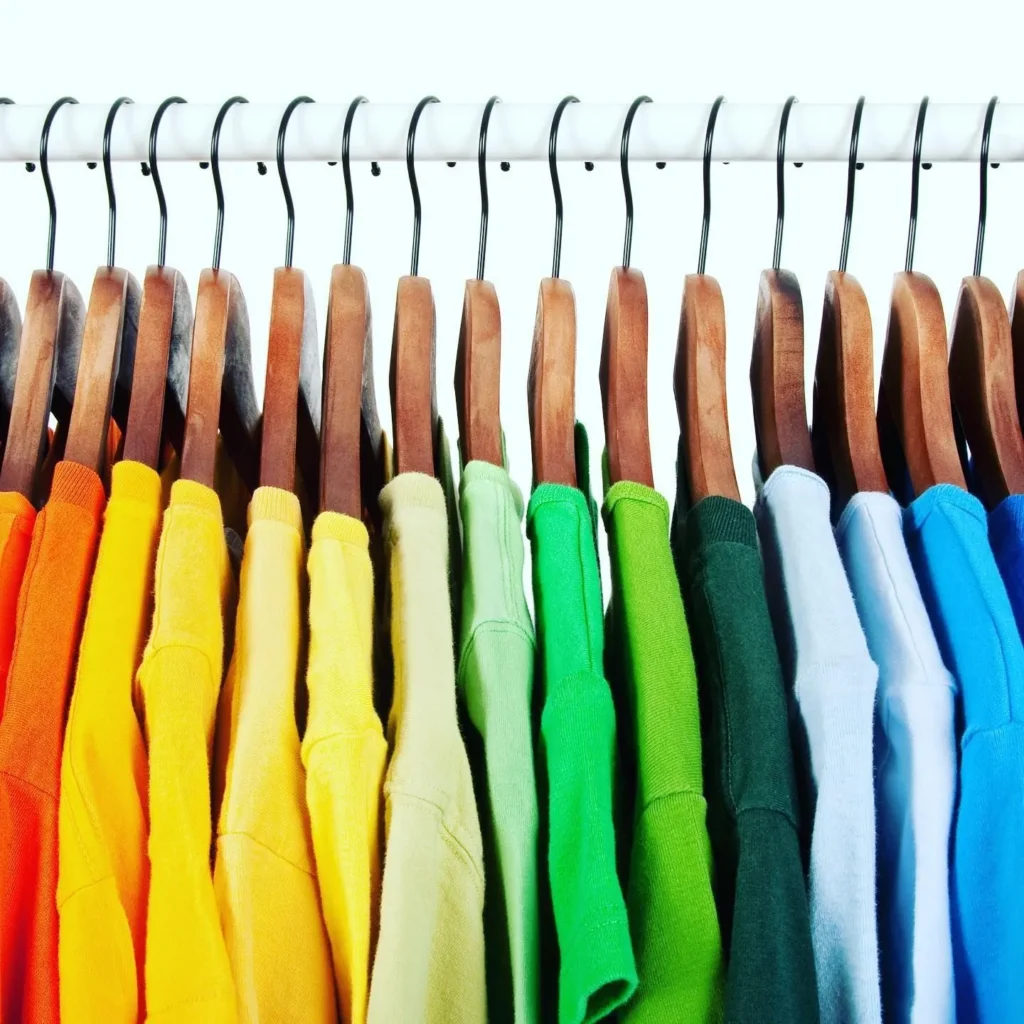
Too many clothes, zero time. You reach for the same pieces. Color-first sorting fixes speed, reduces stress, and makes your closet look like a boutique.
We are a one-stop building-materials partner based in Foshan, serving overseas projects. We cover kitchens, wardrobes, bathrooms, windows and doors, tiles, lighting, flooring, and wall panels. We support homeowners, renovation teams, designers, developers, and builders. We also assist with interior and facade 3D design, whole-home style matching, export logistics, and after-sales support. Advice stays simple; results stay steady.
Organize by a clear color order, then keep it consistent inside each category. Use uniform hangers, labeled sections, and a short weekly reset. Handle prints with one rule, train everyone in the home, and watch mornings get easier.
You will find fast wins first, then deeper steps with checklists, tables, and small tests you can try today. Read one section, take one action, and see a calmer closet by tonight.
Start with Space: Empty, Edit, Clean
Clutter hides great outfits. Start with a full reset. Empty the closet, edit hard, and clean shelves and rods. Make room before you sort by color.
Color systems fail in crowded closets. Make decisions with simple rules. Remove what does not fit, what you do not wear, and what needs repair. Put “maybes” in a short trial box with a date on it.

Edit fast with three piles
Take everything out. Decide fast. Keep only what serves your style or purpose. Put “maybe” items in a dated box. If you do not open it in 60 days, donate.
Keep / Donate / Repair guide
| Item state | Keep | Donate | Repair |
| Fits well, worn weekly | ✓ | ||
| Fits, worn rarely, but needed (formal) | ✓ | ||
| Wrong size for >6 months | ✓ | ||
| Damage that a tailor can fix | ✓ | ||
| Out of style for you | ✓ |
Prep the shell
Wipe dust. Vacuum floor. Tighten loose rods. Add one extra top shelf bin for “in rotation” pieces. A clean shell makes color blocks pop. Add simple LED lights so colors read true.
Decide Your Color Order
Order drives speed. Pick one system and follow it everywhere. The classic is rainbow order (ROYGBIV) with neutrals at the ends. Another is light-to-dark gradient.
Color order is not about taste; it is about recall. Use the same flow across tops, bottoms, and outerwear. If you are visual, color-first reduces search time. For context on color strategy, see color theory. For rainbow order, you can reference the visible spectrum idea behind ROYGBIV (see visible spectrum).

Two solid choices
| System | Flow | Best for | Notes |
| ROYGBIV + neutrals | White → tan → ROYGBIV → gray → black | People who think in color blocks | Easy to teach; looks bold |
| Light → dark | White → cream → tan → … → black | Minimal, tonal wardrobes | Calmer look; great with neutrals |
Make it consistent
Apply the same order within each category. Tops, then bottoms, then dresses. Use left-to-right or right-to-left—pick one and keep it. If you share a closet, post a small card that shows the chosen order so everyone follows it.
Choose Your Master Rule: Category-First or Color-First
There are two good paths. Category-first (type then color) and color-first (color then type). Both work. Choose one master rule to avoid drift.
Category-first helps people who dress by silhouette. Color-first helps people who match tones first. If you own many basics, color-first feels faster. If you plan outfits by cut, category-first saves time.

Compare the methods
| Method | How it looks | Pros | Watch-outs |
| Category → Color | Tops → Jackets → Dresses, each in color order | Easy to grab by function; tidy | Can split color stories across rails |
| Color → Category | White zone, then beige zone, etc., each with tanks/tees/shirts inside | Strong visual blocks; fast matching | Needs labels so types do not mix |
Pick and lock
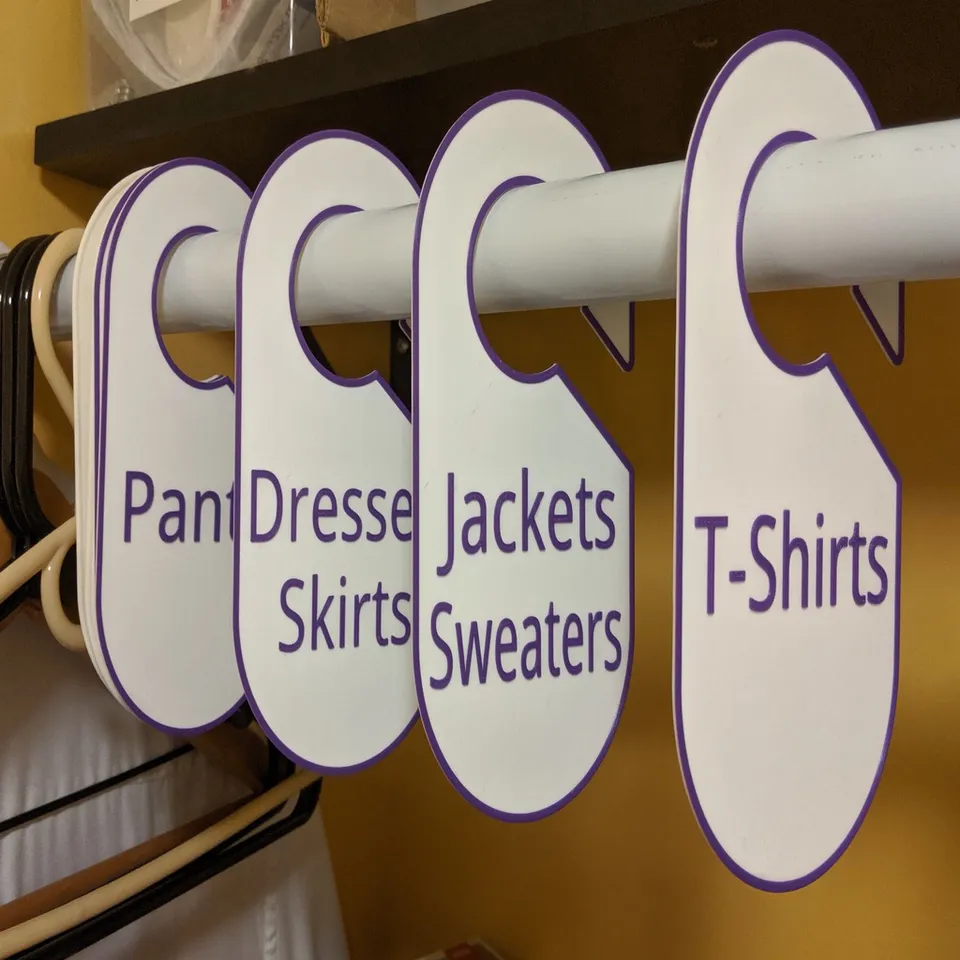
Choose your master rule today. Write it on a small label inside the door. If others use the closet, keep short labels at each divider: “White Tops,” “Beige Tops,” “Brown Dresses,” etc. Consistency is the win.
Uniform Hangers, Labels, and Tools
Mismatched hangers cause visual noise and wasted space. Uniform hardware looks calm and saves inches. Add dividers and label ledges so every color block has a start and end.
Hangers should match material and shape. Thin velvet saves space, wood keeps structure, and wide-shoulder hangers protect jackets. Use clip hangers for skirts and pants. Add a few cascading hooks only if rails are strong.
Choose the right hanger
| Type | Use | Strength | Notes |
| Slim velvet | Tees, blouses, dresses | Medium | Space-saving; gentle grip |
| Wood standard | Shirts, light jackets | High | Clean lines; durable |
| Wide-shoulder | Blazers, coats | High | Protects shape |
| Clips/slim bar | Skirts, trousers | Medium–High | Align hems; avoid creases |
Label once, decide less
Place small acrylic ledges or clip-on dividers between color zones. Print simple tags: “Yellow Ends → Green Starts,” “Neutrals,” etc. Everyone in the home returns items to the same spot with no debate.
Small tools that help
- Lint roller near dark section
- Folding board for tees and knits
- Step stool for high shelves
- Under-shelf hooks for scarves or belts
Layouts for Walk-In, Reach-In, and Shared Closets
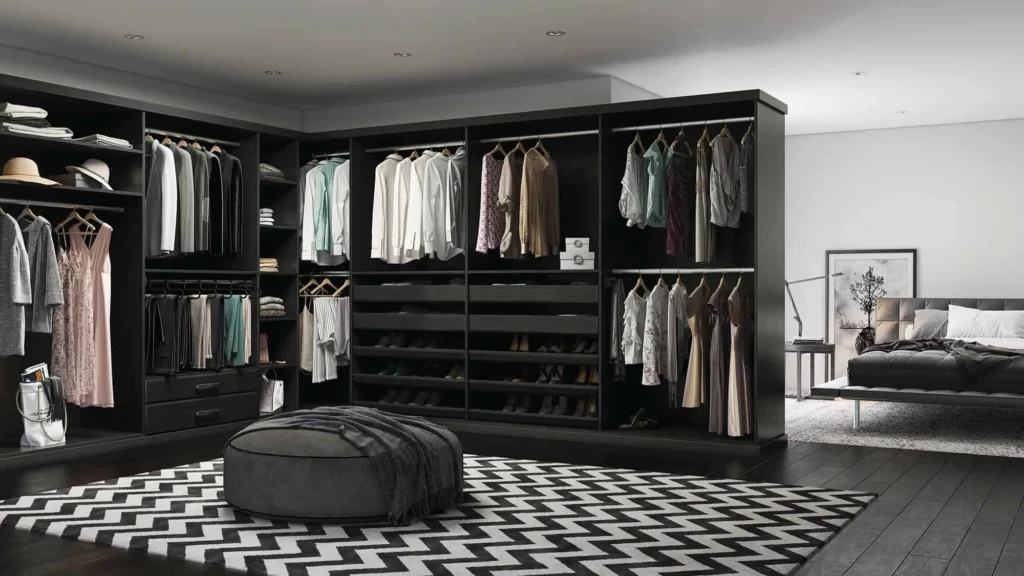
Good flow beats square footage. Plan by closet type. Keep “grab-and-go” at chest height. Put rarely used items higher or lower. Leave a clean path.
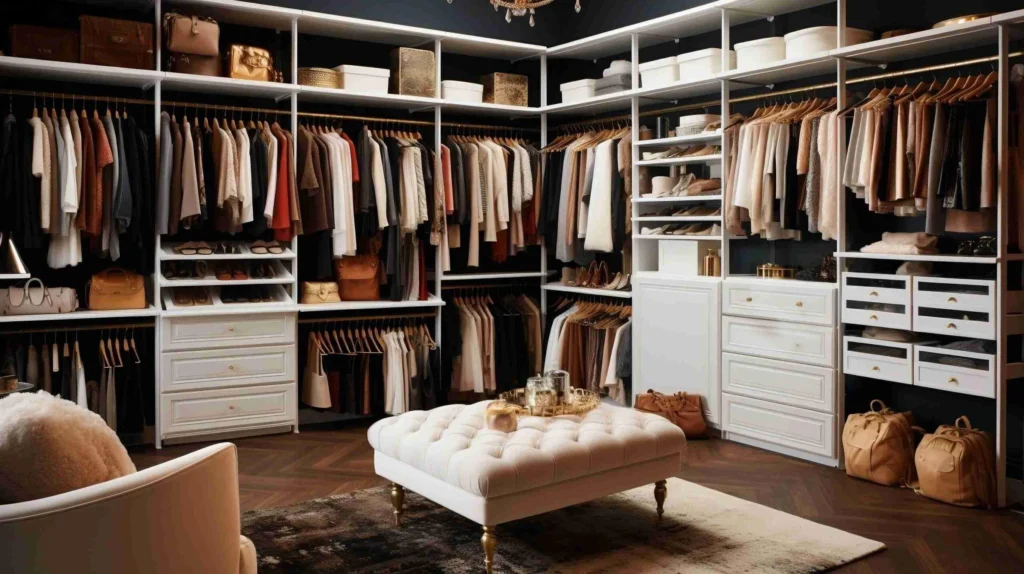
Walk-ins can run color bands on two or three walls. Reach-ins need strict editing and double-hang bars. Shared closets need clear zones so color blocks do not collide.
Quick layout rules
| Closet | Rail plan | Best zones | Extra |
| Walk-in | Long runs by color; suits on wider hangers | Chest height for daily wear | Shoe wall sorted by color |
| Reach-in | Double hang (tops over bottoms); slim hangers | Middle for most-used | Bins for off-season |
| Shared | Left/right split; color order mirrors on both sides | Neutral “community” shelf | Two hampers to prevent mix-ups |
Path and reach
Keep 24–30 cm between hanging clothes and the door swing. Put workwear and uniforms at the start of each color band. Place a valet hook near the door for outfit prep. If ceilings are high, add a third shelf for labeled “archive” bins.
Handle Prints, Neutrals, and Denim Without Chaos
Prints cause doubt. Neutrals swallow the rack. Denim piles up. Solve these three and your system stays clean.
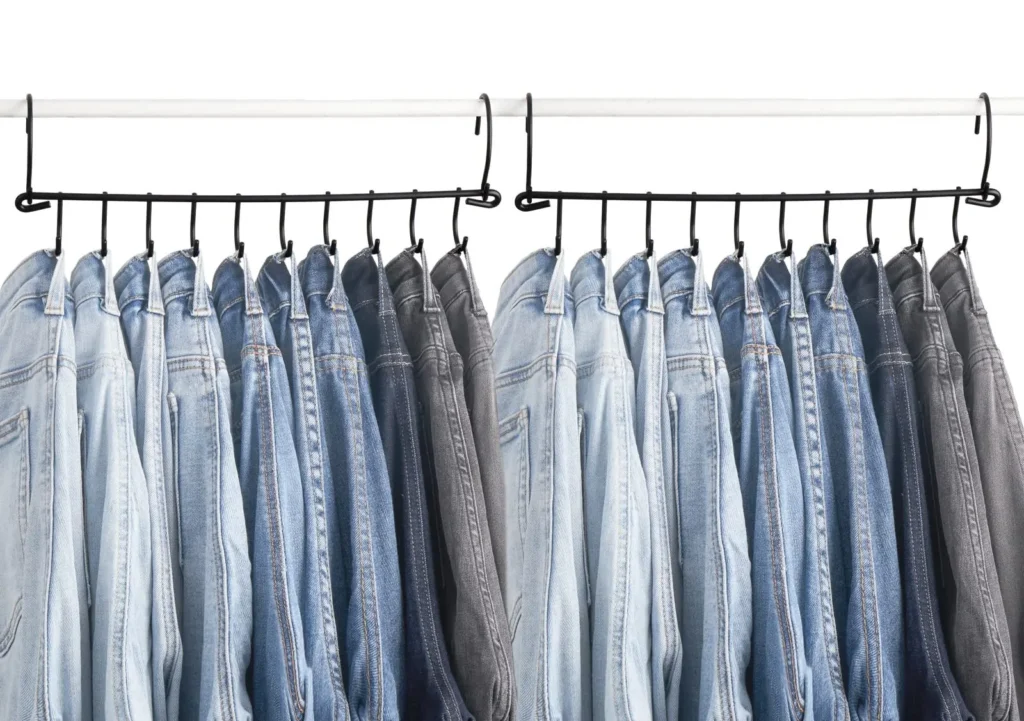
Use one rule for prints: sort by dominant color. Keep neutrals ordered from white to tan to gray to black. Park denim as its own color band from light to raw.
A simple rule for prints
Hold the garment at arm’s length. Name the color you see first. Place it in that color band. If two colors shout equally, pick the one you own less of to balance volumes. Stripes and checks follow the background color. Florals and abstracts follow the field color.
Manage neutrals and denim
| Group | Order | Tip |
| Neutrals | White → cream → tan → camel → gray → charcoal → black | Use matching hangers so tones stand out |
| Denim | Light wash → mid wash → dark → raw/black | Fold heavy denim to avoid shoulder bumps |
Capsule support
If you dress from a tight palette, set a mini-rail for a weekly mix. This mirrors a small capsule wardrobe and speeds choices. Rotate pieces back into the main color bands after laundry.
Shoes, Bags, and Small Items in the Same Color System
Great closets fail when accessories drift. Bring shoes, bags, and hats into the same order. It looks sharp and saves minutes.
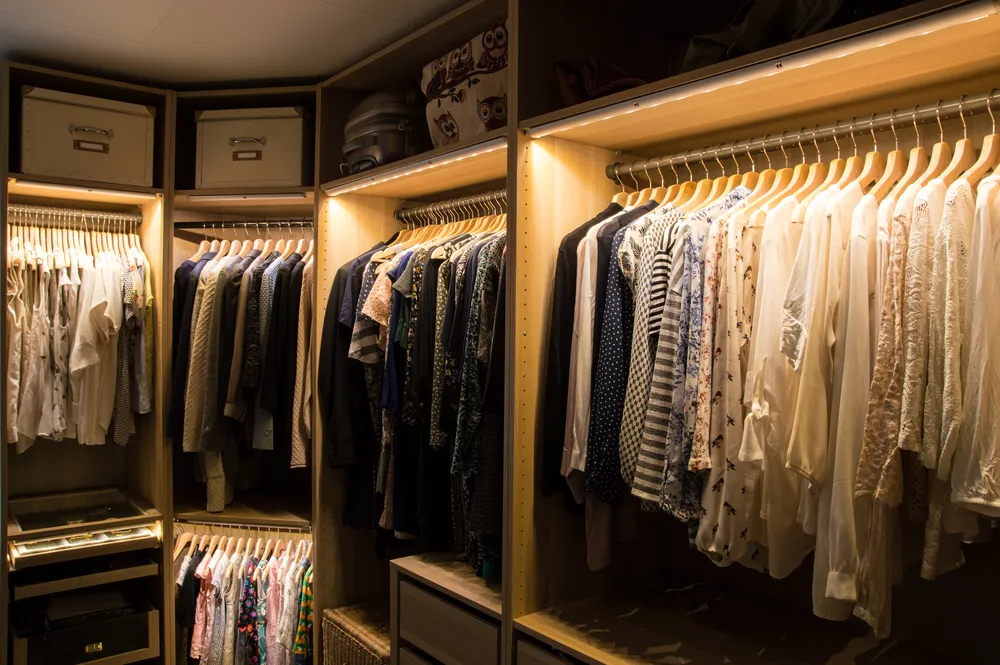
Align a shoe wall from light to dark. Keep heels at eye level, flats and sneakers below, and boots on one side. Group bags by color, then by size. Use clear bins or open shelves with label clips.
Accessory map
| Item | Sort method | Storage |
| Shoes | Light → dark | Adjustable shelves; heel stops |
| Bags | Color → size | Open shelves; dust covers for delicate |
| Belts/Scarves | Color only | Shallow bins or hooks |
| Jewelry | Metal tone → color stones | Drawer inserts; anti-tarnish cards |
Maintenance trick
After laundry day, do a 5-minute “color return.” Put every piece back into its band before closing the door. Train the habit and the system never collapses.
Conclusion
Pick one color order, one master rule, and one weekly reset. Use uniform hangers, clear labels, and simple layouts. Handle prints and neutrals with one rule. Your closet will look calm and save time.
Share Your Plan, Get Ideas
Send a quick sketch and a few photos. We can mark color bands, label placements, and a layout that fits your closet type and habits.