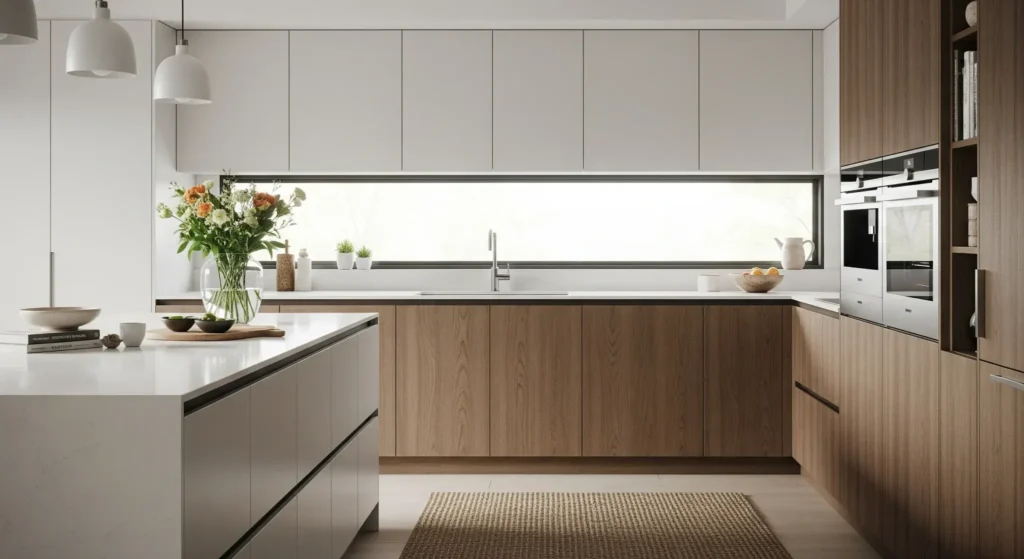
A kitchen can feel cluttered fast when cabinet styles compete for attention. Many homeowners want a clean, simple look but struggle to find a cabinet style that stays modern without losing warmth. Flat cabinets solve this by removing visual noise.
Flat cabinets work well for homeowners, designers, and contractors seeking clear lines and efficient layouts. Our team supports full-house projects from Foshan with coordinated materials across kitchens, wardrobes, bathrooms, and interior panels. We also offer 3D design, space planning, consistent finish matching, and export logistics so overseas clients can complete projects with fewer suppliers and fewer delays.
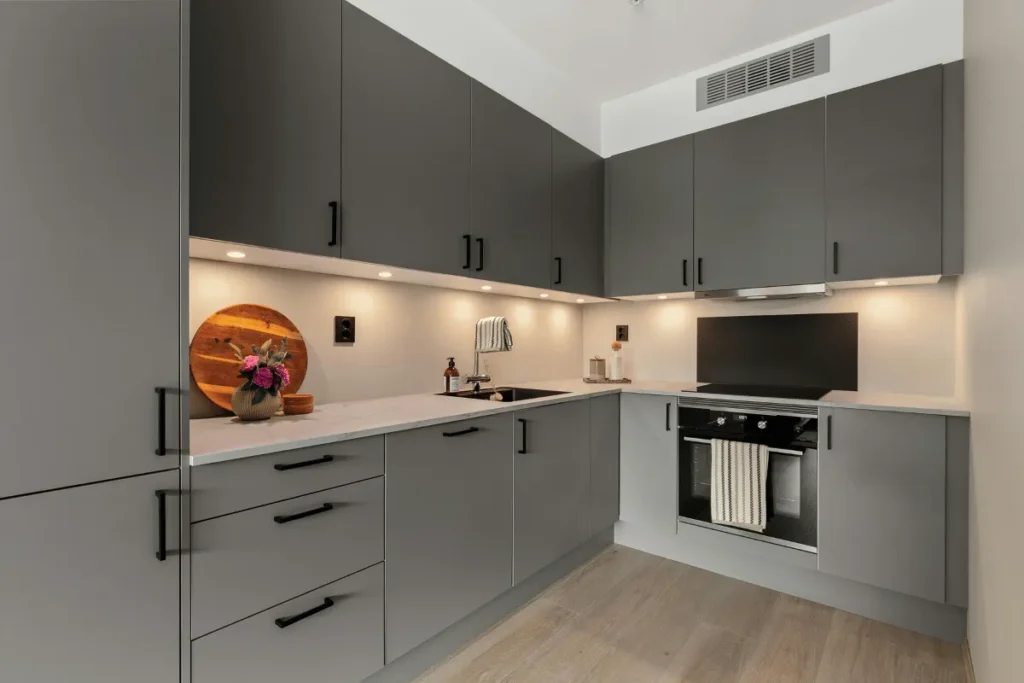
Flat cabinets use a single smooth panel with no frames, giving them a sleek and modern look. They fit many kitchen layouts because the clean surface supports minimal designs, two-tone color schemes, or handle-free systems. They are ideal for compact homes, open kitchens, and spaces that need simple surfaces for easy cleaning.
Flat panel cabinets continue to grow in popularity because they work well with many materials, finishes, and opening mechanisms. Their smooth door structure reduces dust buildup and supports new ergonomic systems like push-to-open and Gola profiles. Now let’s explore what makes them such a strong modern choice.
What Are Flat Panel Cabinets Made Of?
Flat cabinets are made from engineered boards or solid wood panels with smooth faces. The most common materials include MDF, plywood, and solid hardwood. Each one affects durability, painting quality, and long-term performance.
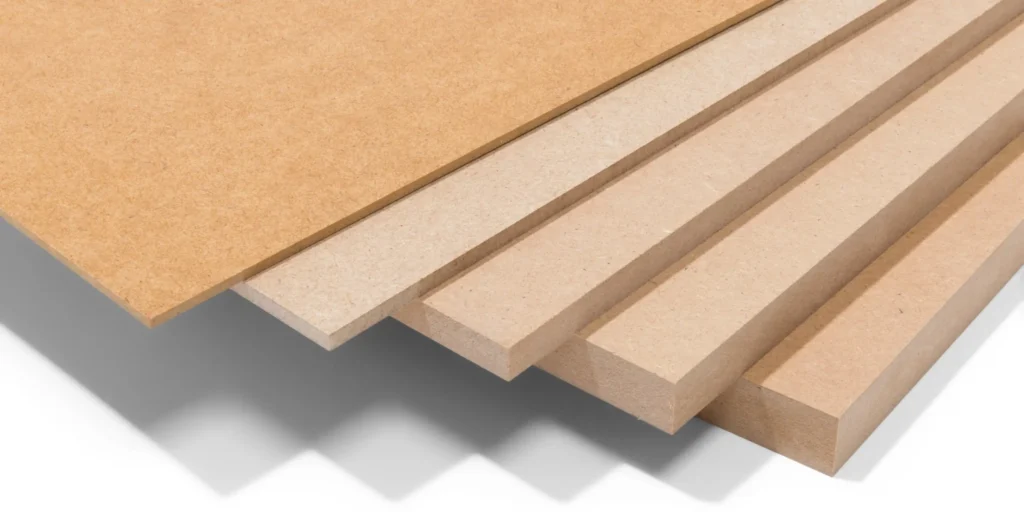
Flat cabinets rely on stable panel cores because a single slab shape shows imperfections easily. MDF gives a very smooth painted finish, plywood offers strength through cross-layer veneers, and solid wood delivers natural grain with higher price and slight movement in humidity. Engineered products such as MDF and plywood are popular because their uniform density reduces warping and minimizes maintenance. These panels are often used with surface treatments like melamine, thermofoil, or lacquer for a consistent appearance.
Here is what most homeowners do not know: the internal density and thickness of the board affect sound, stability, and long-term resistance to bending. A 19 mm panel is more stable than a 15 mm panel, especially for tall pantry doors.
Common Material Comparison
| Material | Strength | Paint Quality | Moisture Resistance | Cost Level |
| MDF | Medium | Excellent | Medium | Low |
| Plywood | High | Good | High | Medium |
| Solid Wood | High | Good (grain visible) | Medium | High |
Why Material Matters
The stability of engineered boards depends on internal fiber structure. MDF uses compressed wood fibers and resin, described in fiberboard. Plywood gains stability from alternating wood grain layers. Solid wood expands more because it follows natural moisture movement patterns described in woodworking. Choosing the right material reduces door twisting and ensures smooth operation with drawer runners or hinge mechanisms.
How does this matter for real kitchens? Flat surfaces show every flaw. Stronger materials keep the panel straight so the door aligns well with nearby cabinets. For a deeper explanation of how different cabinet structures compare, see our related guide on cabinet door construction.
Why Are Flat Panel Cabinets So Popular Today?
Flat cabinets are popular because they match modern interior styles, support handleless systems, and create a clean visual flow. Their simple shape fits many colors, including matte black, warm taupe, and natural wood veneer.
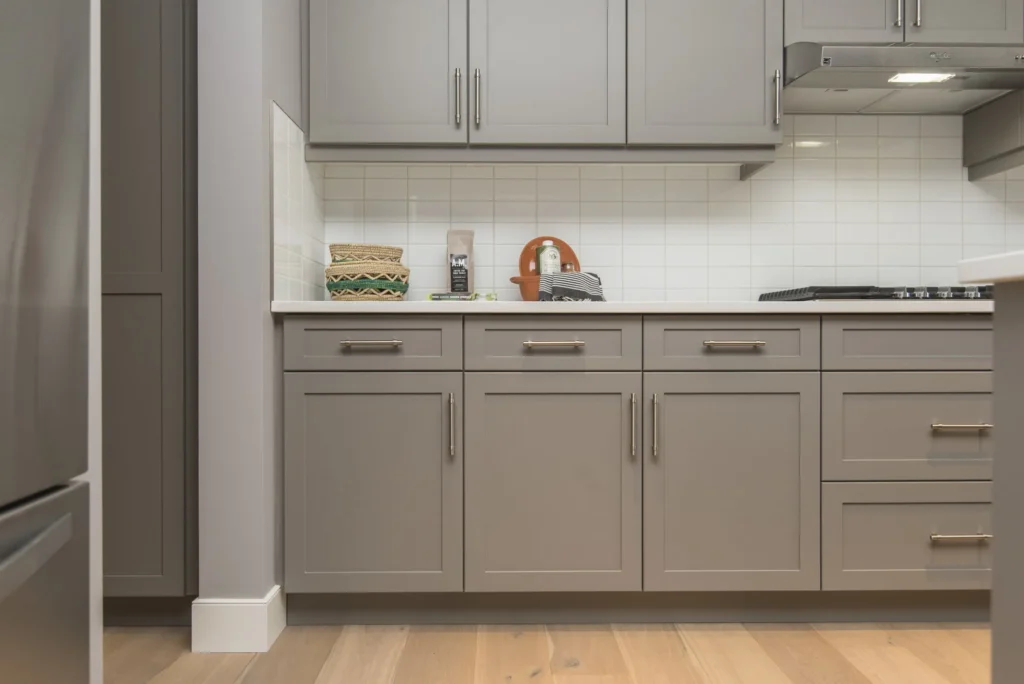
Flat cabinet doors pair well with modern ergonomic trends. Many homeowners choose push-to-open latches or soft-close hinges to remove handles fully. Others use aluminum profiles in Gola systems to keep the cabinet face smooth while maintaining easy grip access. These systems improve ergonomics, reduce wrist strain, and keep kitchens looking seamless.
Flat cabinets are also easier to clean. Without frames or grooves, they need only a simple wipe to remove grease or dust. This makes them ideal for busy homes or rental units that need fast maintenance.
Why Modern Homes Prefer Flat Panels
| Feature | Benefit |
| Clean Lines | No visual clutter |
| Smooth Surface | Easy to clean |
| Flexible Finishes | Works with matte, gloss, or wood veneer |
| Handleless Support | Works with push-to-open & Gola profiles |
| Wide Style Fit | Minimalist, Scandinavian, or industrial |
Flat cabinets also support many surface treatments such as melamine, high-gloss acrylic, or matte lacquer. These finishes improve color stability and scratch resistance. The combination of simple doors and advanced finishes makes flat cabinets a future-proof choice.
For a comparison between flat cabinets and framed styles, see our comparison of door opening mechanisms or our guide on Shaker vs flat panels.
How Do Flat Panel Cabinets Compare to Shaker Style?
Flat cabinets and Shaker cabinets look simple at first, but they use different construction methods and create different visual effects. Flat panels use a single smooth surface, while Shaker cabinets use a five-piece frame with a recessed center. These design differences affect durability, cleaning, cost, and the type of hardware or mechanism you can use.
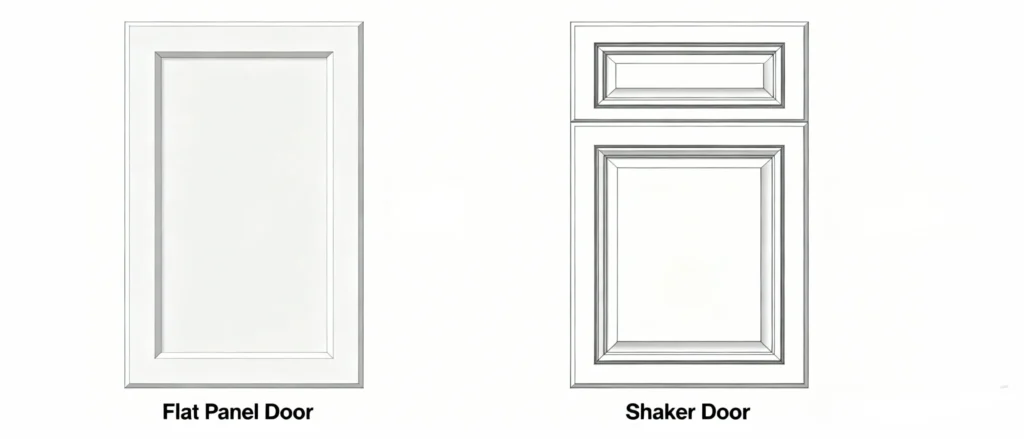
Flat cabinets support minimalist looks and sleek lines. They match modern, Scandinavian, and contemporary homes well. Shaker cabinets fit transitional or classic homes better because they add depth through their frame. Flat panels also work better with handleless systems like push-to-open and Gola rails because the surface stays uninterrupted. In contrast, Shaker frames sometimes limit where grips or profiles can sit.
Key Differences Between Flat and Shaker
| Feature | Flat Panel | Shaker |
| Surface | Smooth slab | Framed recessed panel |
| Cleaning | Very easy | Moderate |
| Cost | Low to medium | Medium |
| Mechanism Fit | Ideal for push-to-open | Works best with handles |
| Style | Modern | Transitional |
Here is what most homeowners do not know: flat cabinets maintain alignment better when using large doors or tall pantry systems. A solid slab spreads tension evenly across hinges and drawer runners. In Shaker doors, the frame and center panel move differently under humidity changes, which sometimes requires adjustment.
For more detailed comparison logic and structure, see our internal guide on Shaker vs flat panel cabinetry for deeper reading.
Which Kitchen Styles Work Best With Flat Cabinets?
Flat cabinets fit many kitchen styles because they do not fight for visual attention. The simple panel works with soft colors, bold tones, matte metals, and warm wood textures. They also pair well with modern appliances because the flat surface aligns with built-in ovens, refrigerators, and flush-mounted cooktops.
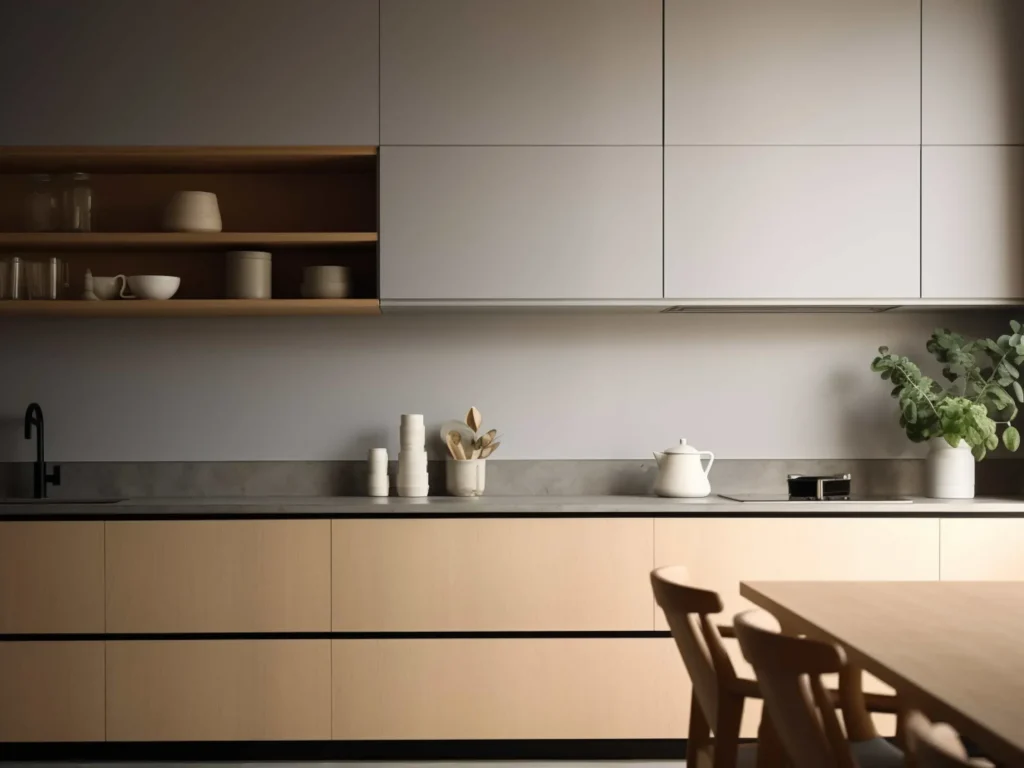
Minimalist and Scandinavian kitchens benefit most from flat cabinets. Smooth doors help create open lines and reduce visual noise. Industrial kitchens also use flat cabinets because matte black and dark wood textures fit well with concrete, steel, or stone surfaces. Two-tone kitchens with a wood lower cabinet and matte upper cabinet also use flat panels because they highlight contrast clearly.
Recommended Styles for Flat Panels
| Style | Why It Fits |
| Minimalist | Clean surfaces reduce noise |
| Scandinavian | Light woods match flat veneers |
| Industrial | Works with metal textures |
| Modern Luxury | Supports glossy lacquer finishes |
Flat panels also support ergonomic ideas from modern interior design. Because the surface is smooth, it is easier to add aluminum profile grips that align with human hand movement. This improves comfort when opening heavy drawers or large pantry doors.
Are Flat Panel Cabinets Easy to Clean and Maintain?
Flat cabinets are one of the easiest door styles to clean because dirt cannot hide in grooves or deep corners. A single flat surface allows oil and dust to wipe away quickly. This makes flat cabinets ideal for busy families, rental units, and compact kitchens where cleaning time is limited.
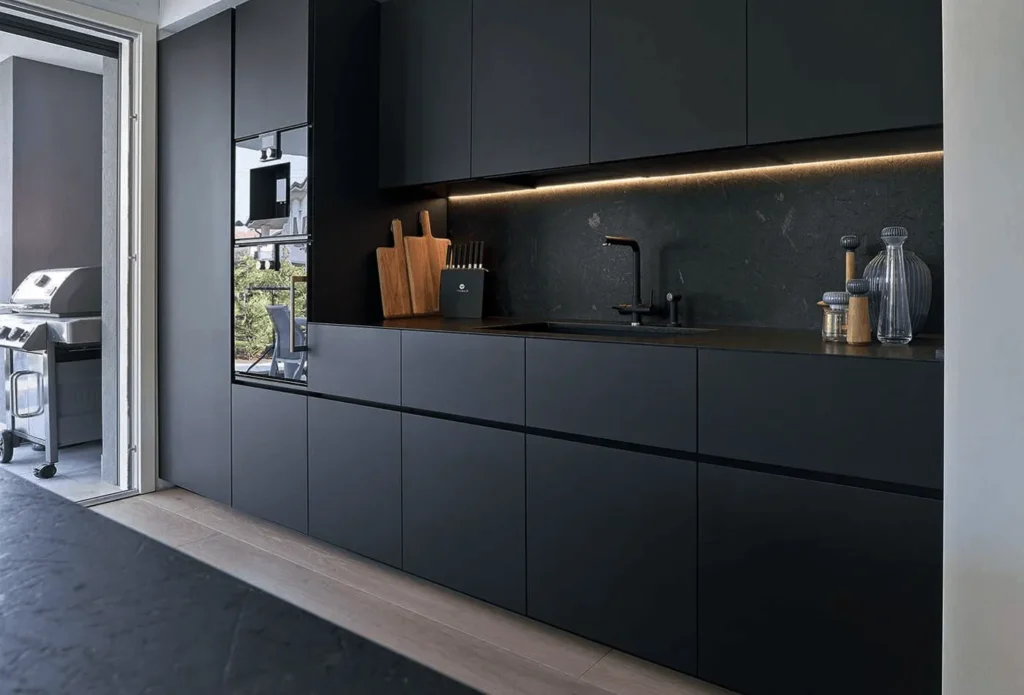
Flat panels also resist long-term wear when paired with durable surface treatments like melamine, matte lacquer, or acrylic. These finishes protect against light scratches and fingerprints. Matte finishes hide smudges well, while high-gloss surfaces reflect light and create a bright kitchen feel.
Maintenance Tips
| Action | Result |
| Wipe with microfiber cloth | Removes grease quickly |
| Avoid harsh chemicals | Protects surface treatment |
| Check hinge screws yearly | Ensures stable alignment |
Here is what most homeowners do not know: the hinge mechanism matters more than the door material when preventing sagging. A strong soft-close hinge holds the weight of large slabs better, especially for 19 mm thick panels. A proper hinge keeps the slab from leaning forward, which protects the alignment of nearby doors.
For deeper mechanism discussions, see our detailed explanation of soft-close runners and how they support modern cabinet systems.
How Much Do Flat Panel Cabinets Cost in 2025?
The price of flat cabinets varies by material, thickness, surface treatment, and hardware mechanism. In 2025, global costs range from $60 to $350 per door, depending on finish and construction type.
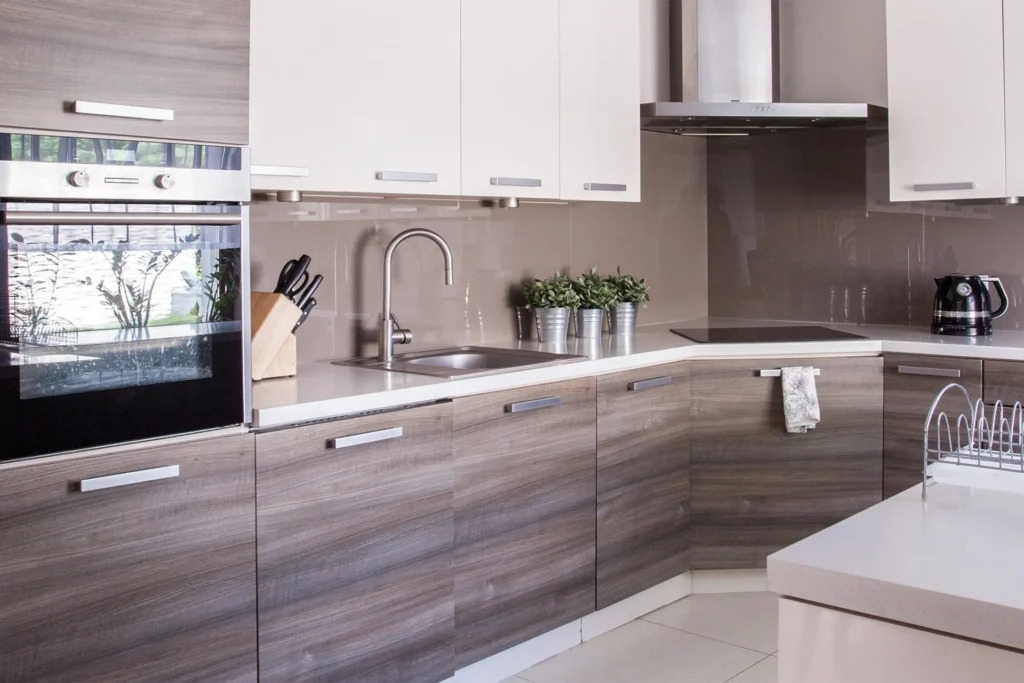
MDF doors with melamine finishes sit in the lower range. Painted MDF or plywood doors fall in the mid-range. Solid wood slab doors sit at the highest tier due to the natural grain and finishing process.
Price Breakdown Table
| Material | Cost Range | Notes |
| MDF + Melamine | $60–$90 | Good for rentals |
| MDF + Paint | $100–$150 | Smooth finish |
| Plywood + Paint | $120–$200 | Strong core |
| Solid Wood | $200–$350 | Premium look |
Surface treatments also influence cost. High-gloss acrylic or matte lacquer adds cost because they require extra polishing, coating, and curing time.
How does this matter for real homeowners? The price determines durability and finish quality. Cheaper melamine may chip faster, while plywood or thick MDF keeps doors stable over time. For broader cost comparison by door style, see our internal guide on cabinet style pricing.
What Finishes Look Best on Flat Panel Cabinets?
Flat cabinets work well with many finishes because the surface does not have grooves. Matte finishes create calm visuals, gloss finishes add brightness, and wood textures bring warmth. Each finish changes how the kitchen feels and how light reflects off the surface.
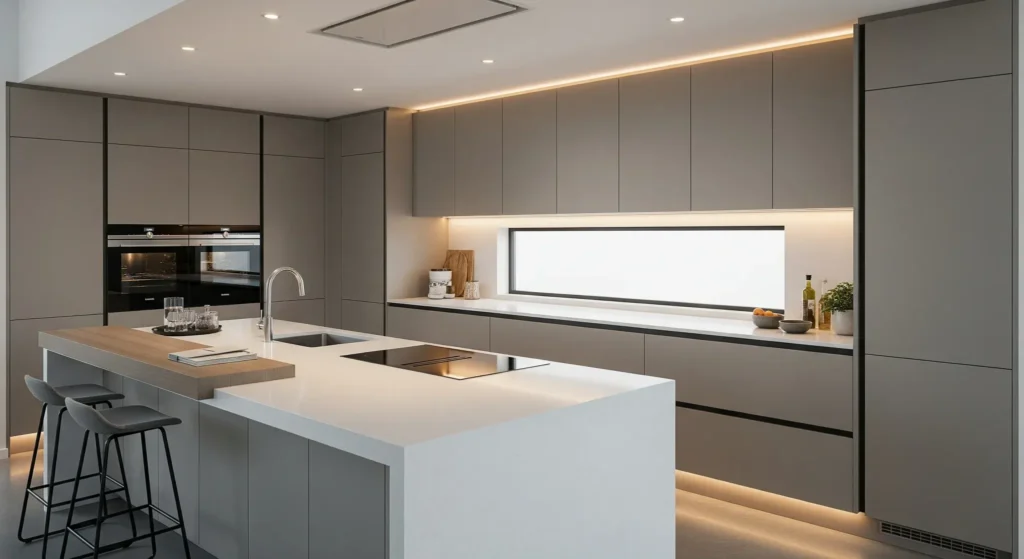
Common Finishes
| Finish | Effect | Best Use Case |
| Matte Lacquer | Soft, minimal look | Modern kitchens |
| High-Gloss Acrylic | Reflective, bright | Small kitchens |
| Wood Veneer | Natural, warm | Scandinavian homes |
| Thermofoil | Smooth, budget-friendly | Rental units |
Surface treatments like lacquer or acrylic involve specific coating processes described in surface finishing. This affects durability, scratch resistance, and color stability.
Here is what most homeowners do not know: gloss levels influence cleaning difficulty. High gloss shows fingerprints but reflects light well. Matte hides fingerprints but absorbs more light.
How Do You Choose the Right Flat Panel Cabinet Style?
Choosing flat cabinets depends on layout, lighting, surface finishes, and the mechanisms you want. Handleless systems like Gola rails or push-to-open latches create seamless lines. Standard handles create a more traditional look but still work well on flat doors.
Steps to Choose the Right Style
| Step | What to Consider |
| Lighting | Gloss vs matte |
| Layout | U-shaped, L-shaped, galley |
| Mechanism | Push-to-open, Gola, standard handles |
| Material | MDF, plywood, solid wood |
| Finish | Paint, veneer, acrylic |
How does this matter for real kitchens? The wrong finish can make a small kitchen darker, and the wrong mechanism can feel uncomfortable during daily cooking. Flat cabinets work best when finish, material, and door mechanism align with how you use your kitchen daily.
For mechanism comparison, see our internal link: comparison of door opening mechanisms.
Conclusion
Flat cabinets offer clean lines, simple surfaces, and flexible finishes that fit modern kitchens well. Their materials, colors, and mechanisms help them work in many layouts, making them a reliable and stylish choice for today’s homes.
Share Your Plan, Get Ideas
If you are planning a kitchen redesign or full-house upgrade, share your floor plan or style reference with our team. We can help you explore materials, finishes, and cabinet mechanisms that match your space, lighting, and workflow. You will receive practical design guidance and a coordinated layout suggestion that supports your budget and schedule.
想开始了吗?把户型图发给我们就行。