
Stuck between sleek slab and classic shaker? Choices feel risky. Mistakes cost money and time. This guide shows the clear path for your room, style, and budget.
Choose the door style that fits your space, light, and cleaning habits. Flat-panel (slab) brings a calm, modern look with simple cleaning. Shaker adds shadow lines and texture that hide daily wear. Pick based on material, finish, hardware, and layout—not hype.
You want quick, confident decisions. So we answer the real questions homeowners ask, then go deeper with rules that work. Use the checklists, mini-tables, and photos you can search to lock your plan.
What defines flat-panel cabinets?
Flat-panel doors are single-plane faces without framing rail details. They read quiet and modern. Edges can be square or slightly eased. The clean surface makes wiping easy and puts focus on counters, tile, and lighting rather than the doors themselves.

How they are built and why that matters
Construction basics. A slab door can be solid wood, veneered MDF, thermofoil, or laminate. Many use MDF or HDF for a smooth, stable paint surface. Veneer on MDF gives a real-wood face with good stability.
Look and lines. Since there is no inner rail, the style depends on color, sheen, wood grain, and hardware. Long pulls or edge pulls reinforce the linear look.
Maintenance. One flat surface means fewer dust lines. Smudges show more on high gloss and deep colors, not because the door is weak, but because light reflects differently.
Quick comparison
| Feature | Flat-Panel (Slab) | Shaker |
| Visual effect | Minimal, quiet | Framed, classic shadows |
| Cleaning | Fast, few dust ledges | Slight grooves catch dust |
| Style range | Modern to warm Scandinavian | Transitional to classic |
| “Wow” comes from | Finish, grain, hardware | Rail profile, paint, glass options |
Use when: you want calm surfaces, fast cleanup, or a modern shell that lets stone and tile stand out.
Are shaker cabinets more durable?
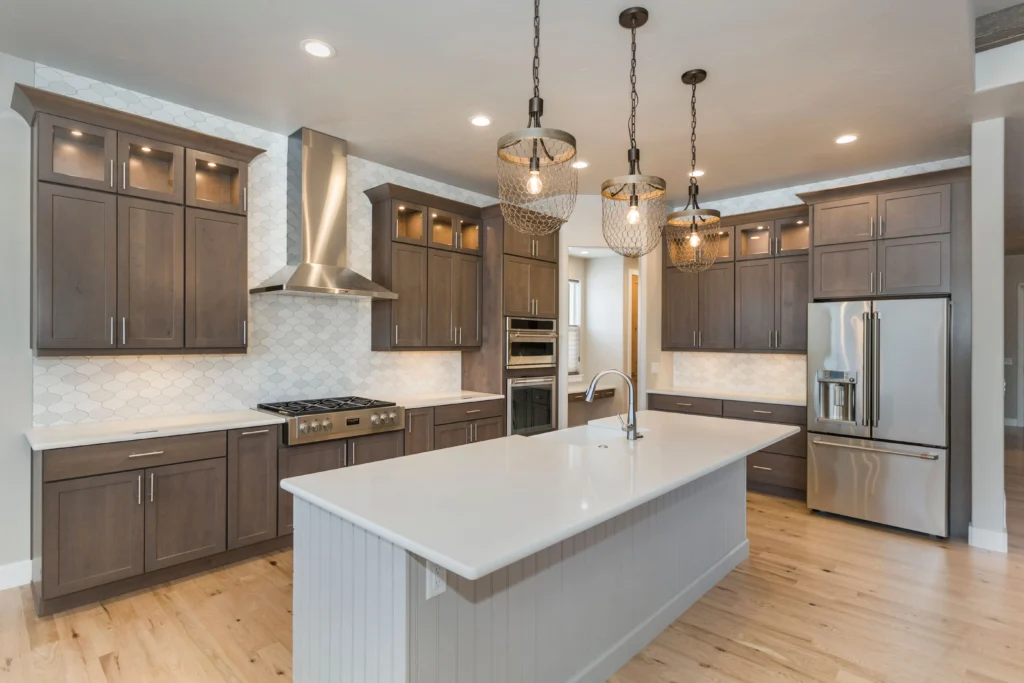
Durability depends more on core, finish, and hardware than the door style alone. A shaker frame is not automatically stronger. A well-made slab with quality hinges can match or exceed a budget shaker in daily life.
What actually fails first
- Finish wear: Grease, steam, and UV break down paint or foil before wood fails.
- Hinges and screws: Heavy doors on weak boxes or short screws sag.
- Water exposure: Sink bases and dishwasher ends suffer if edges are raw.
Risk and fix
| Risk factor | Why it matters | What helps |
| Cheap particleboard boxes | Swell if wet, poor screw hold | Plywood boxes, sealed edges |
| Low-grade hinges | Misalignment, door sag | 6-way adjustable soft-close hinges |
| Unsealed cut edges | Moisture wicks in | Edge banding; paint all sides |
| High-gloss dark paint | Shows hairline scratches | Satin or matte topcoat; microfiber care |
Bottom line: pick a sturdy box, sealed edges, and good hardware. Either door style can then live a long, hard life.
Which style suits small kitchens?
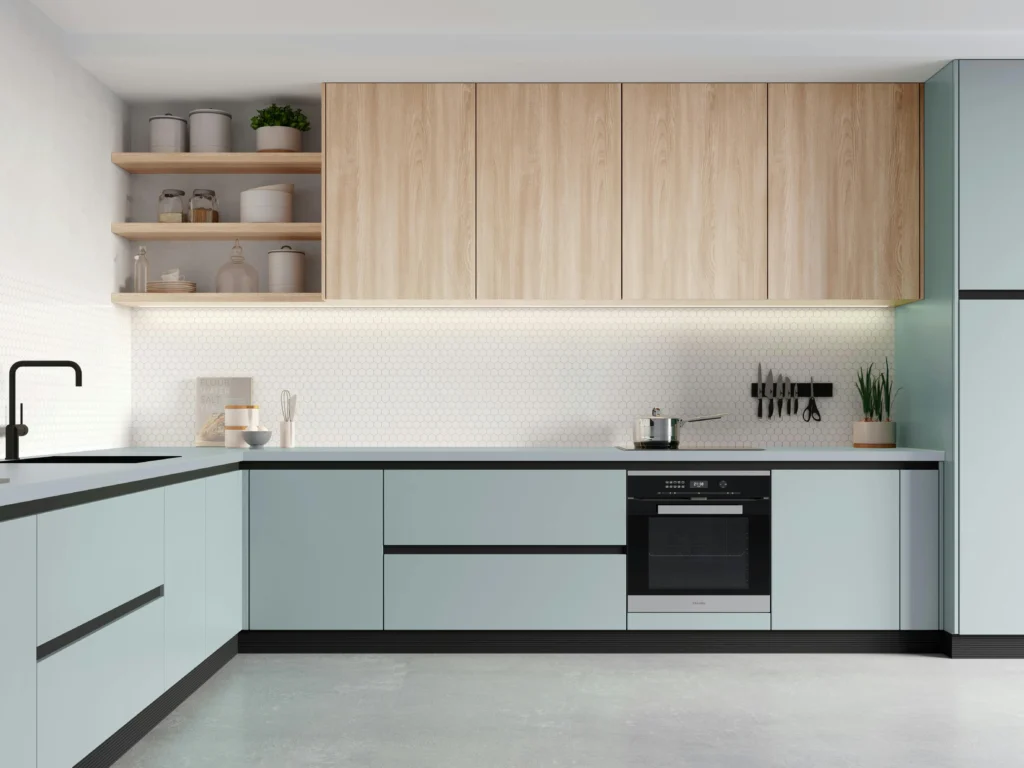
Small rooms need simple lines and light. Flat-panel usually feels larger because it reflects light evenly and has no grooves. Shaker still works if rails stay slim and colors stay soft.
Scale, light, and sightlines
Scale. In tight spaces, visual noise grows fast. Slab doors with slim edge pulls reduce “busyness.” If you love shaker, pick narrow rails to calm the pattern.
Light. Pale matte finishes bounce light without glare. High gloss bounces more but shows fingerprints. Under-cabinet lighting helps both styles look crisp.
Sightlines. Use full-height doors and vertical grain to pull the eye up. Match fillers and panels to doors so the wall reads as one plane.
Layout moves that help any style
- Carry cabinets to the ceiling to avoid a dust shelf.
- Use shallow uppers (12–13 in) on tight aisles.
- Choose drawers over doors below the counter for easy reach.
- Keep hardware consistent and slim to reduce visual clutter.
Are flat-panel cabinets cheaper?
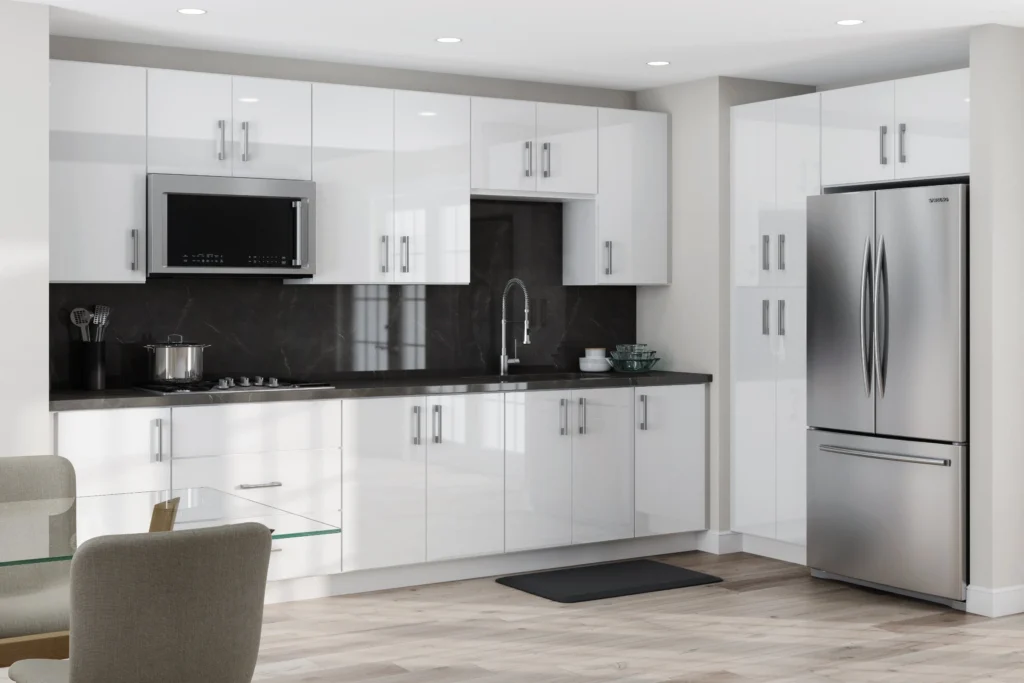
Often, yes—but not always. Slab doors are simpler to make, so entry-level sets can cost less. High-end slabs with premium veneer or high-gloss lacquer can equal or exceed the price of painted shaker.
Cost drivers you control
| Component | Lower cost choices | Higher cost choices |
| Door construction | Thermofoil, basic laminate | Book-matched veneer, acrylic high-gloss |
| Finish | Satin paint, textured melamine | High-gloss lacquer, custom stain |
| Box material | Particleboard with edge banding | Plywood with solid-wood fronts |
| Hardware | Standard hinges, simple pulls | Soft-close everywhere, integrated channels |
Install and paint. Labor changes the math. Painting shaker takes more time because paint must flow into rail grooves. Slab paints faster. On the flip side, replacing only doors can be cheaper with shaker if you reuse frames in partial refacing.
Takeaway: compare total system cost—doors, boxes, finish, and install—not only the brochure price.
Which materials work for flat-panel?
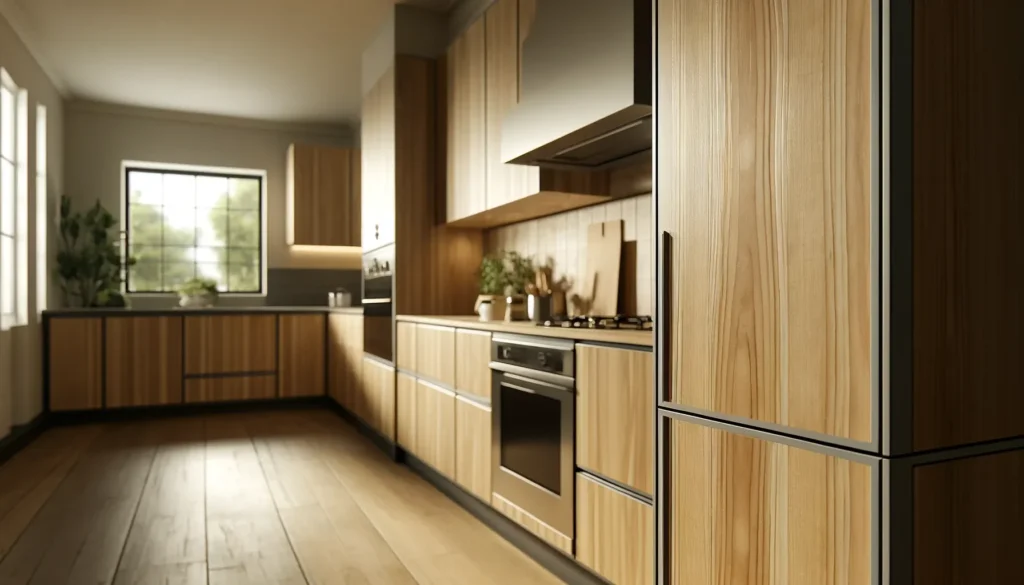
Choose stable cores and finishes that fit your use. MDF or HDF gives the smoothest paint face. Veneered MDF delivers real wood grain with a stable core. Plywood boxes add strength and screw hold.
Material quick guide
| Material | Where it shines | Watch-outs |
| MDF/HDF (painted) | Smooth surface, stable, value | Seal all edges; avoid heavy water |
| Wood veneer on MDF | Warm grain with stability | Protect from long UV exposure |
| Laminate/melamine | Tough, wipeable, many textures | Edge banding quality matters |
| Solid wood slab | Rich look, refinishable | Moves with humidity; heavier |
| Plywood box | Strong, resists sag | Cost; still needs edge sealing |
Build rules that keep doors flat
- Paint or seal all sides to balance moisture.
- Use thicker cores for tall pantry doors.
- Add stiles or an inner frame for very wide panels if needed.
- Specify quality edge banding on laminates to stop chipping.
Can you mix shaker and slab?
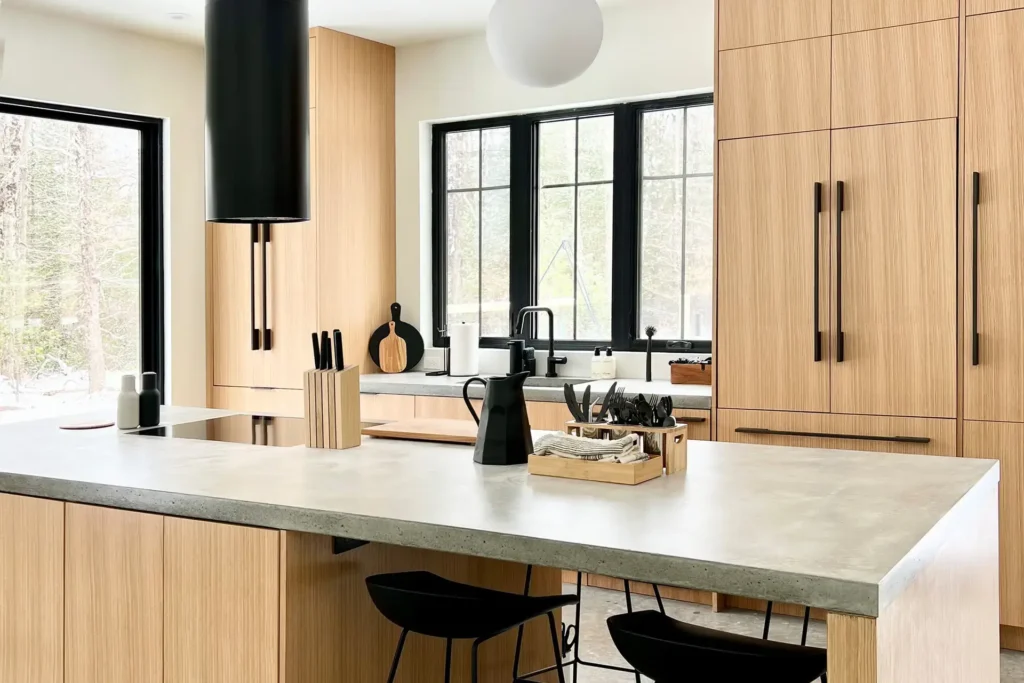
Yes. Mixing styles can zone a kitchen and add depth. The trick is to keep one clear hero and make the other style support it with matching color, sheen, and hardware language.
Simple mix formulas
- Slab perimeter + shaker island. The island becomes the focal point without busy walls.
- Shaker uppers + slab bases. Bases read calm while uppers add texture at eye level.
- Glass in a few shaker doors. Breaks long runs and ties classic notes to modern lines.
Guardrails
- Keep colors and sheens the same or in a planned two-tone scheme.
- Use one hardware shape across both styles to avoid chaos.
- Limit the secondary style to about 30–40% of doors so the room still feels intentional.
Which finish hides fingerprints best?
Matte and satin finishes hide prints better than high gloss. Medium-tone woodgrain also hides smudges and micro-scratches. High-gloss dark colors show the most, but they clean to a mirror shine if you have the patience.

Visibility cheat sheet
| Finish | Fingerprint visibility | Cleaning notes |
| Matte paint | Low | Wipe with microfiber; avoid abrasives |
| Satin/eggshell paint | Low–medium | Balance between wipeability and sheen |
| Textured melamine/laminate | Low | Very durable; seams must be good |
| Natural wood with light stain | Medium | Grain masks wear; use gentle cleaner |
| High-gloss lacquer/acrylic | High | Shows prints; stunning when spotless |
Practical tips
- Add pulls or edge rails so hands touch metal, not the door face.
- Place the trash and dishwasher near the sink to reduce wet handprints on far cabinets.
- Keep a microfiber cloth in a nearby drawer for fast wipe-downs.
Are handleless cabinets practical?
Handleless systems look seamless and modern. They work well when designed with care. The main options are edge pulls, J-pull profiles, continuous rail channels, and push-to-open hardware. Each changes grip, cleaning, and cost.

Hardware choices at a glance
| Type | How it works | Pros | Cons |
| Edge pull | Thin metal pull on top/side | Cheap, retrofit friendly | Visible line, can collect grease |
| J-pull door | Built-in finger scoop | Clean look, no extra parts | Harder to repaint; crumbs in scoop |
| Rail channel | Aluminum rail behind doors | True handleless line | Costs more; clean the rail |
| Push-to-open | Magnetic or spring latches | No visible pull, easy clean | Doors can pop with bumps; alignment needs care |
Use case tips. Place handleless doors away from heavy traffic corners to avoid accidental bumps. For fridges and dishwashers, prefer solid pulls or strong J-pulls for leverage.
Which increases kitchen resale value?
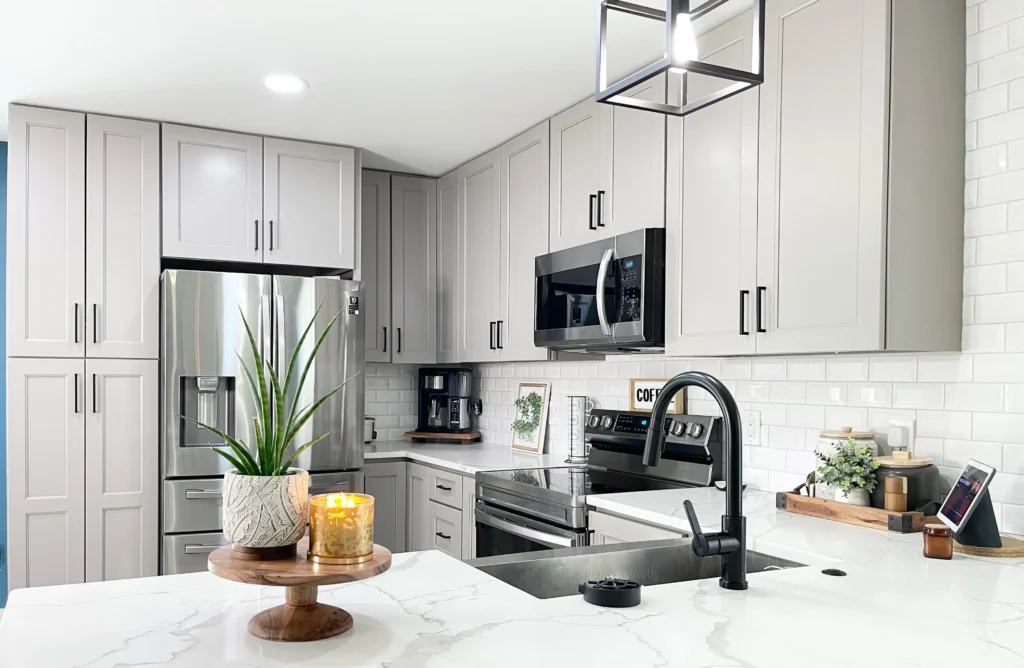
Both styles can help resale. Shaker reads “safe and classic.” Flat-panel speaks to modern buyers and open-plan spaces. What matters most is build quality, a clean install, neutral color, and a layout that feels easy to use.
Value principles that outlast trends
- Keep colors timeless: white, warm putty, sand, light gray, or light wood.
- Use soft-close hinges and slides; buyers notice the feel.
- Add lighting under uppers to make stone and backsplashes glow.
- Avoid awkward fillers; use panels and spacers for a fitted look.
- Finish end panels like doors so runs look built-in.
Should cabinets go to the ceiling?
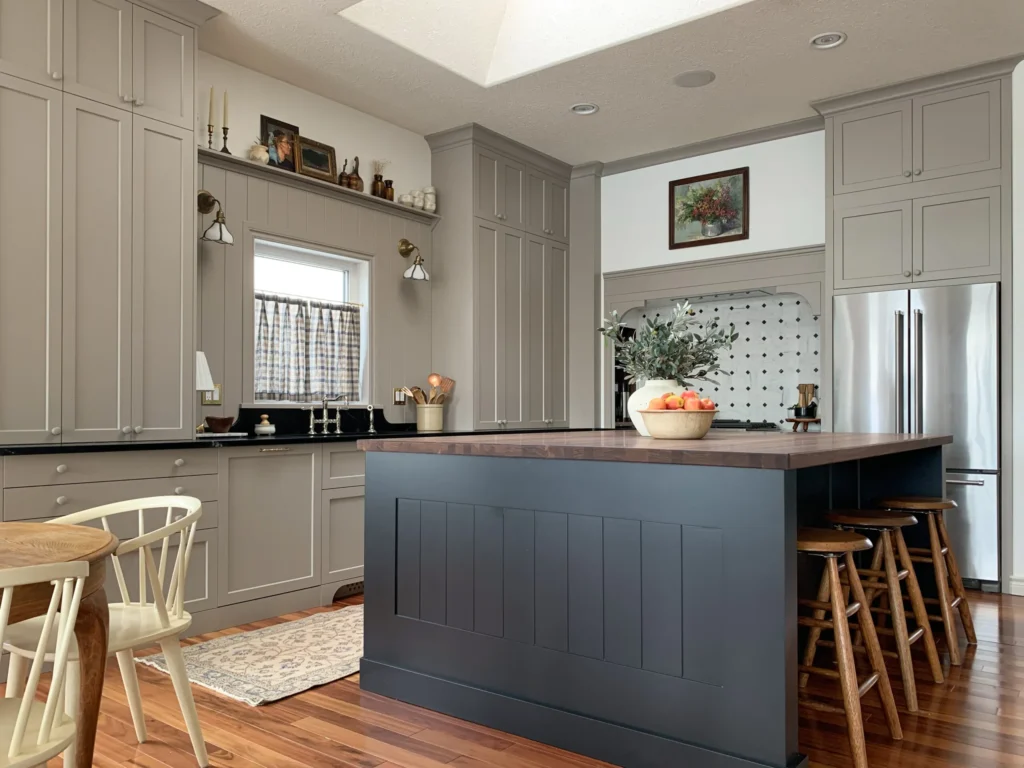
Taking cabinets to the ceiling adds storage and stops dust ledges. It also makes the room feel taller. Both slab and shaker handle the height well. Plan for crown or a clean reveal and keep service access clear.
Pros, cons, and planning
| Aspect | To-ceiling | Standard height |
| Storage | Maximum, seasonal items up high | Easier reach; less step-stool use |
| Look | Built-in, premium | Casual; gap collects dust |
| Install | More panels, careful scribing | Simpler; cheaper |
| Venting/valves | Must plan access | Easier access |
Design notes
- On 9–10 ft rooms, use stacked uppers with small top doors.
- Keep a removable panel near any shutoff or outlet you may need to reach.
- If ceilings are wavy, use a small crown or a scribe strip for a tight finish.
Conclusion
Match style to the room you have. Pick stable materials, smart finishes, and dependable hardware. Then install with care. The right choices make daily life easier for years.
FAQ
Are Shaker cabinets going out of style?
No. Shaker stays popular because it looks simple and classic. It adapts to many colors and hardware. It works in modern, transitional, and traditional spaces.
Are flat-panel cabinets considered modern or contemporary?
Flat-panel is a hallmark of modern and contemporary design. The smooth face and straight lines create a calm backdrop that lets stone, tile, and lighting stand out.
Can you paint laminate or thermofoil cabinet doors?
You can, but prep matters. Use a bonding primer made for slick surfaces. Expect more care long-term than with solid wood or MDF paint-grade doors.
What cabinet color is easiest to maintain?
Medium tones in matte or satin hide fingerprints and crumbs best. Pure white shows smudges. Very dark and very glossy colors show prints and micro-scratches.
Are inset cabinets worth the extra cost?
Inset looks refined because doors sit flush in the frame. It costs more and needs tight humidity control. Choose it when precision and a classic look are top goals.
Do soft-close hinges work with any door style?
Yes. Soft-close hinges pair with slab and shaker doors. Make sure the hinge matches your overlay or inset type and that boxes are strong enough to hold settings.
Can you add hardware later to handleless cabinets?
Often yes. You can add knobs or pulls to slab and shaker doors. For J-pull or rail systems, retrofits are possible but may require drilling through the profile.
What paint finish is best for kitchen cabinets?
Satin or semi-matte balances wipeability and glare. Gloss shows more prints and surface flaws. Use a hard, cabinet-rated enamel for durability on doors and drawers.