
A villa or hotel needs doors that look good, last long, and install fast. DIY tricks will not scale. Factory specs keep quality stable, costs clear, and timelines safe.
Cabinet doors for projects are made with stable cores, precise machining, and proven finishes. Good specs cover material, thickness, drilling, finish, color control, QC, and packaging. Clear data in, repeatable parts out. That is how large orders stay on time.
This guide turns “how to make cabinet doors” into what buyers, designers, and contractors need. You get choices, numbers, and checks. Use this as a worksheet when you request quotes or approve samples.
Which cabinet door constructions suit villas and hotels?
In busy spaces, construction must handle use, cleaners, and heat. Frame-and-panel, slab, and five-piece styles can all work when specs match the site.
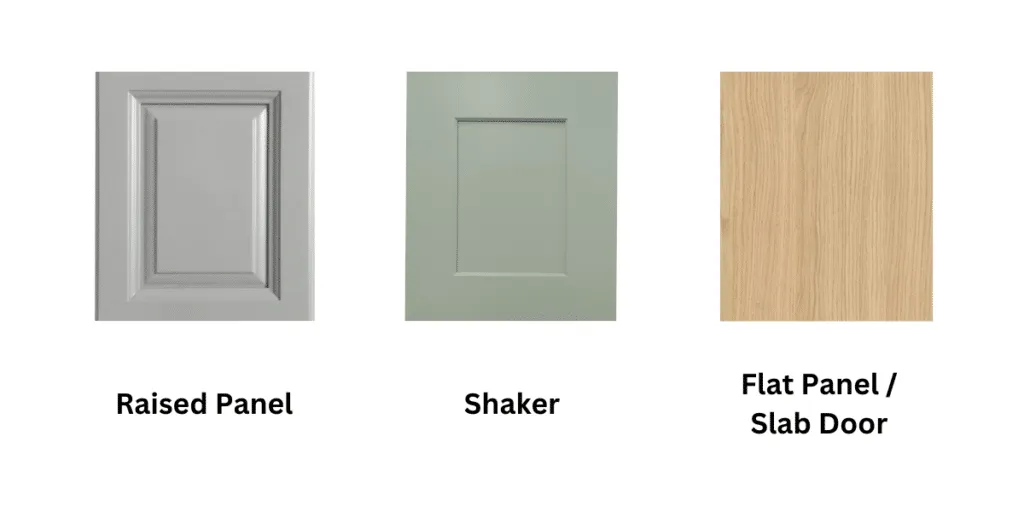
Cabinet doors for hospitality work when construction is simple, stable, and easy to clean. Choose designs with fewer traps for grease and dust, stable cores for climate changes, and edges that handle carts and luggage. Match the construction to the traffic level and cleaning routine.
What to compare
- Traffic and cleaning: Frequent wipe-downs favor flatter profiles.
- Style rules: Villas often want wood grain; hotels often want clean lines.
- Lifecycle: Materials that allow easy touch-up reduce downtime.
Quick comparison
| Construction | Look | Cleaning | Stability | Notes |
| Slab (flat) | Modern | Very easy | High with MDF/HDF core | Best where cleaning is frequent |
| Shaker (5-piece) | Timeless | Moderate | High with engineered core | Slight groove can hold dust |
| Raised panel | Traditional | Harder | Good with stable core | Use sparingly in heavy-use zones |
Checklist: define room type, use level, cleaning method, and target style.
Solid wood, MDF, or HDF—which core lasts longer?
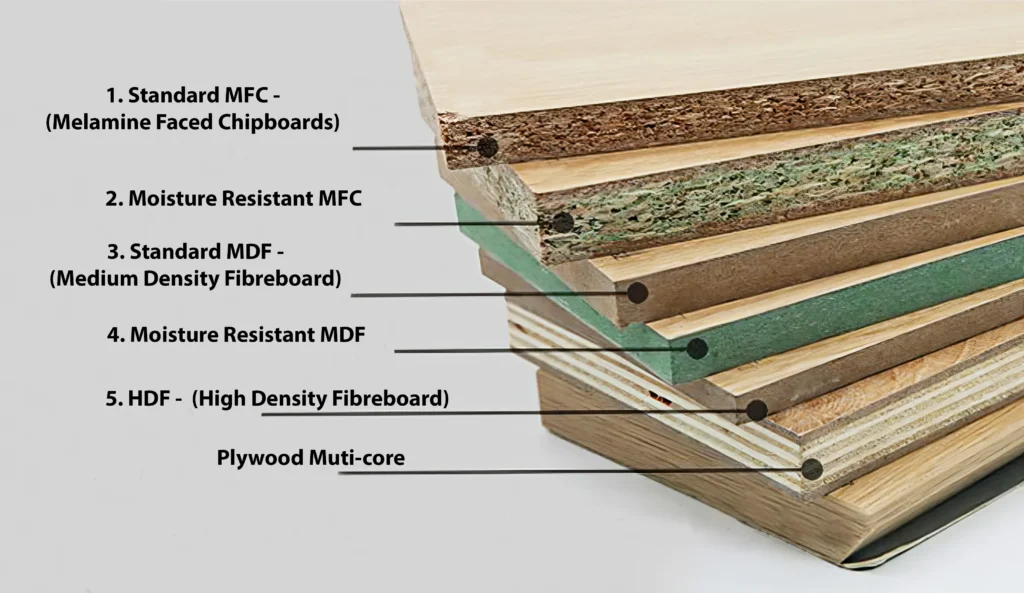
Core choice sets stability, finish quality, and cost. Solid wood moves with humidity. MDF is stable and smooth under paint. HDF is denser and tougher at edges.
For long service, pick the core by finish and climate. Painted doors favor MDF or HDF for a smooth face and crisp edges. Stained doors can use veneer over stable core to show grain. In humid areas, use sealed edges and moisture-safe glues. Stabilize the core and the finish will last.
Pros and cons table
| Core | Best For | Strengths | Risks | Controls |
| Solid wood | Stain, classic villas | Natural grain | Warping, joint cracks | Narrow stiles/rails, correct MC, seal all sides |
| MDF | Painted doors | Smooth paint, stable | Edge crush if unprotected | Hinge area reinforcements, quality edge sealing |
| HDF | Painted, high wear | Dense edges, impact | Heavier, tool wear | Proper hinges, sharp tooling |
Key spec notes
- Moisture content: Keep wood 6–10% before machining.
- Edge durability: HDF holds profiles and resists chipping better.
- Repairs: MDF/HDF patch and repaint cleanly in the field.
What door thickness prevents warping in cabinetry?
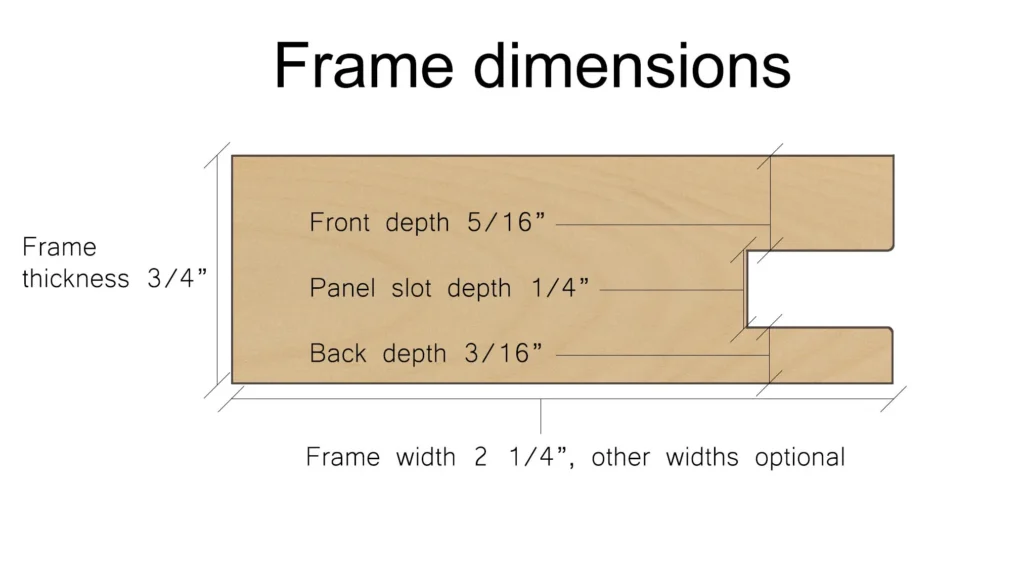
Too thin and doors warp. Too thick and weight stresses hinges. Most projects choose ~19 mm (3/4″) with adjustments for size and material.
For taller or wider doors, move to thicker cores or add stabilizers. Balance thickness, size, and hinge count. Control warp risk with proper layup, sealed edges, and balanced coatings on both faces and all edges.
Recommended ranges
| Door Size (H × W) | MDF/HDF | Veneer on core | Solid wood |
| ≤ 700 × 400 mm | 18–19 mm | 18–19 mm | 20 mm |
| ≤ 900 × 500 mm | 19–21 mm | 19–21 mm | 20–22 mm |
| ≤ 1200 × 600 mm | 21–22 mm | 21–22 mm | 22–24 mm |
Controls that matter
- Balanced finish: Same number of coats both sides.
- Back relief: Light back-grooves can reduce cupping on solid wood.
- Hinges: Add a third hinge on doors over ~900 mm tall.
Shaker, slab, or raised panel—which meets specs?
Specs start with use and cleaning. Slab cleans fastest. Shaker balances style and maintenance. Raised panels add detail but need careful cleaning.
Pick one style for the whole space to keep a consistent look. Use slab near heavy cooking. Use Shaker in living or guest areas. Keep edges simple so staff can clean fast and guests see neat lines.
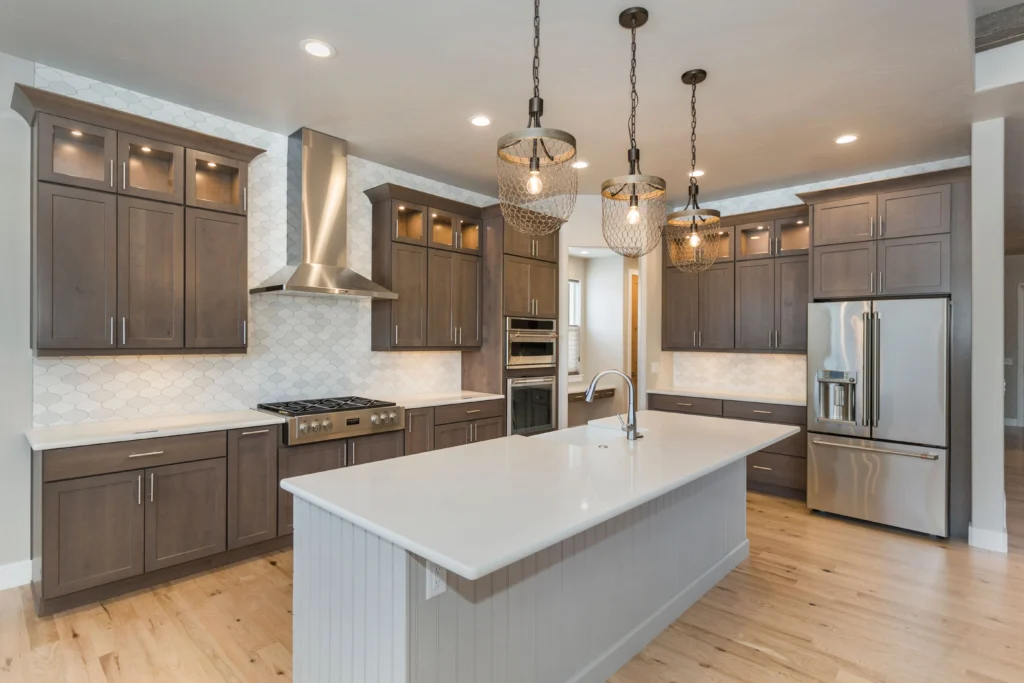
Style by zone
- Back-of-house kitchens: slab or minimal-profile Shaker.
- Guest kitchens or villas: Shaker for timeless look.
- Feature spaces: limited raised panel, sealed profiles.
Spec tips
- Minimum groove depth on Shaker rails to reduce dust traps.
- Edge radius ≥ 1 mm on high-traffic areas to cut chipping.
- Color and sheen aligned with countertop and wall finishes.
How is veneer layup controlled for color matching?
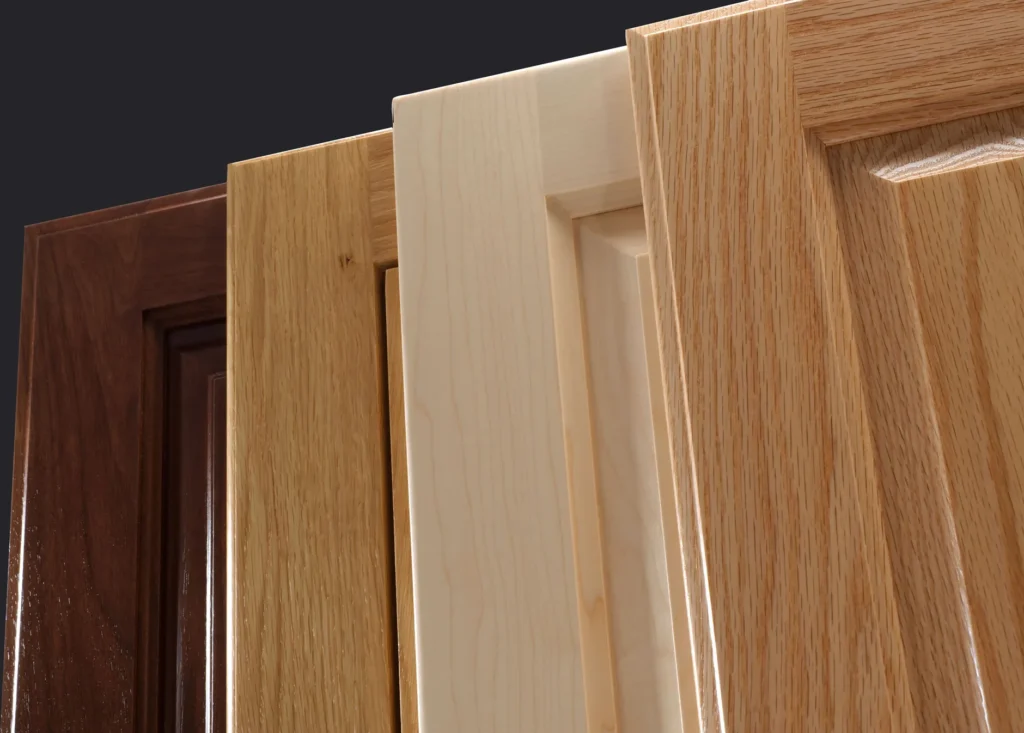
Veneer shows natural grain but needs strict matching. Poor layup causes color jumps across doors. Good layup looks calm and premium.
Control begins with the log. Sequence the leaves, choose match type, and keep a master color panel. Use the same stain system, same spray settings, and measured dry film build. Track batches so replacements match later.

Match types
- Slip match: even tone, minimal V-pattern.
- Book match: mirrored grain, more figure.
- Random match: rustic look, less uniform.
Color control table
| Step | Control | Outcome |
| Leaf sequencing | Keep door sets in sequence | Doors match side by side |
| Sample approval | Master panel signed | Target tone stays stable |
| Batch records | Stain and topcoat codes logged | Re-orders match later |
What CNC drilling matches 35mm hinge cups?
Most concealed hinges use a 35 mm cup. The bore is clean, consistent depth, and set back from the edge by a small distance. Holes for plates follow a modular pattern.
Give the factory your hinge brand or a drilling drawing. Confirm cup depth, edge setback, and hole spacing for mounting plates. Ask for a sample door drilled and fitted to check reveal and overlay before mass production.

Common items to specify
- Cup diameter: 35 mm.
- Cup depth: usually ~12–13 mm.
- Edge setback (“K”): often ~3–5 mm from edge to cup.
Helpful table
| Item | Typical Range | Why It Matters |
| Cup depth | 12–13 mm | Prevents blow-through; ensures clearance |
| Edge setback | 3–5 mm | Controls reveal; prevents weak edge |
| Plate holes | 32 mm system | Quick jigging on site |
Always confirm with the hinge brand’s sheet for exact numbers.
Which finishes resist humidity, heat, and cleaners?
Finishes must fight steam, heat, oils, and daily chemicals. Good systems include UV-cured coatings, 2K polyurethane, or high-grade melamine/laminate surfaces.
Pick finishes by zone. Kitchens need higher chemical and heat resistance. Guest areas can use warmer sheens. Demand clear test results: stain resistance, heat resistance, and abrasion. Specify sheen, color tolerance, and minimum film build.

Finish comparison
| Finish Type | Strengths | Considerations |
| UV-cured | Fast cure, hard surface | Needs flat lines, color matching skill |
| 2K Polyurethane | Strong chemical/heat resistance | Longer cure, skilled mixing |
| Melamine/Laminate | Very durable, easy clean | Edge sealing and color edges matter |
| Thermofoil | Seamless face | Heat edges need protection |
Spec tips
- Sheen: 10–30 gloss hides wear; high gloss shows defects.
- Edges: seal fully; add micro-radius for durability.
- Tests: request standard stain and heat test summaries.
How are cabinet doors packaged for export and safety?
Doors must arrive flat, clean, and labeled. Good packaging saves hours on site. Poor packaging causes chips, rubs, and missing parts.
Use layered protection, clear labels, and stable pallets. Keep moisture out. Keep corners safe. Mark boxes by room and unit. Add handling icons. Ask for photos of packed pallets before loading.

Export pack table
| Layer | Material | Purpose |
| Door wrap | Foam + film | Scratch and dust protection |
| Edge guards | Cardboard/PE | Impact at edges |
| Box | Heavy carton | Unit-level kitting |
| Pallet | Fumigated wood | Fork-safe, stable stacking |
| Desiccant | Bags inside | Moisture control |
| Labels | Room/position | Fast site allocation |
Extra controls
- Drop/tilt indicators on cartons.
- Photo log of every pallet.
- Box weight limits for one-person carry.
What lead time and expedited production options are available?
Time matters. Lead time depends on style, finish, and order size. Clear drawings and fast approvals speed everything.
Ask for a timeline by phase: drawings, sample, production, finishing, packing, shipping. Ask about rush lanes for simple styles or standard colors. Keep one approved sample set to avoid rework. Plan buffer around shipping and customs.
Typical flow
- Drawings and sample: approval triggers production.
- Production and finish: core work then coatings.
- Pack and ship: book freight early.
Ways to speed up
- Use standard colors and hardware.
- Approve samples quickly.
- Batch similar units to reduce changeovers.
Can you preinstall hinges and label doors by room?
Pre-install saves time on site. Labeling by room cuts mistakes. It also makes punch lists easier.
Confirm hinge type, plate height, and overlay before mounting. Ask for protective caps on cups. Use clear room and position labels. Request a door schedule sheet in each pallet. Balance shipping volume against on-site labor savings.

Options to consider
- Hinges mounted on doors only or doors + frames.
- Labels: room, unit, position (e.g., G-201, Kitchen, D-03).
- Kitting: group by room to speed installation.
On-site benefits
- Faster hanging and alignment.
- Fewer mix-ups between similar sizes.
- Easier replacement tracking during punch.
Conclusion
Set clear specs. Approve smart samples. Control drilling, finish, and packaging. Your cabinet doors will look right, install fast, and last long.
FAQ
How do you measure for replacement cabinet doors?
Measure opening width and height, decide overlay or inset, then add or subtract the correct reveal. Confirm hinge type, cup position, and plate height before ordering.
What is the difference between full overlay, partial overlay, and inset?
Full overlay covers most of the frame. Partial overlay leaves more face frame visible. Inset sits flush inside the frame with tight reveals and precise drilling.
Can soft-close hinges be added to existing doors?
Yes, if doors have 35 mm cups and the cabinet accepts compatible plates. Choose hinges with the right overlay and angle. Minor adjustments may be needed on site.
How do you choose the right sheen for kitchens?
Low to mid-sheen hides fingerprints and small scratches. High gloss shows defects and needs careful cleaning. Match sheen to lighting and countertop reflectance.
Can laminate or thermofoil doors be repainted?
It is possible but tricky. Use strong adhesion primers and compatible topcoats. Factory re-lamination or full replacement often gives better, longer-lasting results.
How much clearance do you leave between double doors?
A small gap, often around 2 mm, prevents binding and paint rub. Confirm the hinge brand’s recommended reveal and adjust plates to keep lines straight.
Do concealed hinges fit thick doors?
Many hinges support thicker doors with specific cup depths and arm designs. Check the hinge data sheet, as thicker doors may need a different boring pattern.
What is the standard gap for inset doors?
Inset doors often use about 2 mm reveals on all sides. Keep doors flat and frames square. Accurate CNC drilling and careful hinge adjustment hold the line.