Too many choices, inclement weather, and limited time. What you need are pieces that are both beautiful and durable, and easy to clean. As China’s leading one-stop building materials supplier, George Mulanbuild guide will help you confidently select, coordinate, and care for your clothing.
You want clear guidance, not buzzwords. Below are short takeaways first, then deeper steps with checklists, tables, and simple tests you can try at home. Use what fits your yard, balcony, or garden.
Most outdoor spaces need durable materials, breathable cushions, and a simple cleaning rhythm. Choose repairable frames and UV-stable fabrics. Plan zones for dining, lounging, and fire features with safe clearances. Keep covers dry before storage.
You will find the “why” and the “how” for each decision. Read a section, take one action, and see results this season.
Materials That Last in Real Weather
Cheap frames wobble. Coatings flake. You keep replacing. Choose materials that can take sun, rain, and temperature swings. The right base saves you money and stress.
Pick frames and weaves that age well: solid teak, powder-coated aluminum, and all-weather wicker made from high-density polyethylene (HDPE). These resist rot and rust and clean with simple soaps. Hardware should be stainless or corrosion-resistant.
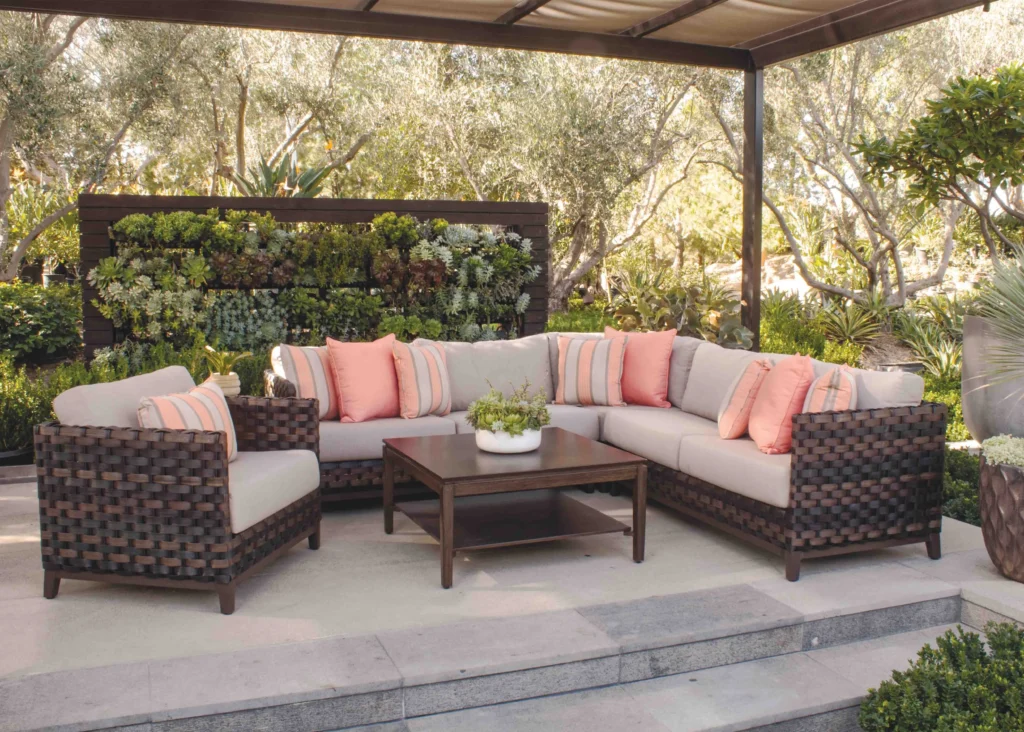
Teak is a dense, oily hardwood that resists moisture and pests. It lives outside for years and turns a silver patina if left unfinished. Choose grade A or well-seasoned stock for stability; check joinery (mortise-and-tenon or through-bolts) for strength. Aluminum does not rust and is light to move. A quality powder coating adds color and shields against oxidation. Look for even finish and capped tube ends that keep water out. All-weather wicker is usually HDPE over a metal frame. HDPE resists UV, cracking, and stains, and it cleans quickly. Avoid natural rattan or rush outdoors; they swell, split, and mold. For coastal homes, choose aluminum or teak with marine-grade hardware. For high-altitude sun, prefer light colors and UV-stable plastics and paints. For windy decks, pick heavier bases or hidden tie-downs. Always ask sellers about spare parts—glides, feet, end caps, or replacement weave—so you can repair, not replace.
Quick Material Map
| Frame / Weave | Weather Strength | Care Level | Good For |
| Teak (unfinished) | Excellent | Low–moderate (wash, optional oil) | Year-round use, classic look |
| Aluminum (powder-coated) | Excellent vs. rust | Low (wash, check chips) | Coastal, light to move |
| HDPE all-weather wicker | Excellent vs. UV + moisture | Low (hose + soap) | Lounge sets, mixed climates |
| Steel (painted) | Moderate (can rust) | Moderate–high | Dry climates, covered porches |
| Natural rattan | Low outdoors | High | Covered, dry indoor-outdoor rooms |
Plan Zones and Layouts That Flow
Guests bunch up. Paths jam. Chairs hit planters. Plan your layout first. Size and spacing make the set feel generous, not cramped.
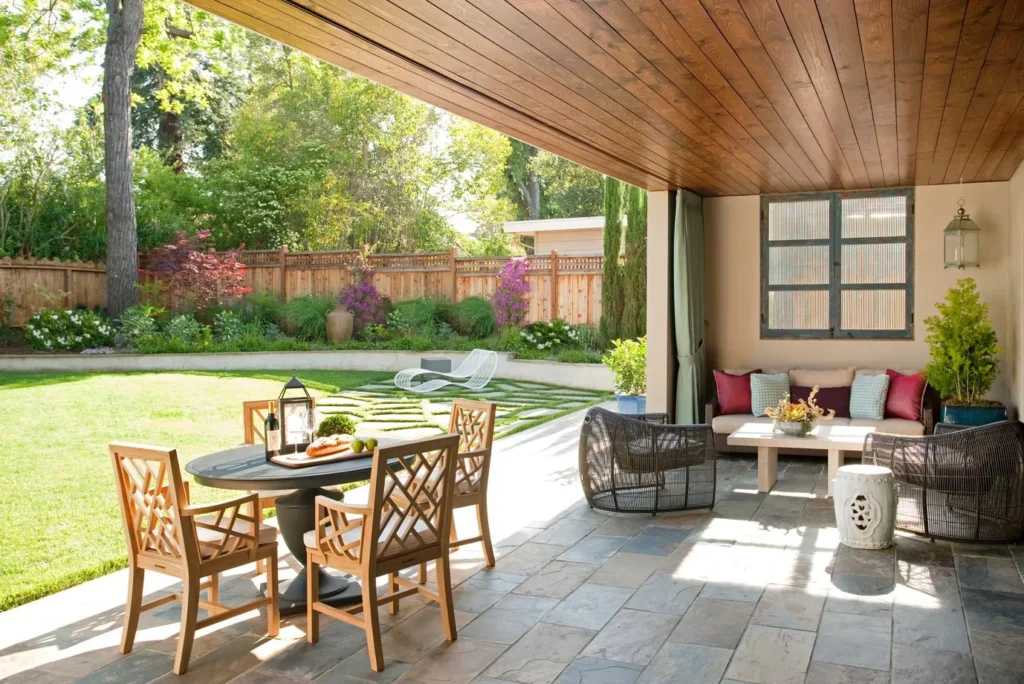
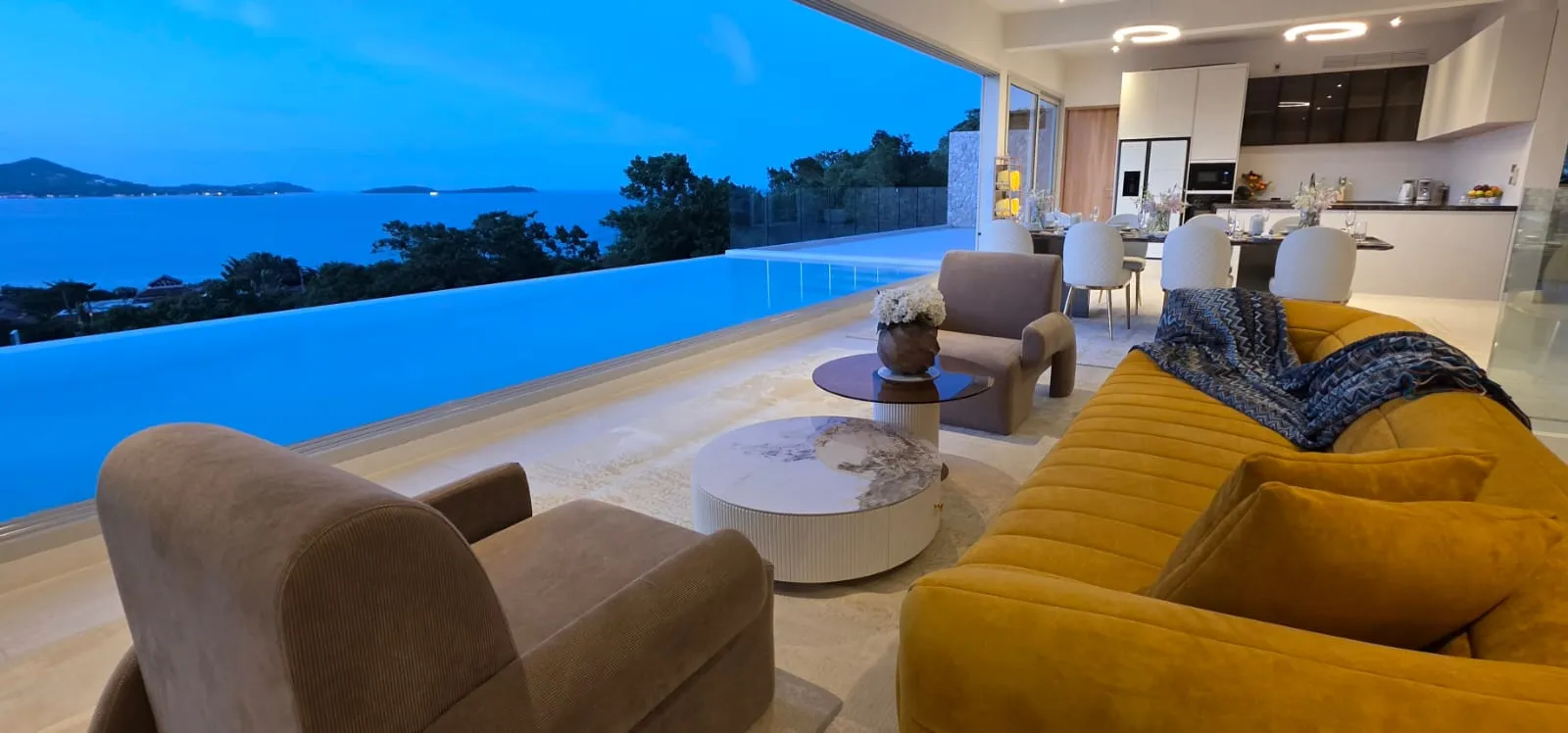
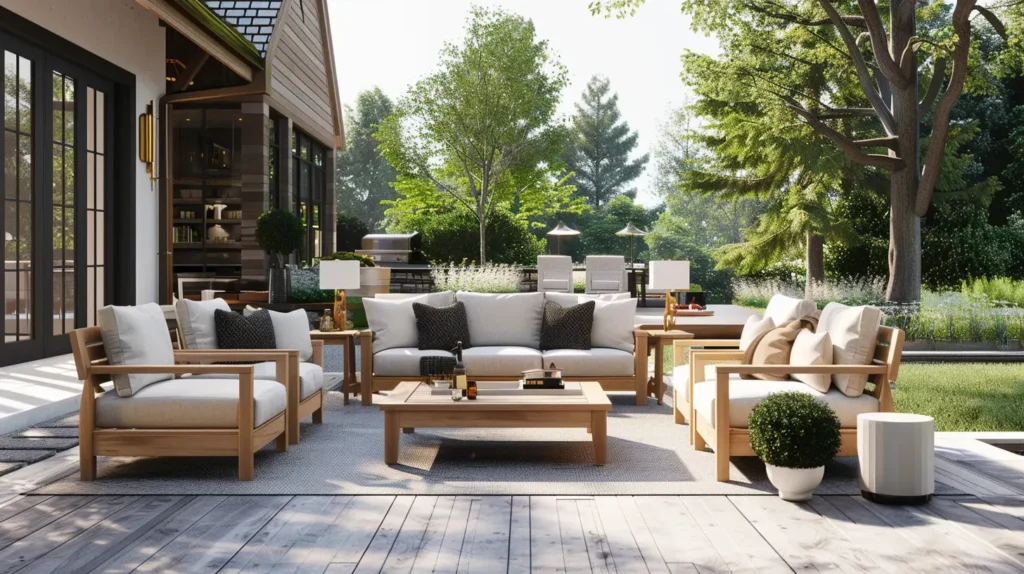
Create three simple zones: lounge, dining, and flex (bar cart, grill, or chaise). Keep clear walking lanes and service space around tables and fire features. Good flow makes any set feel “designer.”
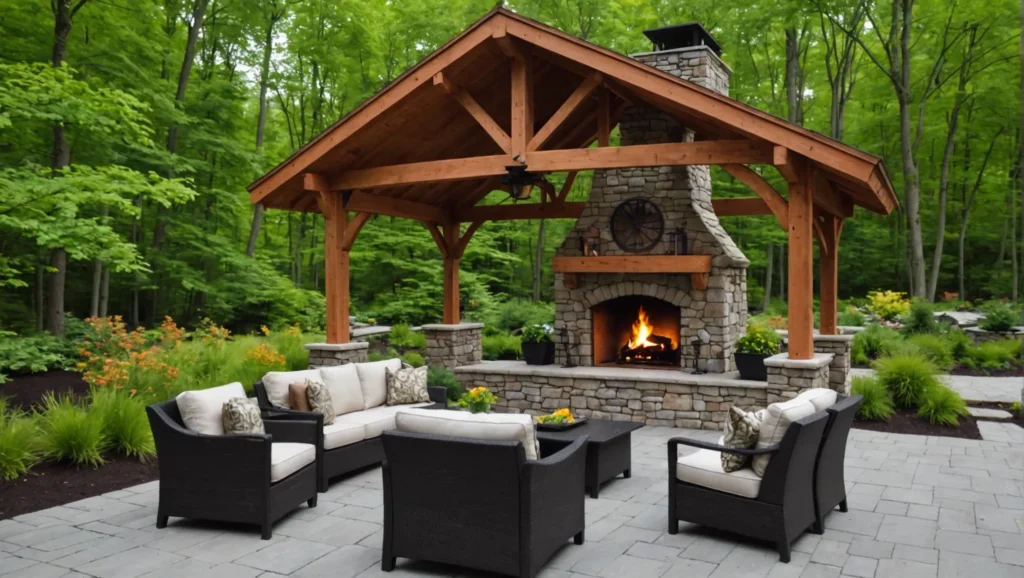
Good layouts start with clearances. Around a dining table, leave 36–48 inches for chairs and walking. For lounge clusters, aim for 18 inches between sofa and coffee table for easy reach. Keep 24 inches minimum from chaise edge to wall or rail so you can pass. If you use a fire pit, maintain the manufacturer’s safe distance and check wind patterns. In tiny balconies, a café table with two folding chairs beats a bulky sofa. Modular sets help small or evolving spaces: add a corner or ottoman later as your needs change. Use outdoor rugs to define zones, not to cover everything. Large rugs make small patios feel larger; runners guide movement on narrow decks. Place light sources at multiple heights: string lights overhead, lanterns at table height, and a low solar path light or two. The mixed glow feels warm and keeps steps safe. If you plan a grill, keep a heat-safe wall panel or metal shield near siding.
Size & Seating Cheatsheet
| Zone | Minimum Clearances | Seat Count Guide |
| Dining (round 48″) | 36–48″ around | 4 seats |
| Dining (rect 72″ × 36″) | 36–48″ around | 6–8 seats |
| Lounge (sofa + table) | 18″ to table, 30″ paths | 4–6 seats |
| Fire pit ring | Follow product safe radius; add 24″ pass lane | 4–6 seats |
Comfort That Survives Weather: Cushions & Fabrics
Cushions sour. Foam stays wet. Colors fade. Comfort is not just soft; it must dry fast and resist UV. Build a set you can actually sit on after rain.
Use breathable, UV-stable fabrics, quick-dry cores, and full-length zips for cleaning. Light colors run cooler. Dark ones hide soil. Store dry, not just “covered.”
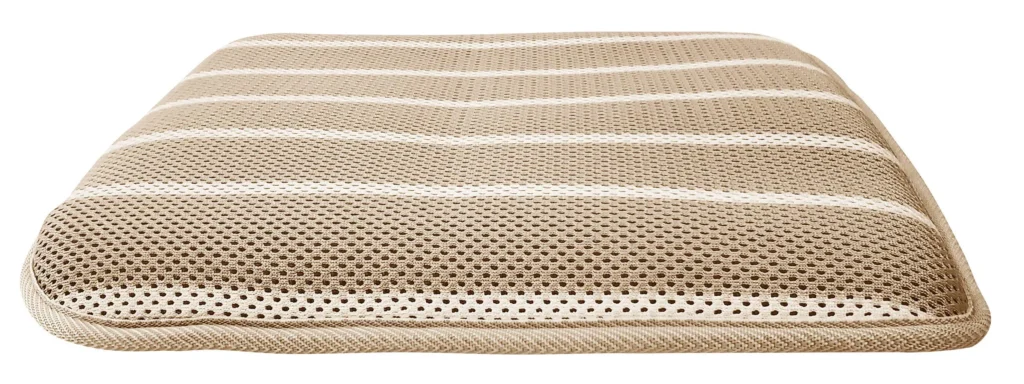
Pick covers made with solution-dyed fibers (acrylic or polyolefin) because the color is in the yarn, not just the surface. They fade slower and clean easier. Choose medium-firm foam with drain panels or reticulated foam that lets water pass through. Add a mesh underlay on slatted frames so cushions dry all around. If you see tiny puddles on flat tables after showers, add furniture feet or risers to reduce splashback on seat backs. For straps and slings, look for UV-resistant synthetics; test by bending the sample: a chalky sound hints at age or poor resin. Zippers should extend far enough to remove inserts easily. Piping is pretty but can hold water; double stitch lines last longer in sun. For windy areas, sew-in ties or hidden snaps keep cushions in place. Write a simple care tag with mix ratios for your go-to soap solution and tape it inside a storage box. Dry completely before covering. Trapped moisture grows mildew even on “outdoor” textiles.
Fabric & Fill Quick Picks
| Component | What to Look For | Why It Matters |
| Cover fabric | Solution-dyed, UV-stable | Colorfast, easy clean |
| Foam core | Quick-dry / reticulated | No sponge effect |
| Liners | Breathable mesh, drain vents | Faster drying |
| Closures | Full-length zips, hidden ties | Easy wash, wind-safe |
Cleaning Playbook by Material
Grease from grilling, pollen, and leaf stains build up fast. Cleaning does not need harsh chemicals. Keep it simple and regular. Most jobs need mild soap, soft brushes, and water.
Clean by material: teak, aluminum, all-weather wicker, glass or ceramic tops, and textiles. Make a monthly rhythm, with a deeper seasonal refresh when pollen peaks or after storms.

Weekly–Monthly Rhythm
| Task | Frequency | Notes |
| Dust or hose pollen | Weekly in season | Low pressure rinse; avoid driving water into seams |
| Soap wash frames | Monthly | Mild dish soap; soft brush; rinse and dry |
| Cushion refresh | 2–4 weeks | Brush dry dirt first; spot clean; unzip and air |
| Glass/ceramic tops | Monthly | Soft cloth; avoid gritty paper towels |
Material-Specific Notes
Teak: Wash with mild soap and a soft brush along the grain. Let dry. If you like golden tone, apply a light teak sealer; if not, let it weather to silver. Avoid thick film finishes; they can peel outdoors.
Aluminum (powder-coated): Wash with soapy water. Rinse and dry to stop water spots. Touch up chips fast to seal metal from air and salt.
All-weather wicker (HDPE): Vacuum or brush debris out of weave. Hose gently. Spot clean with soapy water. Avoid hot-water pressure washing; it can force dirt deeper.
Textiles: Remove covers if possible. Hand wash or machine wash cold per label. Air dry fully. For non-removable cushions, use mild soap and a soft brush, then rinse until water runs clear. Stand on edge to drip dry.
Keep strong acids and bleach away from frames and fabrics unless a label says they are safe. Test any cleaner on a hidden spot first. When in doubt, more water, less force, and more drying time beat heavy chemicals.
Mold, Mildew, and Rust: Stop Problems Early
Green film creeps in shade. Orange spots bloom near screws. Covers trap damp air. Prevent first, then treat gently. Moisture management wins this fight.
Dry fast, ventilate well, and inspect coatings. For metals, sound powder coating blocks rust. For wood, standing water and trapped soil cause stains. Keep hardware corrosion-resistant.
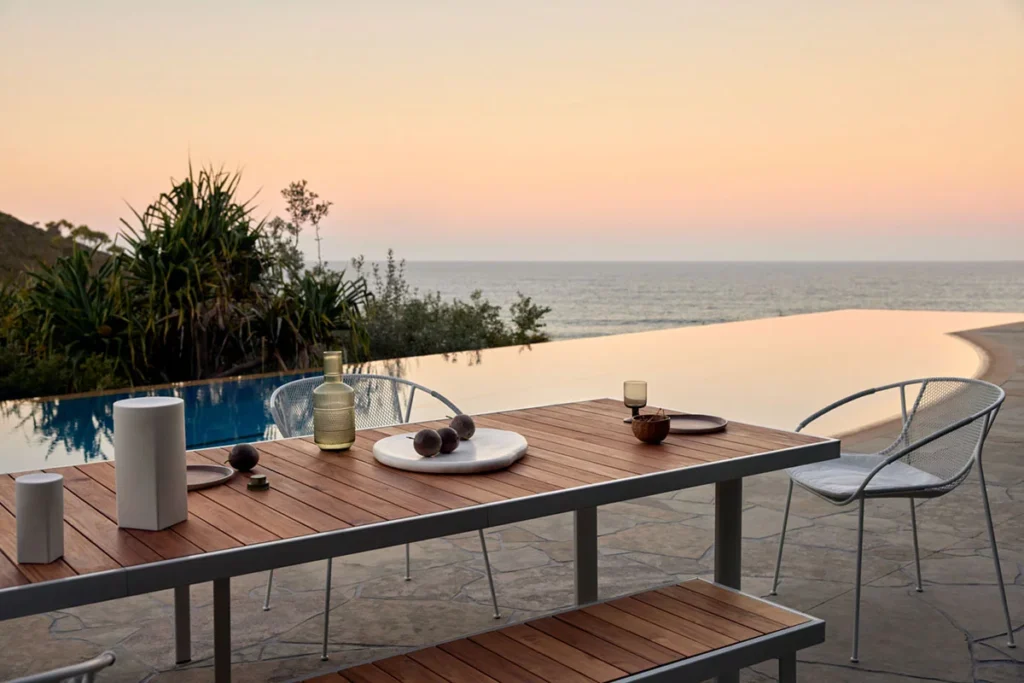
Mildew needs moisture, warmth, and nutrients. Remove leaf litter and soil that feed growth. Raise feet so bases dry. After rain, open zips and stand cushions on edge so air moves through the core. Covers help only if the furniture is already dry. Trapped humidity causes more mildew than open air. For light mildew on fabric, brush dry first, then use mild soap and water; rinse and sun-dry. For stubborn patches, a fabric-safe oxygen cleaner may help; rinse well. Rust starts where coatings chip or hardware mixes metals. If you see a nick on a powder-coated tube, sand lightly, clean, and dab with matching touch-up. Replace plain steel screws with stainless. Under coastal salt spray, rinse frames more often. On teak, dark spots near metal may be tannin reacting with iron dust; clean with a wood-safe cleaner and rinse. Keep grills and fire tables far enough away that grease and soot do not settle on lounge fabrics.
Problem → Prevention
| Issue | Root Cause | Prevention |
| Mildew on cushions | Trapped moisture | Dry fully before covers; vented storage |
| Rust blooms | Chips, mixed metals | Touch-up coating; stainless hardware |
| Black marks on teak | Iron + tannin | Use non-ferrous pads; clean and rinse |
| Cloudy glass | Mineral deposits | Dry after wash; soft water if possible |
Seasonal Strategy: Sun, Rain, Wind, and Storage
UV beats color. Rain fills seams. Wind flips chairs. Plan by season and climate. Protect when needed, but keep things breathing. Dry first, cover second.
Use breathable covers, shade where possible, and simple tie-downs. Store soft goods in a ventilated box. In winter zones, park frames clean and dry; bring cushions indoors.

In high sun, rotate layouts so one side does not fade faster. Light colors stay cooler to the touch. Add umbrellas, pergolas, or shade sails where people linger. In rainy seasons, a quick squeegee or towel saves stains later. Keep a folding rack for air-drying cushions after surprise showers. When storms approach, stack chairs and tie with soft straps; bring umbrellas down. For storage, avoid plastic wrap that seals in moisture; instead, use vented covers or breathable fabric bags. Label bins with the set name so you can unpack fast in spring. For snow zones, brush snow off flat table tops so weight does not stress frames. Concrete or ceramic tops handle weather well, but they still appreciate a dry cover. Before long off-season breaks, wash everything, dry fully, touch up paint, lubricate hinges, and note any parts to order. A 30-minute fall routine avoids a frustrating spring.
Seasonal Quick Planner
| Season | Action List |
| Spring | Deep wash, inspect coatings, refresh cushion protectant |
| Summer | Weekly hose-off, rotate cushions, shade during peaks |
| Fall | Full clean, dry, touch-up, breathable covers on |
| Winter | Store cushions inside; check covers after storms |
Style Moves That Look Good Outside
Too many pieces. Not enough tone control. The set feels busy. Keep shapes simple and textures rich. Let plants and light do the rest.
Choose a calm base in wood or metal, then layer one texture and one accent color. Repeat materials across zones so the space reads as one.
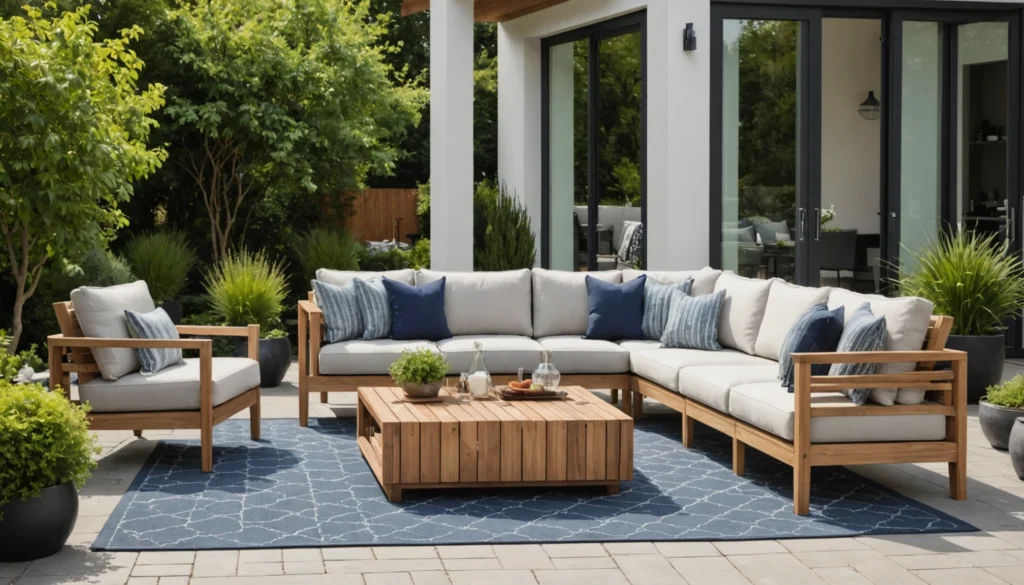
Start with two core materials (for example, teak + aluminum), one weave (HDPE wicker), and one fabric family. Repeat them. A teak sofa pairs well with a teak or aluminum table; avoid adding a third major frame material without a reason. Use one bold pattern—like a stripe on two pillows—and keep the rest quiet. Outdoor rugs define zones, but pick low-pile or flatweave for fast drying. Group lanterns and planters in odd numbers (3s or 5s). Vary height for interest. If your yard is green, warm woods and off-white fabrics read fresh. In desert light, cooler grays and stone tops feel right. Place a bar cart or side table within arm’s reach of every seat; this small move makes the set feel thought-through. At night, mix string lights with low solar stakes and one table lantern per cluster. Music and a small tray for citronella or coils keep evenings easy.
Quick Styling Rules
- One statement, many basics
- Repeat materials for unity
- Keep reach distance short (table within 18″)
- Mix light sources (overhead + table + low path)
Conclusion
Pick durable materials, plan clear zones, and follow a simple cleaning rhythm. Dry before you cover. Touch up chips fast. Your outdoor room will look better and last longer. If you’re unsure about your outdoor layout, browse our outdoor furniture or contact us for detailed solutions.
Share Your Plan, Get Ideas
Have a balcony or a full yard? Send a quick plan and a few photos. We can mark best materials, layouts, and a care rhythm for your climate and budget.