
Buying the wrong rug shrinks your room. Corners curl. Toes hit cold floor. Pick sizes and layouts that work every time, then style without guesswork.
We are a one-stop building-materials partner based in Foshan, serving overseas projects. We cover kitchens, wardrobes, bathrooms, windows and doors, tiles, lighting, flooring, and wall panels. We support homeowners, contractors, designers, developers, and builders. We also help with interior and facade 3D design, whole-home style matching, export logistics, and after-sales support. Advice stays simple; results stay steady.
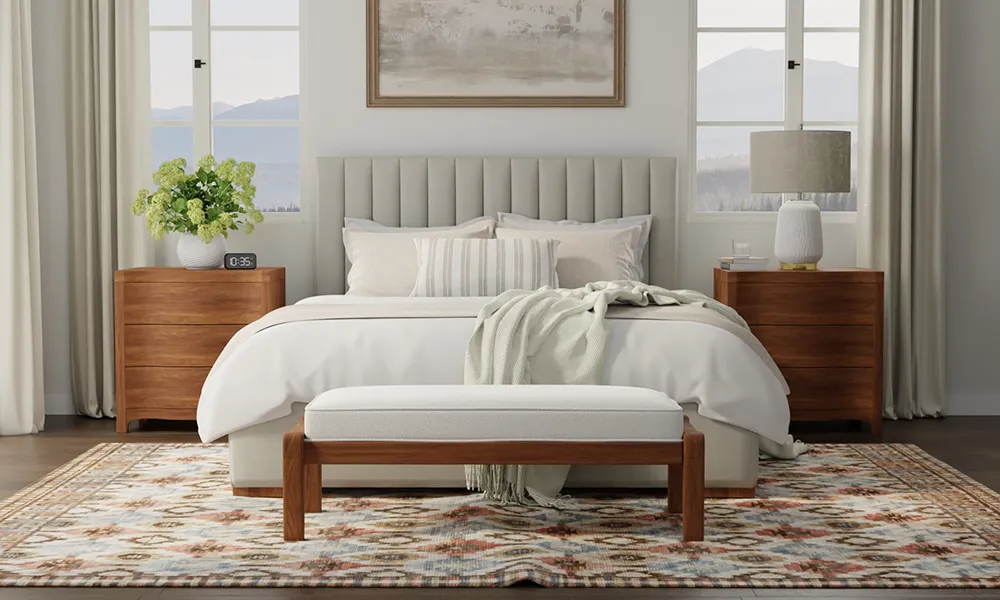
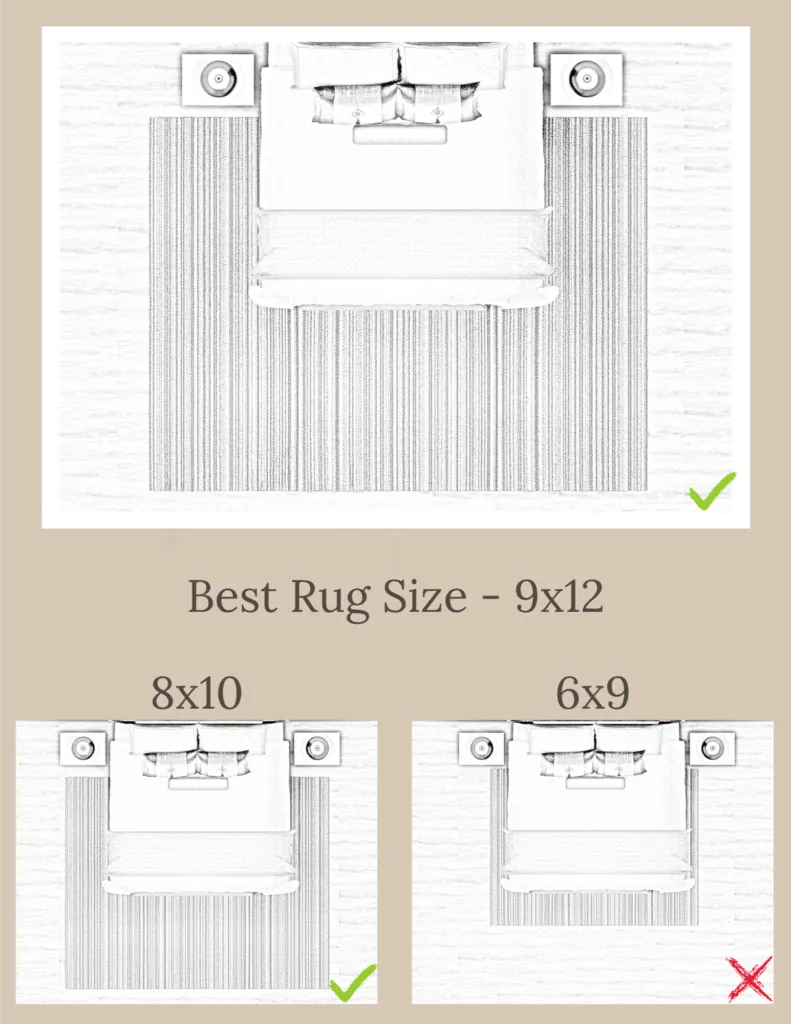
Most queen bedrooms look best with 8×10 rugs. Small rooms can use 6×9. Large rooms fit 9×12. Let the rug extend about 18–24 inches past each side of the mattress. Choose a layout that anchors the bed and leaves clean walking lanes.
You will find size rules, tested layouts, and quick measuring steps below. Use the tables to decide in minutes. Tape the floor, confirm clearances, then buy with confidence.
Exact Rug Sizes for a Queen Bed
A queen mattress measures 60″ × 80″, so a rug should be wider and longer. Aim for soft landings, not tiny borders. Your feet deserve warm, even ground when you get out of bed.
The safe picks: 8×10 for most rooms, 6×9 for compact rooms, and 9×12 for large rooms or when you want both nightstands on the rug. If your frame is a non-standard queen, adjust the size. For reference on bed categories, see bed size. If you’re looking to buy a new bed, you can check out our products.
Why these sizes work
The mattress is 5 feet wide. An 8-foot-wide rug gives about 18 inches of soft landing on each side. A 6×9 works when the room is tight and doors or radiators steal space near walls. A 9×12 looks luxe in larger rooms and can carry nightstands. If you already own a smaller rug, layer it over a larger neutral base to get proper coverage.
Room size vs rug size
| Room (approx.) | Best Rug | Notes |
| 10′ × 10′ | 6′ × 9′ | Landings each side, stops before nightstands |
| 10′ × 12′ | 8′ × 10′ | Balanced overhangs, clean walkways |
| 12′ × 14′ | 9′ × 12′ | All legs on rug, hotel look |
| Studio/odd rooms | 6′ × 9′ or two runners | Keeps zones open; easy to move |
Non-standard queens
Olympic Queen (66″ × 80″) and California Queen (60″ × 84″) need a touch more length or width. If the room can take it, step up to 8×10 or 9×12. Leave 8–12 inches of floor from rug edge to wall so the room looks calm, not crowded. If you’re having trouble assessing the size of your carpet, feel free to visit our carpet page and contact us.
Layouts That Always Work
You want a layout that looks right and feels right. The rug should hold the bed in place and guide the eye. Choose by furniture plan and door swing, not only by size.
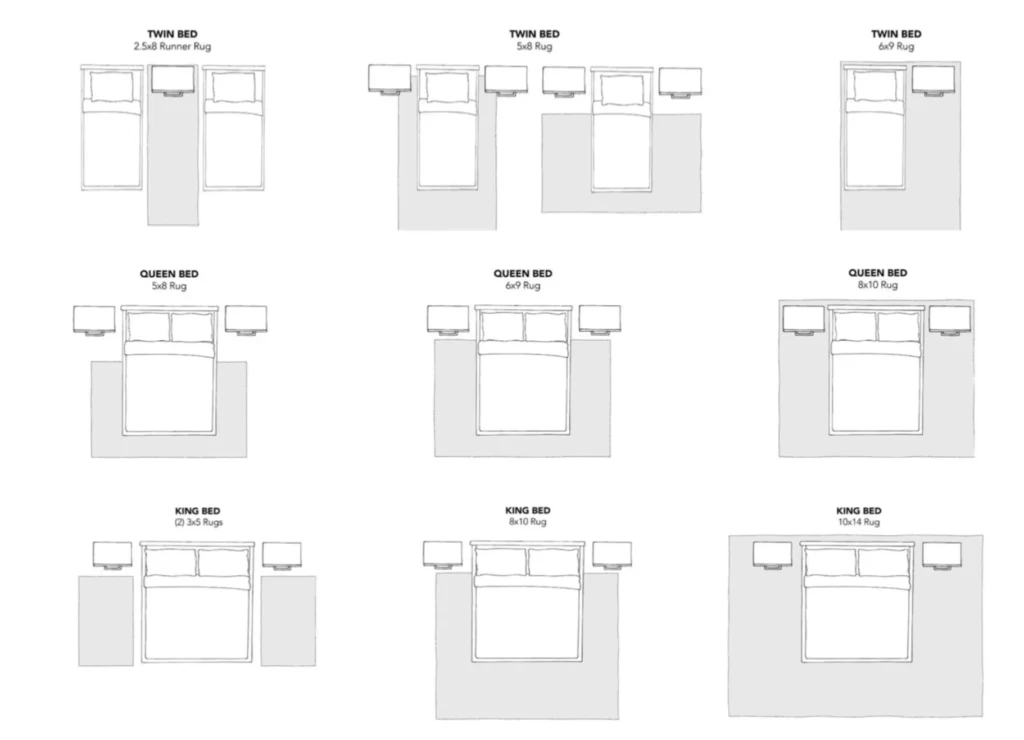
The four layouts that rarely fail: two-thirds under the bed, three-quarters under, full anchor with nightstands, and foot-of-bed placement. Each one keeps balance and gives soft landings.
Two-thirds under the bed
Push the rug under the lower two-thirds of the bed. The top edge clears the nightstands. You get soft landings and a pleasing border at the foot. Works with 6×9 or 8×10.
Three-quarters under the bed
Slide the rug farther so the front legs of nightstands almost meet the rug. This reads more “framed” and suits 8×10 rooms with wider walkways.
Full anchor with nightstands
Place a 9×12 under bed and nightstands. All legs sit on the rug. This gives a quiet, hotel-grade look. It needs a bigger room and careful wall clearances.
Foot-of-bed placement
Use a 5×8 at the foot under a bench. This keeps floors open in small rooms. You still get a soft spot and a color block without crowding the sides.
Quick layout chooser
| Layout | Best For | Pros | Watch-outs |
| Two-thirds under | Most rooms | Balanced, efficient | Align top edge evenly |
| Three-quarters under | Wider rooms | Richer frame | Check door swing |
| Full anchor | Large rooms | Luxury feel | Leave 8–12″ to walls |
| Foot-of-bed | Tight rooms | Budget friendly | Side landings are smaller |
Measure First: Room, Bed, Nightstands
Guessing leads to returns. Measure the whole scene: walls, doors, vents, nightstands, and bench. Tape the outline on the floor. Stand back. Adjust. Then buy.
The rule of thumb: keep 8–12 inches from rug to walls; aim for 18–24 inches of landing past the mattress edges; avoid blocking doors or drawers. If the room is small, reduce borders evenly so the eye reads symmetry.

A simple “tape test”
Use painter’s tape to draw the rug outline. Walk the path from the door to the bed. Sit on the edge. Stand up. Check if toes land on the rug. Make sure closet doors clear. If the outline touches walls, step down a size or pull the layout forward.
Measurement checklist
| Item | Target | Tip |
| Side landing | 18–24″ per side | 8×10 gives this on a queen |
| Foot landing | 24–36″ | Helps dressing or bench seating |
| Wall gap | 8–12″ | Leaves a calm “frame” |
| Door swing | Full clearance | Keep edges taped while testing |
| Nightstands | On or off | Decide this first; size follows |
Nightstands on or off the rug?
Both work. “On” looks seamless and needs 9×12 in larger rooms. “Off” keeps a light border and works with 6×9 or 8×10. Keep both legs of each nightstand either on or off so lines read clean.
Alternatives: Runners and Round Rugs
If a full rug feels too heavy, switch to runners. One on each side gives warm landings without crowding a narrow room. A round rug can soften hard lines at the foot.
The goal stays the same: comfort, balance, and easy cleaning. Use runners to free wall space and allow vents and doors to breathe.
Side runners
A pair of 2′6″ × 8′ runners fits most queen setups. Place each runner a few inches out from the bed edge. Keep the walkway clean and straight. Runners are easy to rotate and wash. They also cost less than a single large rug and work in rentals.
Foot-of-bed round
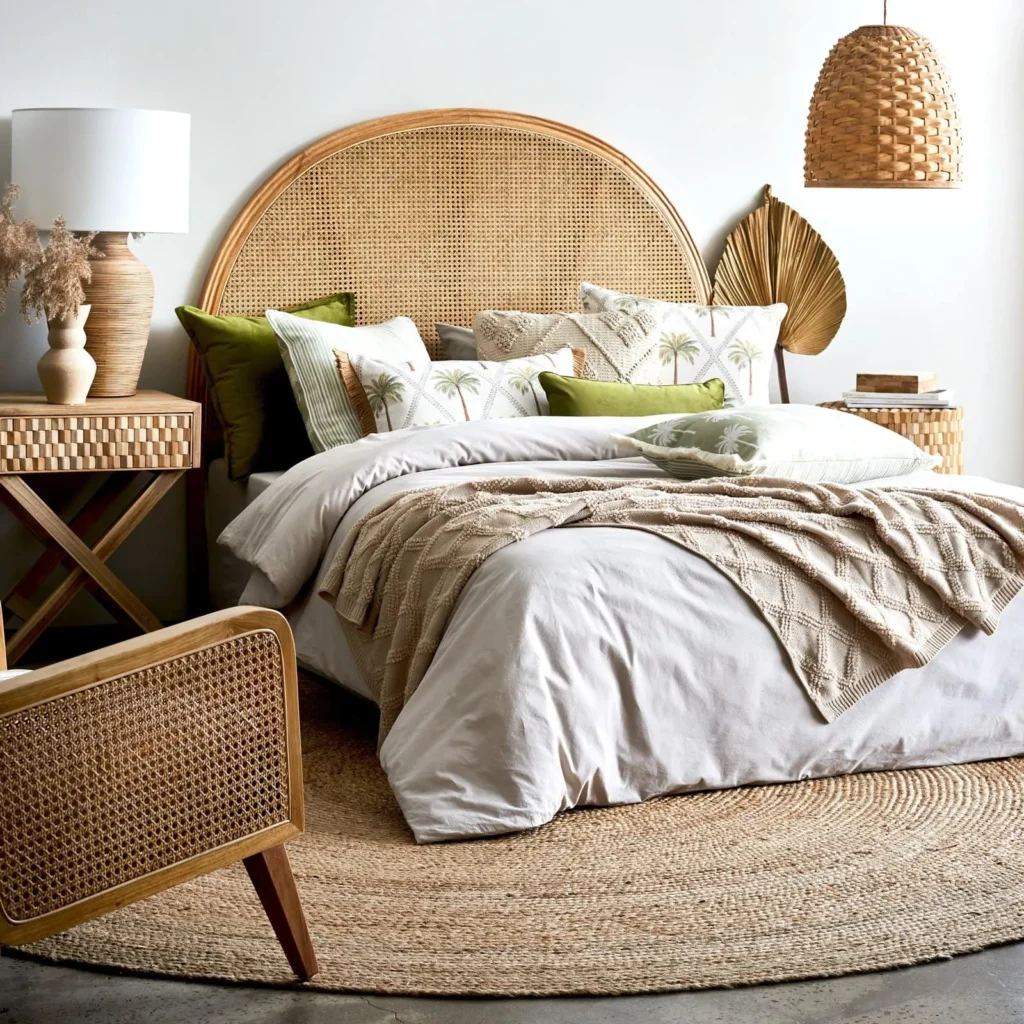
A 5′ or 6′ round rug under a bench adds a soft shape. It breaks rectangles and adds visual interest. Keep at least 8″ from the wall behind the bench so the circle does not feel cramped.
Mix with carpeted rooms
Layering rugs over wall-to-wall carpet works if you add a pad. This stops creeping and keeps edges flat. Use a contrasting texture so the layer looks intentional.
Alternatives at a glance
| Option | Best For | Pros | Watch-outs |
| Two runners | Narrow rooms | Low cost, easy cleaning | Keep both aligned |
| One runner | Solo side access | Simple path | Other side stays cold |
| Small round | Bench focus | Softens lines | Check door and vent |
| Layer over carpet | Rentals | Adds style fast | Pad is a must |
Materials, Pile, and Padding
Material changes feel, life, and cleaning. Wool wears well and feels warm. Cotton cleans fast but flattens sooner. Synthetics resist stains and suit kids’ rooms. Match pile and pad to how you live.
For basics: wool is a classic natural fiber that springs back and regulates moisture (see wool). “Pile” is the upright yarn in a rug; height and density change how it feels and cleans (see pile (textile)).

Material snapshot
| Material | Feel | Durability | Notes |
| Wool | Springy, warm | High | Naturally stain-resistant; sheds at first |
| Cotton | Soft, light | Moderate | Easy wash; flattens faster |
| Synthetic (polypropylene/nylon) | Smooth, tough | High | Good for stains; watch heat |
| Viscose blends | Silky sheen | Low–moderate | Shows water marks; style play |
| Jute/sisal | Textured | High on wear, rough on feet | Great layered; gentle cleaning |
Pile and pad choices
Low pile is easier to clean and better for allergies. Medium pile feels plush and works well under a queen if doors clear. High pile looks rich but needs more care and can snag. Use a felt or natural rubber pad sized a little smaller than the rug. Pads add cushion, stop slips, and extend life.
Care rhythm
Vacuum weekly with a brush set for rug height. Rotate every six months to balance sun and wear. Spot clean fast. Place a tray under lotions and water on nightstands so bottles do not leak onto fibers.
Mistakes to Avoid and Quick Fixes
Most problems come from rugs that are too small, misaligned, or sliding. The fixes are simple. Size up, re-center, and add a pad. Check doors and vents last.
You get a calmer room when edges are straight, borders match, and walkways stay open. Treat the rug like a big picture frame for the bed.
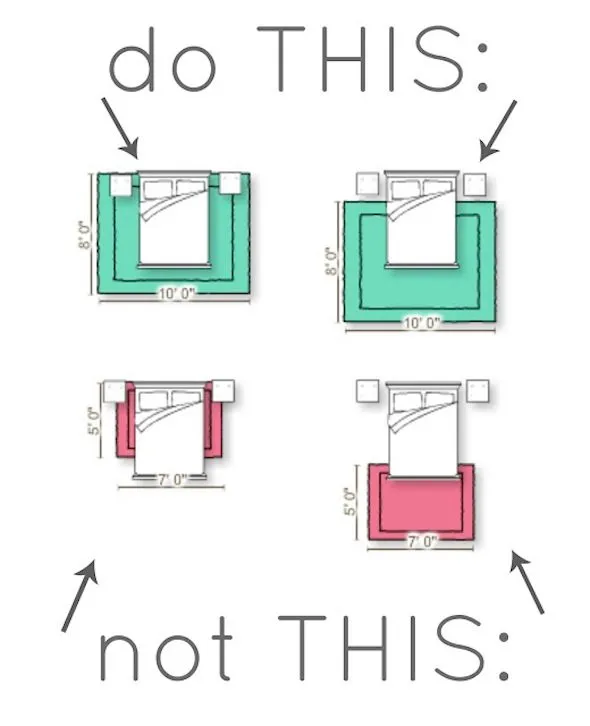
Common pitfalls
| Mistake | Why It Happens | Fix |
| Rug too small | Buying by price, not plan | Step up one size or layer |
| Uneven borders | No tape test | Re-tape, re-center, confirm walls |
| Slipping/creeping | No pad | Add felt/rubber pad, trim to fit |
| Door rubs edge | Pile too high | Lower pile or move rug forward |
| Wavy corners | Stored rolled tight | Reverse roll, warm, use corner grippers |
Simple styling wins
Keep the duvet just above the rug edge so lines read clean. Match rug tones to headboard or curtains, not both. Use one bold pattern per room. Add a bench if the foot looks empty. Keep cables and robot vac paths clear.
Conclusion
Start with size, then layout. Measure, tape, and test walking lines. Choose materials you can live with and pads that keep rugs flat. Your queen bedroom will feel larger, warmer, and calmer.
Share Your Plan, Get Ideas
Have room sizes or a quick sketch? Send them over. We will mark the best rug size, layout, and pad type for your space and budget, then share a simple mock-up.