
Heavy iron tubs chill skin, strain floors, and drain budgets. Acrylic solves the pain, promising warm, light, spa-ready soaks.
Acrylic tubs weigh under a hundred pounds, feel room-temperature on contact, and wipe clean in minutes, letting homeowners build calm retreats without structural work or endless scrubbing.
Keep reading and learn how each benefit works, plus clear tips for choosing, installing, and caring for your own sculpted serenity.
Why choose acrylic tubs over cast iron?
Cast-iron weight, cold enamel, and costly repairs steal comfort fast.
Acrylic tubs win on weight, warmth, and easy upkeep, so most homes gain deep soaking without joist checks, crane rentals, or chipped-enamel headaches.
Why light weight matters
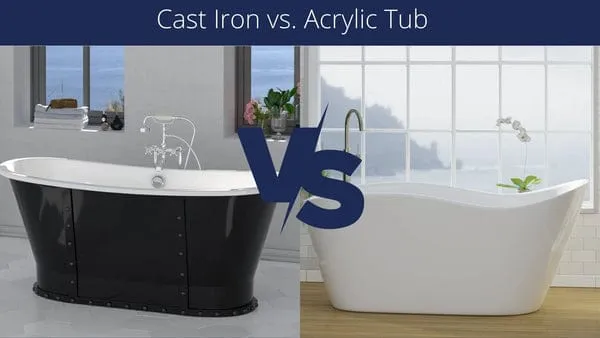
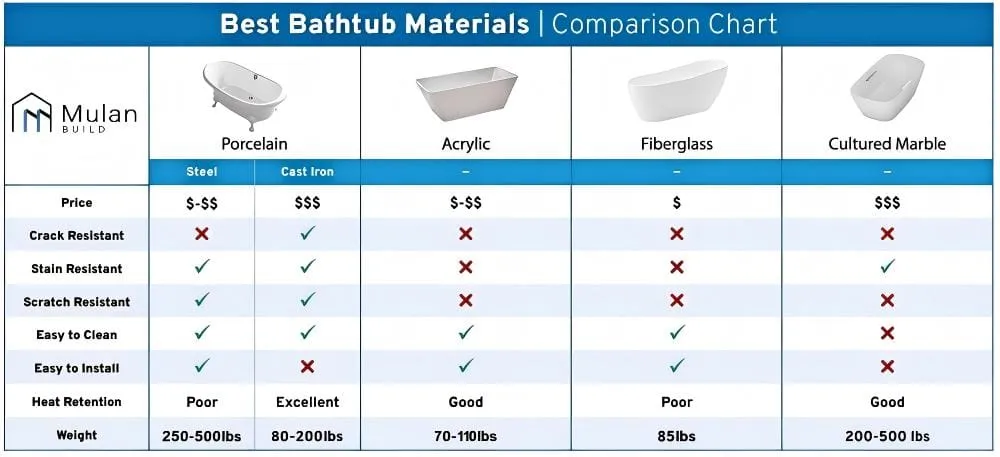
A typical 60-inch acrylic shell weighs 80–110 lb; the same size in cast iron often tops 300 lb. Freight bills drop, attic stairs stay safe, and installers finish in hours, not days. Because acrylic flexes a little before cracking, minor bumps rarely harm it. Enamel over iron chips under a falling showerhead and rust creeps from each nick. Surface feel differs too: acrylic’s plastic skin sits near room temperature, so a full bath starts soothing immediately instead of sending a shiver. Cleaning stays easy—warm water, dish soap, soft cloth—while iron needs non-abrasive enamel cleaner plus a steady hand. Long term, DIY scratch buffing beats specialist chip patching in both cost and effort. Homeowners who seek comfort and practical maintenance nearly always choose acrylic; historic-style restorations may keep iron, yet modern spa goals prefer lighter, warmer material.
How do acrylic tubs retain heat?
Refilling hot water ruins a calm soak and spikes energy bills.
Twin-layer acrylic traps air and slows heat loss roughly one-third versus steel, keeping bathwater comfortable much longer and cutting heater cycles.
How insulation works
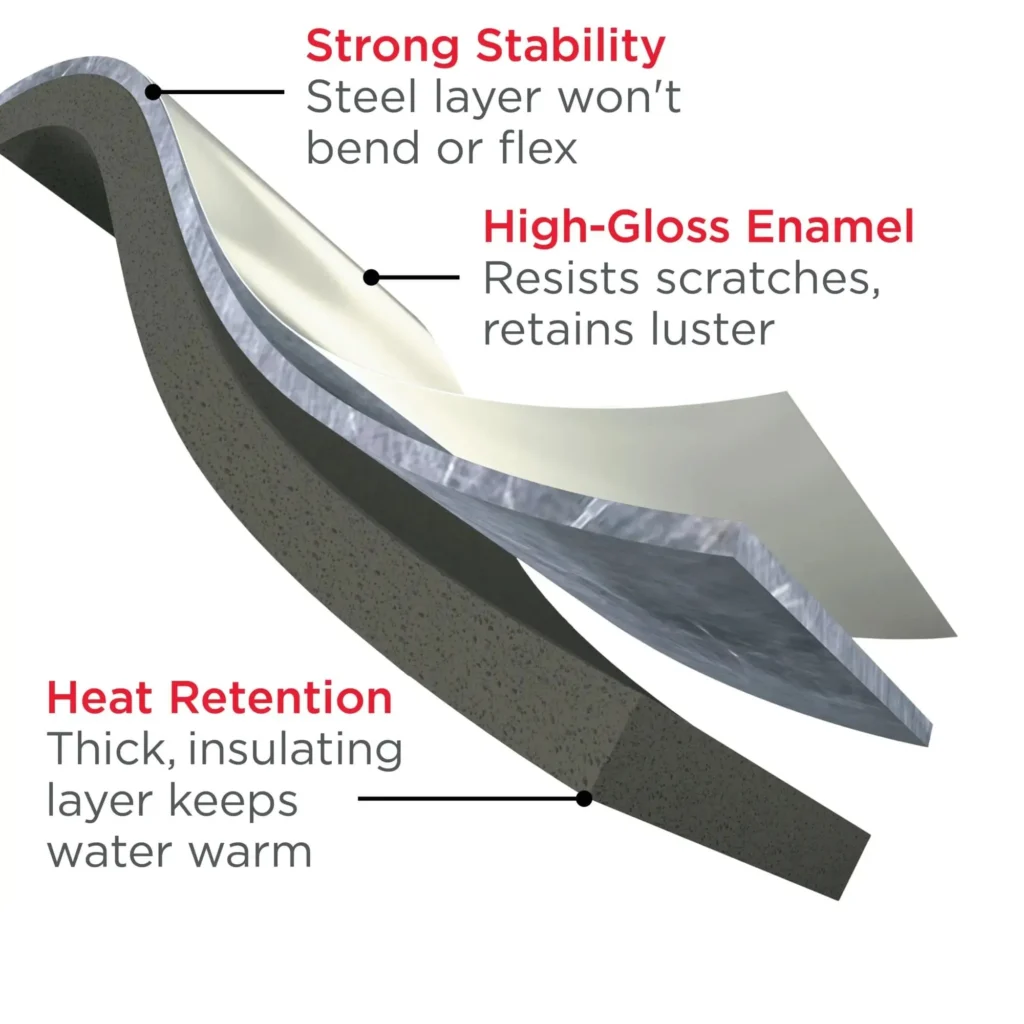
Manufacturers bond two acrylic sheets around fiberglass, creating micro air gaps that act like double-pane windows. Lab tests at 68 °F showed 104 °F bathwater cooling to 95 °F in 20 minutes inside thin steel, yet almost 30 minutes inside acrylic. Adding closed-cell foam around the skirt extends warmth by four more minutes, and an insulated bath mat under tile prevents cold transfer from concrete slabs. Those small gains add up: fewer refills mean lower utility costs and uninterrupted relaxation. Households using tankless heaters notice less burner cycling noise; older tank systems keep up with demand more easily. Heat retention also protects hydrotherapy pumps, which strain when water cools. In short, acrylic’s structure keeps bathwater in the comfort zone while easing pressure on plumbing and wallets.
Which features define a modern home spa tub?
Plain basins clean; spa tubs restore body and mind.
Ergonomic curves, silent air massage, mood LEDs, and slip-safe floors turn a simple shell into a daily wellness station.
Core spa elements
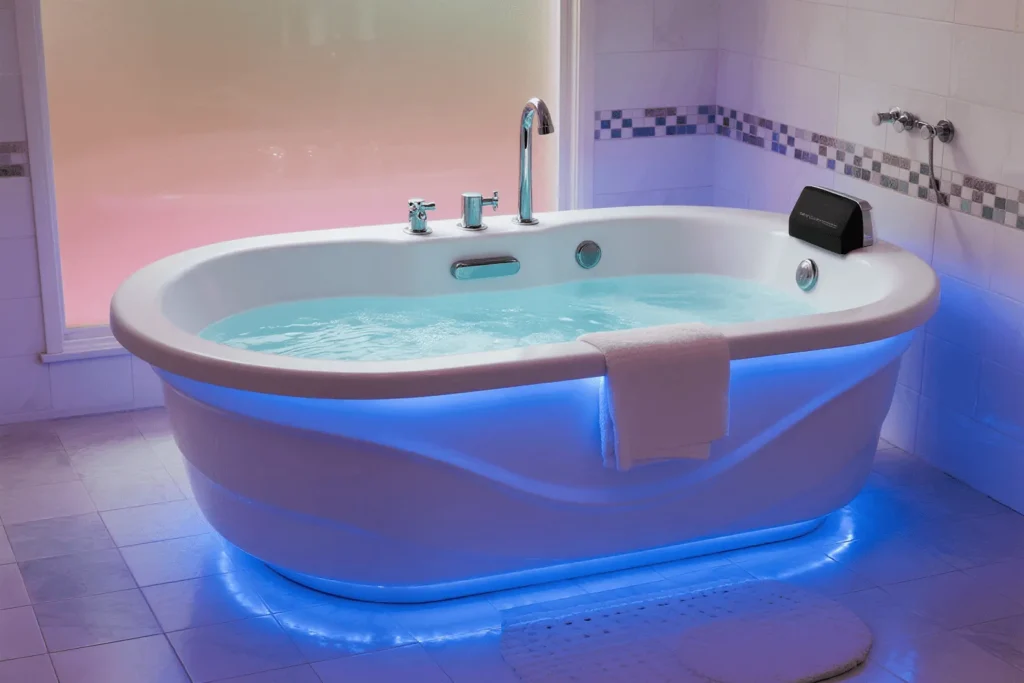
Acrylic molding allows gentle lumbar slopes, rolled armrests, and hidden overflow slots for deep fills without floods. Quiet air jets fizz below 60 dB—softer than many fans—while LED bands fade through calming hues linked to lower heart rate. Underfoot micro-dots stop slips yet wipe clean easily. Add a thermostatic filler, and water stays within two degrees during a thirty-minute read. Together these touches create resort-level calm in an ordinary bathroom. Homeowners who pair soft towels, a dimmer switch, and a scented candle find daily stress melts away without memberships or travel.
Are freestanding acrylic tubs space-efficient for small bathrooms?
Small rooms often feel too tight for luxury focal points.
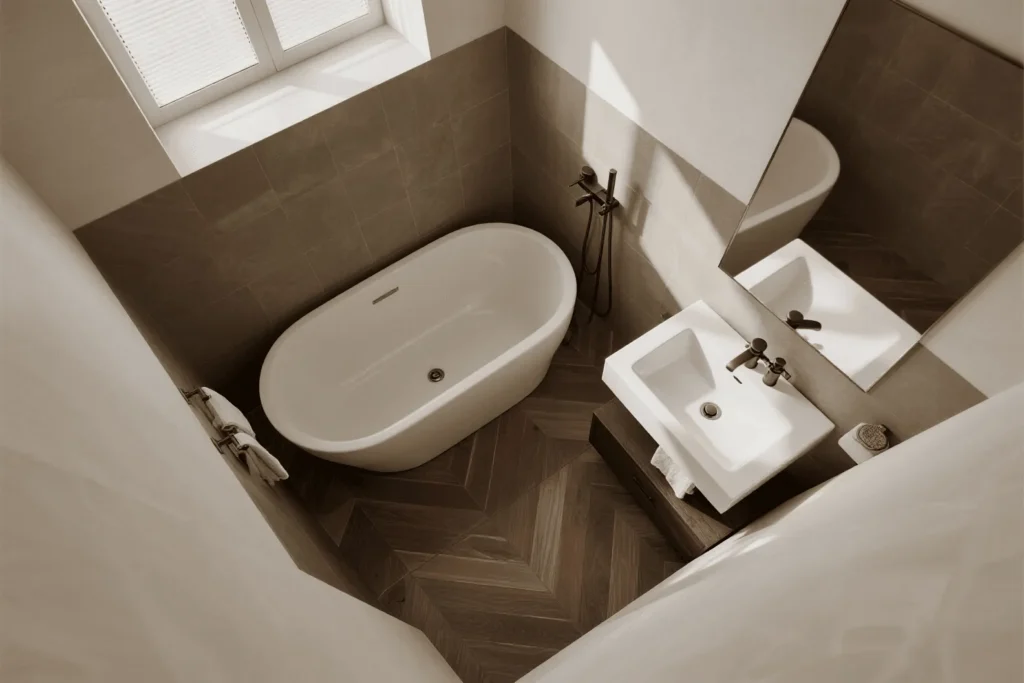
Slim-rim acrylic designs start at 55 inches long and 30 inches wide, fitting five-foot bathrooms while making them look larger by exposing more floor tile.
Layout strategies
Egg and slipper shapes taper toward the foot, letting users rotate the tub diagonally and reveal open corners. Wall-mounted fillers free floors; clear glass screens keep sightlines wide. Leave four inches around the shell for cleaning and eighteen on one side for safe entry. Because the tub weighs less than most refrigerators, upper-floor installs rarely need structural reviews. Even condo owners now enjoy full-body soaks once limited to grand suites, proving square footage is less critical than smart design.
What installation factors affect acrylic tub durability?
Cracks rarely start at the factory; sloppy setup is the culprit.
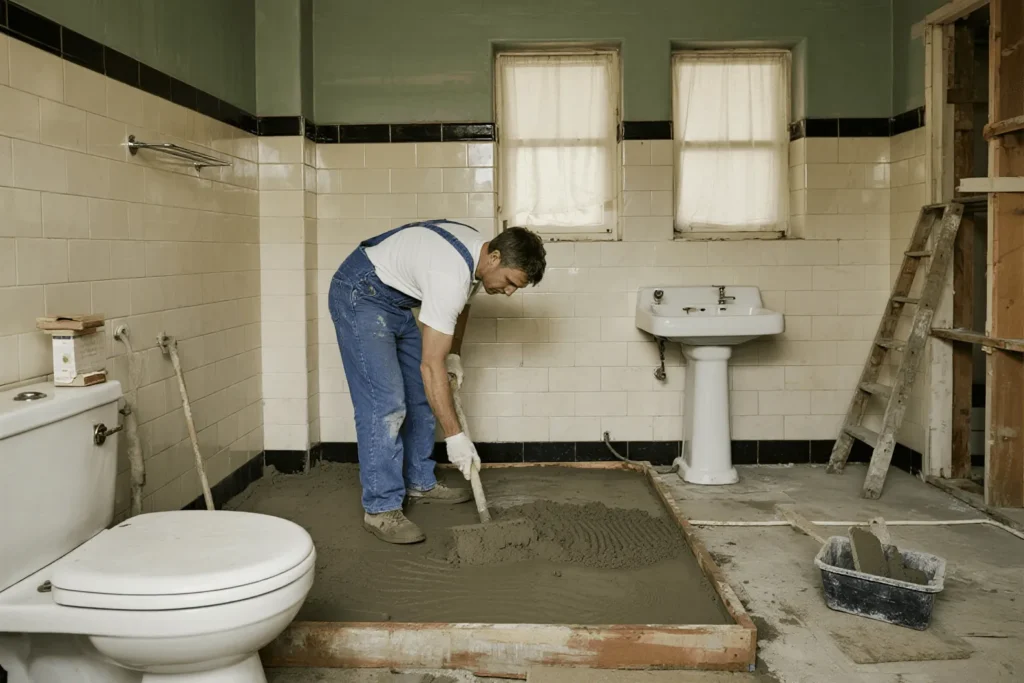
Full mortar support, level rims, snug flange screws, and flexible drains stop stress points, letting acrylic shells stay silent and solid for decades.
Step-by-step essentials
Spread one-inch mortar under the tub; it cures into an even cradle that removes flex. Use a bubble level on all rim edges—tilts as small as ¼-inch pool water, eroding caulk. Stainless screws through flanges hold the tub steady yet allow micro-movement. Swap rigid PVC traps for rubber-gasketed couplers, which absorb seasonal floor shifts. Seal seams with mildew-proof silicone rather than grout. Following these basics eliminates the creaks, wobble, and spider cracks that plague rushed installs.
How to maintain an acrylic tub’s glossy finish?
Shine fades when harsh cleaners scratch soft plastic.
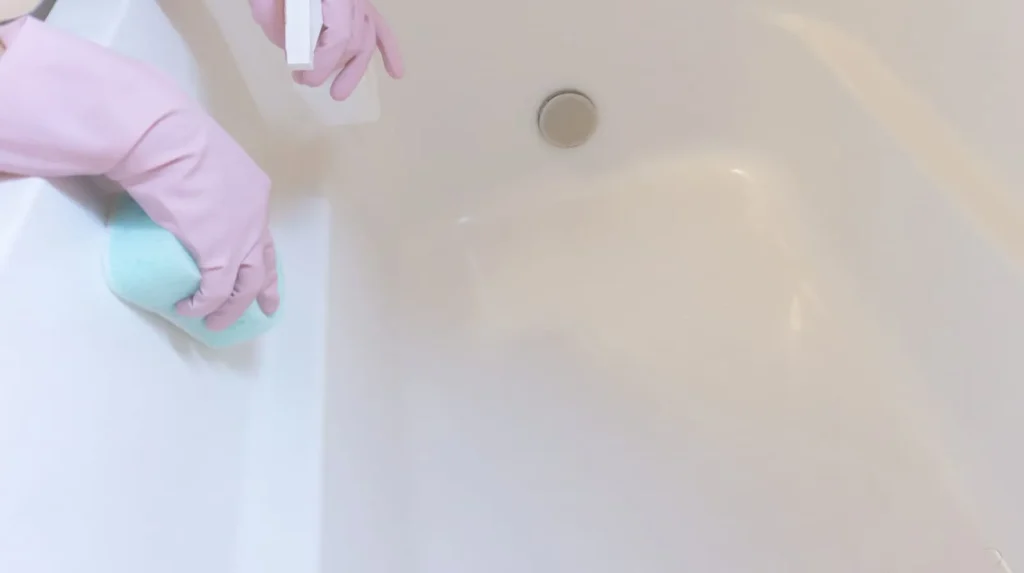
Weekly mild-soap wipes, monthly vinegar rinses, and light polishing keep acrylic bright for decades without bleach or abrasives.
Simple cleaning plan
Spray warm water mixed with dish soap, wipe with microfiber, rinse. For hard-water rings, mist 50 % white vinegar, wait five minutes, rinse again. Fine scratches sand out with 1500-grit wet paper then buff with rubbing compound; protect with polymer wax. Avoid bleach, acetone, and abrasive powders that cloud gloss. Hang suction-cup mats to dry; trapped moisture breeds mildew. Following this gentle routine maintains showroom shine and slashes weekly cleaning time.
Can acrylic tubs integrate hydrotherapy jets easily?
Many crave bubbles but fear complex upgrades.
Acrylic drills cleanly, so makers add air or water jets without heavy frames; skirt-mounted pumps on rubber pads keep noise near casual talk.

Jet options and impact
Air systems weigh least and use small holes; water jets pulse stronger but add bulk. Pumps fit behind access panels and plug into GFCI outlets. Flexible hoses prevent kink stress. Overflow heights rise when jets run, so check joist limits if upstairs. Monthly enzyme cleans keep lines fresh; chlorine tablets cloud plastic. Owners who plan layout early integrate hydrotherapy without tearing walls, gaining muscle relief at home.
What is the average cost of premium acrylic tubs?
Price tags swing from bargain to luxury; clarity helps budgets.
Quality soaking shells cost $800–$2,500; spa upgrades add $150–$700, and installation often matches material spend.
Cost breakdown
| Item | Typical price (USD) |
| Basic alcove shell | 800–1,100 |
| Freestanding oval | 1,200–1,800 |
| Designer asymmetrical | 1,600–2,200 |
| Air-jet kit | +400–700 |
| LED ring | +150–300 |
| Plumbing labor | 300–600 |
| Electrical circuit | 200–400 |
| Freight delivery | 100–200 |
Double shell cost for a safe overall budget. Units under $600 often use thin 3 mm sheets that flex and crack, proving “cheap” can cost more later.
How eco-friendly are recycled-content acrylic tubs?
Plastic and green seem opposed; newer methods bridge the gap.
Reclaimed acrylic blended with fresh resin cuts raw-material energy about 40 %, and adhesive-free shells can be separated for full recycling when retired.

Circular design moves
Factories grind post-industrial scraps into micro pellets, cast new sheets, and add UV stabilizers for equal durability. Carbon audits show big savings during monomer production, the most energy-intense stage. Heat loosens fiberglass backing at end-of-life, letting both parts reenter manufacturing loops. Pick neutral colors to extend style life and reduce landfill churn. Green remodels now gain comfort without heavy environmental debt.
Where to buy designer acrylic spa tubs online?
Online deals lure yet hide pitfalls; reliable buying beats refunds.
Choose plumbing-supply sites or factory stores that list certification logos, offer freight tracking, and allow damage inspection before signing delivery slips.

Vetting checklist
| Must-have | Reason |
| Certification logos | Code compliance |
| Detailed specs | Verify fit |
| Clear freight policy | Avoid surprise fees |
| Customer photos | Show real finish |
| Live support | Solve issues fast |
Inspect rims and flanges at arrival; note cracks on the bill of lading before the driver leaves. Five minutes of diligence safeguards weeks of spa enjoyment.
Conclusion
Lightweight, warm, and shape-flexible, acrylic tubs bring spa serenity home while saving labor, energy, and future headaches.
FAQ
Will hot water warp an acrylic tub?
Household temperatures stay well below acrylic’s softening point, so normal hot fills keep shape intact.
Do acrylic bathtubs yellow with age?
UV-stabilized formulas resist yellowing; regular mild-soap cleaning prevents residue that might dull color.
Can I paint an acrylic tub?
Two-part epoxy coatings adhere, yet may chip over time; choosing a timeless color first avoids repainting.
Is thicker acrylic worth the price?
Sheets 8 mm or more flex less, insulate better, and feel sturdier, giving frequent bathers a noticeable upgrade.
Does Epsom salt damage acrylic surfaces?
No, but rinse after soaking; salt film can leave a matte layer requiring extra wiping.
How long does an acrylic tub last?
Supported on mortar and cleaned gently, many serve 20 years or more before needing cosmetic refresh.
Are air-jet tubs noisy?
Blowers sit near 55 dB—similar to normal conversation; rubber pads further cut vibration for quiet baths.