
Cracks, twists, and grinding rollers can turn a rustic dream into a daily fight with your doorway.
Choose lumber that balances density, moisture stability, and weight; seal every edge before hanging; match the slab to hardware limits—then your barn door will glide smoothly for decades instead of sagging in one season.
Set the coffee down, grab a tape, and discover how nine key questions lead you to the right board, the right finish, and a headache-free install.
What wood qualities stop barn-door warping?
Warp ruins alignment, wrecks tracks, and kills soft-close dampers.
Stable barn-door species feature straight grain, low tangential shrinkage, and uniform moisture below 12 %; when combined, these traits keep seasonal movement under 1 mm across a 36-inch span.
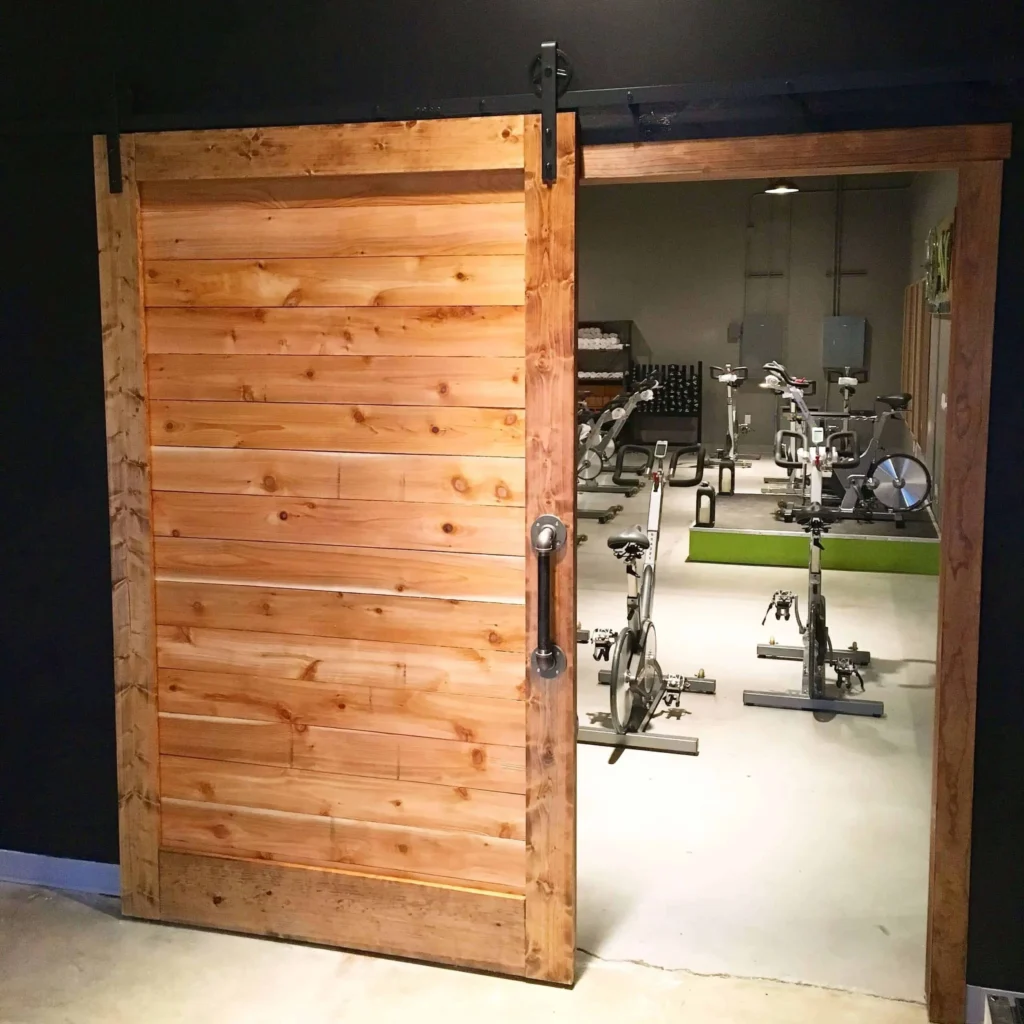
Warp stems from uneven drying. Boards shrink more around growth rings than across them, so flatsawn pine cups fast while quartersawn oak stays flat. Density matters too; light woods absorb moisture faster. Check lumber with a moisture meter, reject anything above 15 %. Store boards stickered for airflow in the room where they will hang for at least three days. Seal all faces, including hinge mortises, before assembly. A simple straightedge test—no daylight over the plank—catches future trouble early. Pair these checks with a plywood backer or cross-buck brace and the door shrugs off humid summers and dry winters.
Tangential vs. Radial Shrinkage
| Species | Tangential % | Radial % | Cup Risk |
| White Oak | 5.3 | 2.6 | Low |
| Knotty Pine | 7.4 | 4.2 | Medium |
| Cypress | 6.2 | 3.5 | Low |
| Poplar | 8.0 | 4.1 | High |
Hardwoods or softwoods: which suits sliding doors best?
Tight budgets love pine; busy hallways punish soft surfaces.
Hardwoods resist dents from kids and carts thanks to higher Janka ratings, yet softwoods work when traffic is light—just pair them with a tough topcoat and stable core.
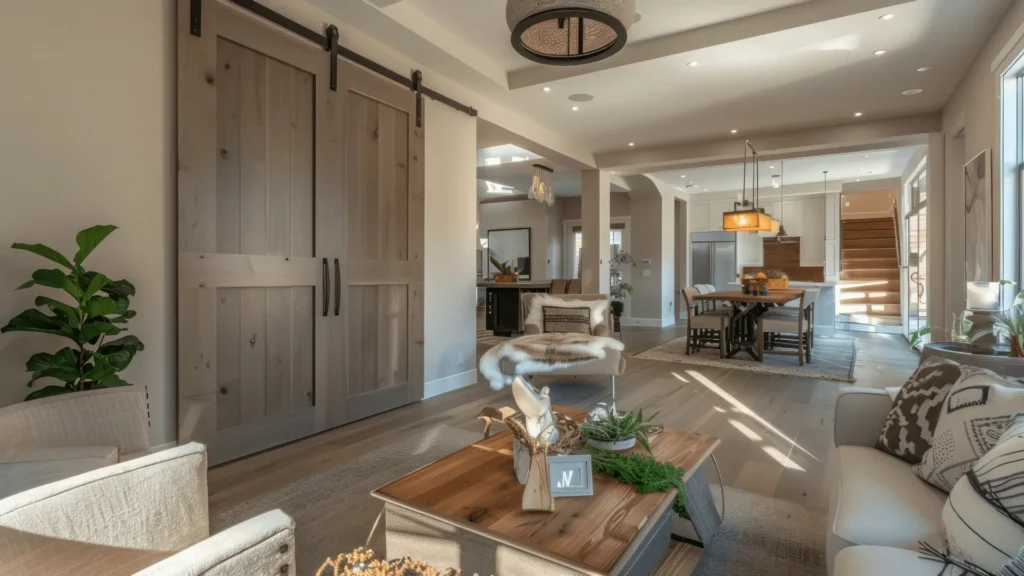
Hardwood density ranges from 600–800 kg/m³; that weight multiplies across a 42-inch slab, so check track load limits. Softwood pine sits near 500 kg/m³, reducing load but denting easier. A compromise is a stile-and-rail pine frame with an MDF or plywood core faced in hardwood veneer—weight stays low, surface stays hard. Finish also levels the field: two coats of catalyzed polyurethane raise pine’s dent resistance by about 20 %. Use hardwood in kitchens or café entries; save softwood for bedrooms and closets where bumps are rare.
Does reclaimed lumber work for barn doors?
Salvaged beams scream authenticity but hide surprises.
Reclaimed boards excel when you remove hidden nails, kiln-treat to kill insects, and stabilize cracks with tinted epoxy; skip these steps and charming history becomes an unstable slab.

Reclaimed pine often holds square nails invisible to magnets; pass every inch under a wand metal detector. Moisture reads high—18 % is common—so kiln to 8 % for balance. Powder-post beetles leave pin holes; inject borate or bake at 140 °F for 24 hours to sterilize. Cracks wider than ⅛ in fill with charcoal-tinted epoxy; sand flush to retain patina. Expect boards to weigh 20 % more than new stock, so upgrade to a 200-lb roller set. Finish with matte water-based polyurethane to keep gray tones intact.
How does kiln-drying boost barn-door longevity?
Air-dry looks ready yet still hides warp-fueling moisture.
Kiln-dry cycles pull water to 6 %–8 % and equalize shell-to-core moisture, cutting post-install shrinkage by half compared with six-month air-dry piles.
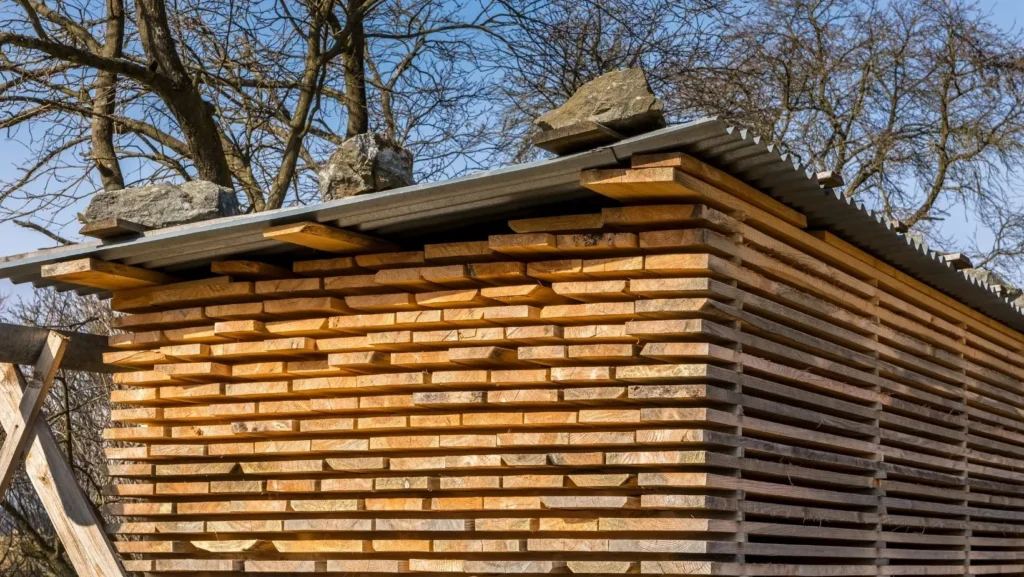
Kilns push hot, humid air through stickers, then finish with a conditioning phase to release stress. Species schedule differs—pine needs 24 hours; white oak may need five days. Use a pin meter on both faces and cores; difference must be under 2 %. After cooling, wrap stacks in paper and store indoors. Lumber leaving a kiln too fast can case-harden, trapping moisture that later forces checks. Pay by board-foot at local kilns; the fee is minor next to a warped $400 door slab.
Will pine handle daily sliding without dents?
Pine sells by price; its softness worries renters.
Select-grade pine, backed with plywood and coated in two-pack polyurethane, survives bedroom traffic for years, though it still dents twice as easily as oak under sharp impact.
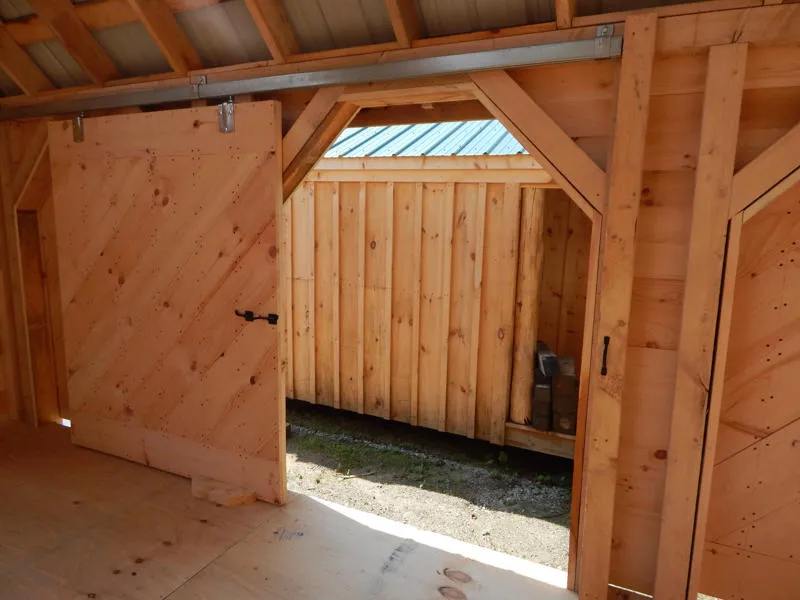
Select pine limits knot size under ¾ in, reducing resin pockets that ooze through paint. Edge-glue strips to cancel twist, orient growth rings alternately, and press at 150 psi. Limit stile width to 5 in; wider boards twist more. Finish matters: sanding sealer, then two polyurethane coats buffed between layers, raises surface hardness significantly. In kids’ rooms, add aluminum edge guards behind flush pulls where toys hit. Pine works when you accept minor dings as rustic charm.
Is cedar worth extra for outdoor barn doors?
Patio entries bake in sunlight and soak in storm spray.
Cedar’s natural oils thwart rot and bugs, letting doors last two decades outdoors with only periodic stain—its higher upfront cost often beats repainting cheaper woods every two years.
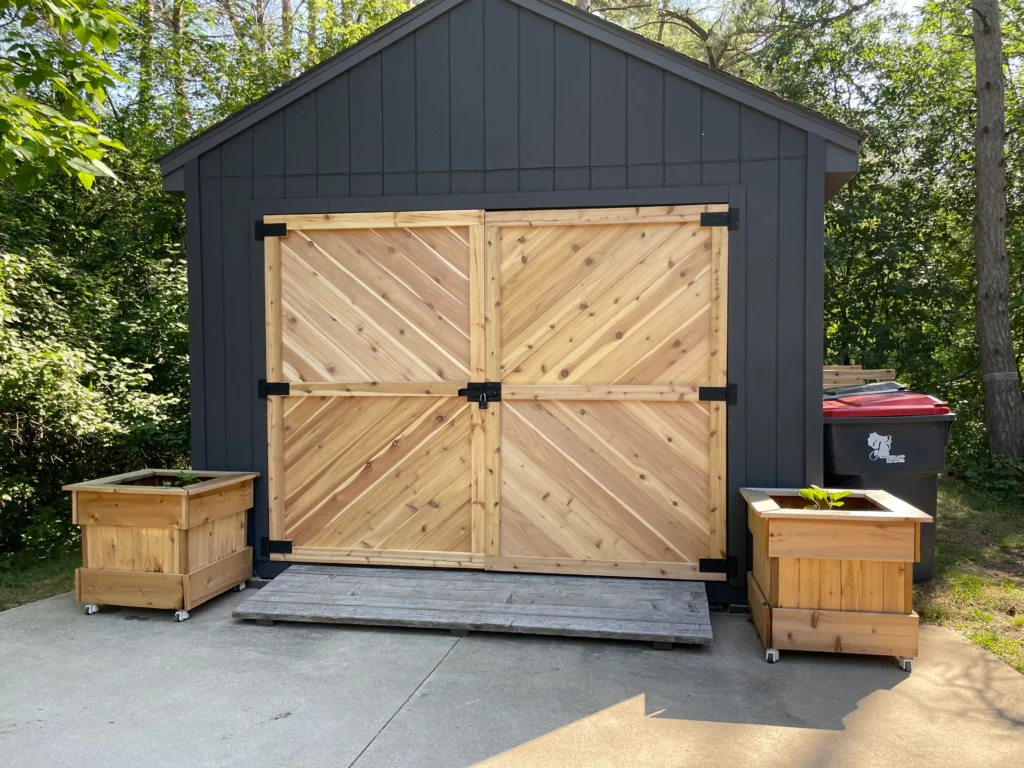
Western red cedar scores high on decay-resistance charts, rivaling treated pine without chemicals. Density near 360 kg/m³ keeps weight low. Seal end grain; cedar drinks stain deep. UV grays the surface in one season, so use semi-transparent stain tinted to your chosen hue. For budget builds, skin a pine frame with cedar bevel siding set vertically; hidden stainless staples resist tannin bleed. Always use stainless hardware—cedar’s tannins corrode plain steel fast.
Can engineered HDF replace solid barn-door planks?
Flawless paint needs uniform substrate; solid boards hate HVAC swings.
HDF core wrapped in veneer keeps warp near zero, paints like glass, and weighs 15 % less than oak, but only if every edge gets two coats of sealer to block moisture entry.
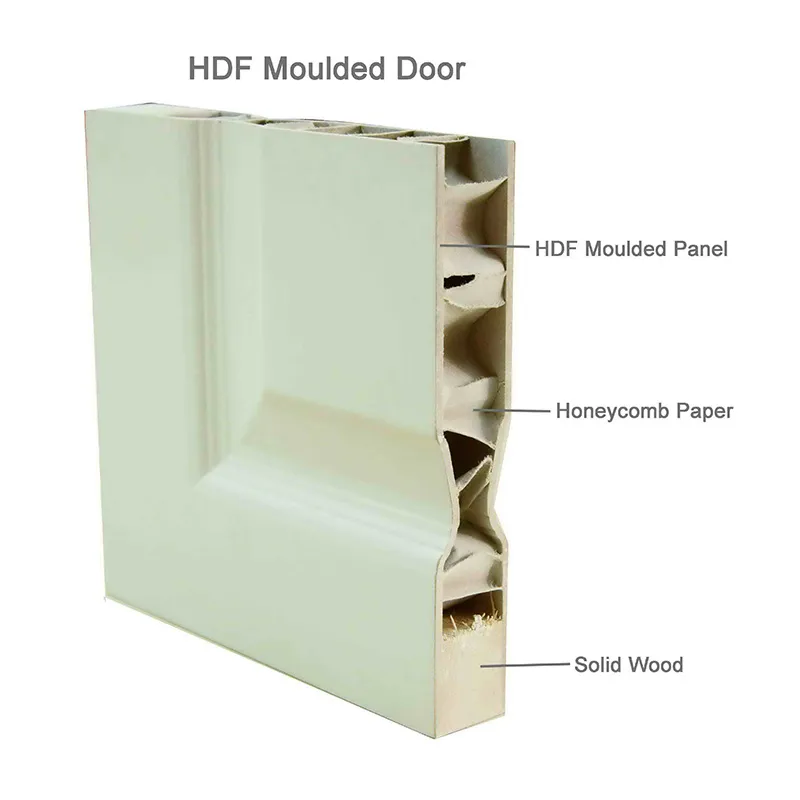
High-density fiberboard compresses wood fibers with resin to 50 lbs/ft³. Screw pull-out strength hits 900 N—adequate for rollers if you use wide washers. Weak point: raw edges wick water. Two-part catalyzed primer soaks and locks fibers; sand smooth, then spray two color coats. For rustic looks, mill V-grooves and paint; grooves stay crisp because there is no grain tear-out. A hybrid core—80 % finger-joint pine blocks inside HDF skin—drops weight further while improving screw bite. HDF works best for flat-panel, shaker, and modern slab doors; fake grain foils never convince in farmhouse décor.
Should you seal barn-door wood before assembly?
Skipping primer inside joints invites hidden swelling.
Sealing all faces—including hinge mortises and bolt holes—reduces moisture uptake by 60 % and stops tannin bleed through light paints, keeping the door flat and the finish clean.
Sanding to 180 grit opens pores; blow dust with compressed air. Spray sanding sealer, wait 30 minutes, scuff with 320 grit. Dip stile and rail ends in penetrating epoxy to close end grain straws. When glue squeezes out, wipe before it skins. After assembly, roll final topcoat, tipping off bubbles with a foam brush. Seal even hidden edges; humidity equalizes through any path. Hardware holes need silicone caulk under washer heads; metal conducts moisture into bare wood.
Which measuring errors waste barn-door lumber?
A mis-cut stile costs cash and adds a week to delivery.
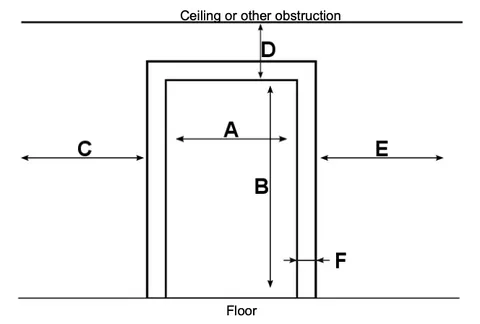
Five common mistakes—misreading code sizes, ignoring cup, cutting before final acclimation, skipping diagonal checks, and forgetting roller clearance—cause costly reorders and delays.
Avoid These Five Pitfalls
1. Code confusion—3050 means 3 ft 0 in × 5 ft 0 in frame, not slab; always verify net size.
2. Board cup—rip with crown up, then flip every second board to balance stress.
3. Early cut—trim length after boards acclimate in the install room for 72 hours.
4. Diagonal check—dry-fit panel; diagonals must match within ⅛ in.
5. Roller clearance—leave ⅜ in gap above slab for shims and soft-close device.
Stick a copy of this checklist on the shop wall; every skipped line shaves days from the timeline and keeps waste out of the scrap bin.
Conclusion
Pick stable lumber, kiln-dry it, seal every edge, and measure twice—your barn door will glide smooth, stay square, and look sharp long after trend pieces twist and fail.
FAQ
Is poplar good for barn-door cores?
Yes. Poplar glues well, paints smooth, and costs less than maple, but it dents more easily than oak.
Can I use MDF for outdoor barn doors?
No. MDF swells badly when wet; stick to cedar, cypress, or treated pine outside.
Do I need soft-close rollers on heavy doors?
Recommended. Soft-close dampers prevent slamming, protecting both frame and track from impact stress.
What thickness works best for barn doors?
Aim for 1 ⅜ in to 1 ¾ in; thinner panels warp easier, thicker panels overload standard roller kits.
How wide should the track be?
Track length should equal door width × 2 so the slab slides fully clear of the opening.
Does adding a Z-brace improve strength?
Yes. A diagonal brace shifts load to the bottom hinge edge, countering sag over time.
How often should I re-seal an exterior barn door?
Check finish yearly; re-coat every three years in harsh sun or salty air zones.
Can I retrofit a swing door opening to a slider in one day?
Usually. Remove casing, patch hinge mortises, mount a header-backed track, and hang pre-finished slab—about six hours for pros.