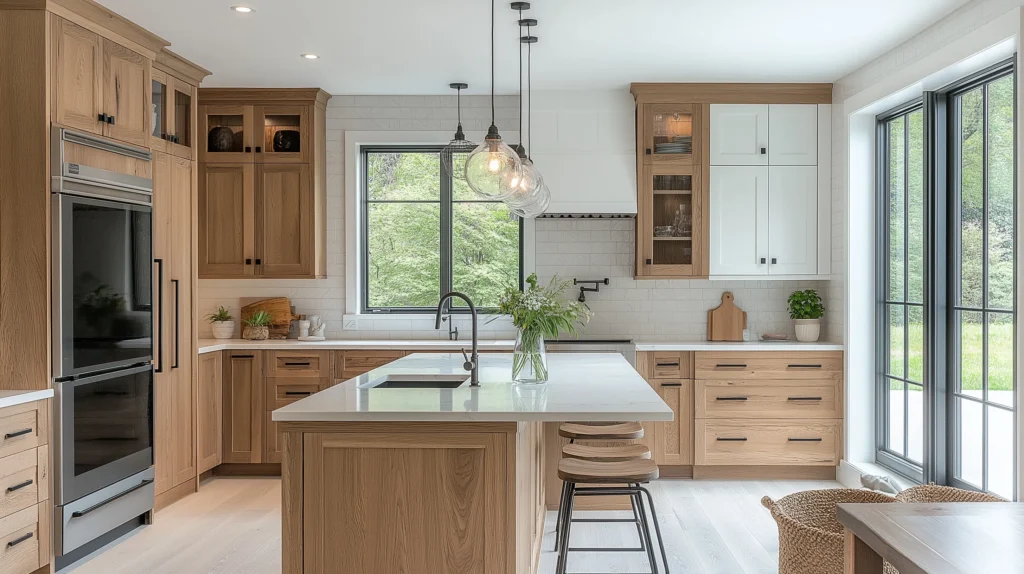
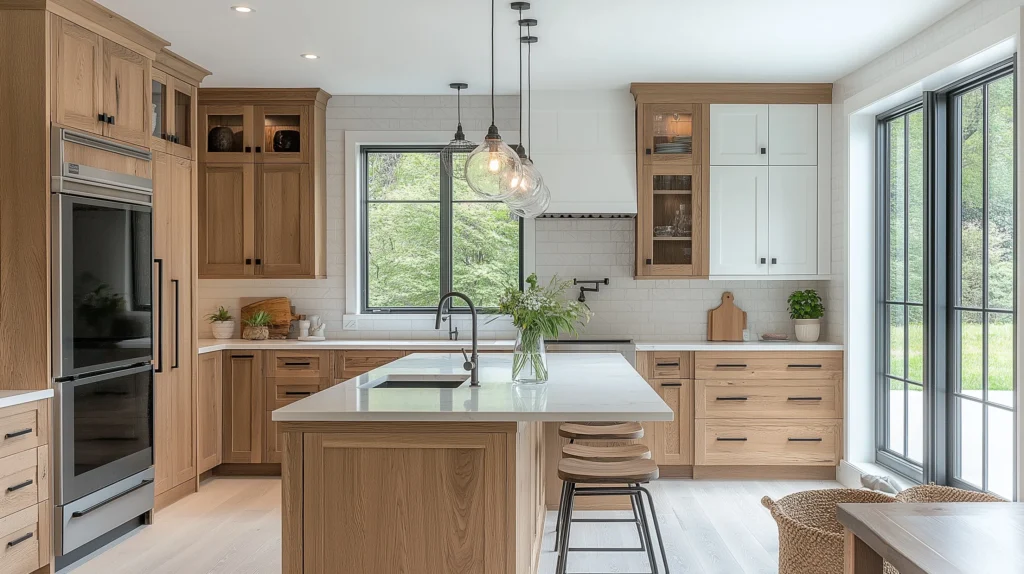
Many homeowners want a warm and modern kitchen but often feel overwhelmed by the choices of materials, finishes, and styles. White oak cabinetry solves this problem with a natural texture that feels calm, clean, and timeless.
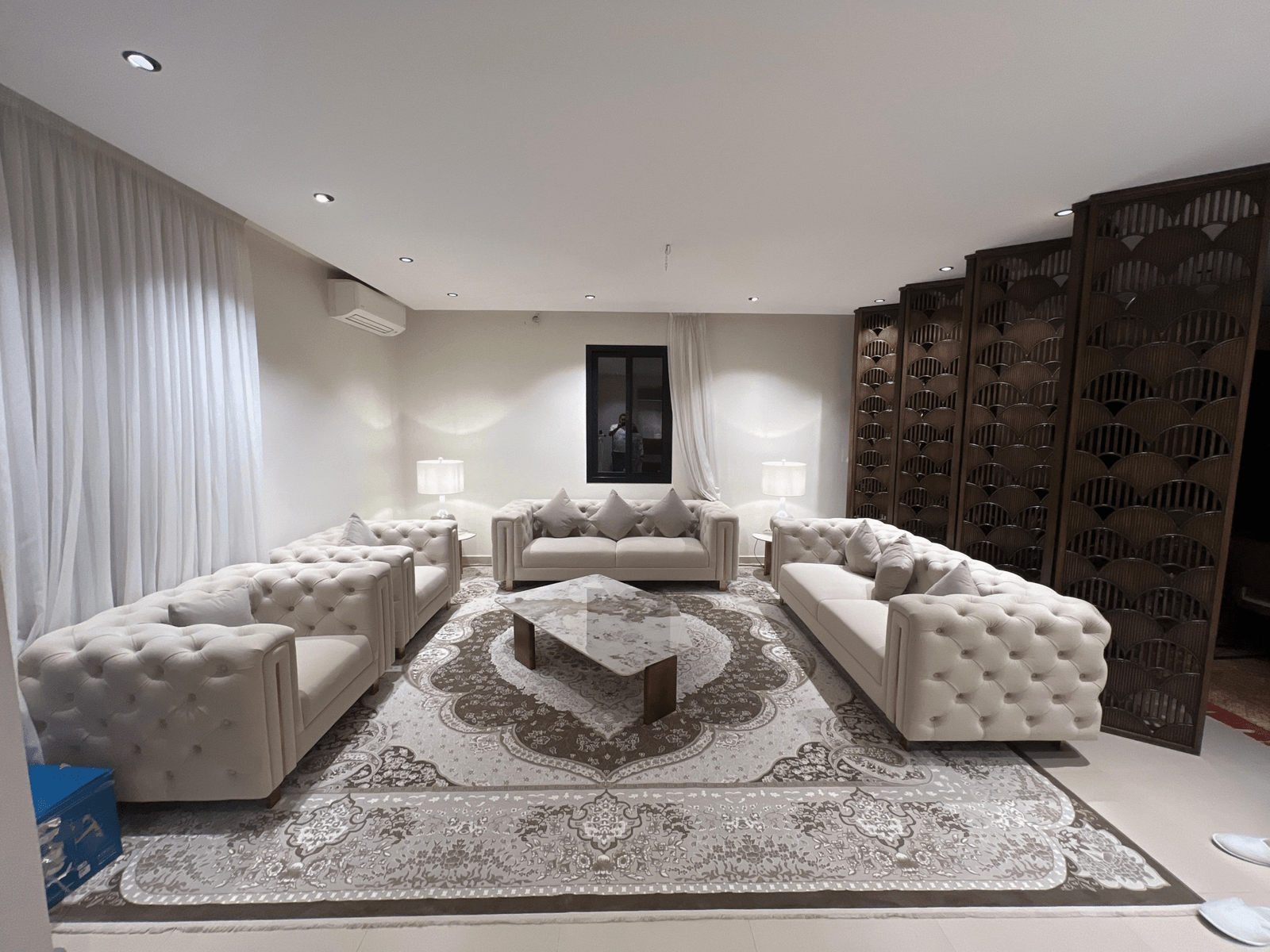
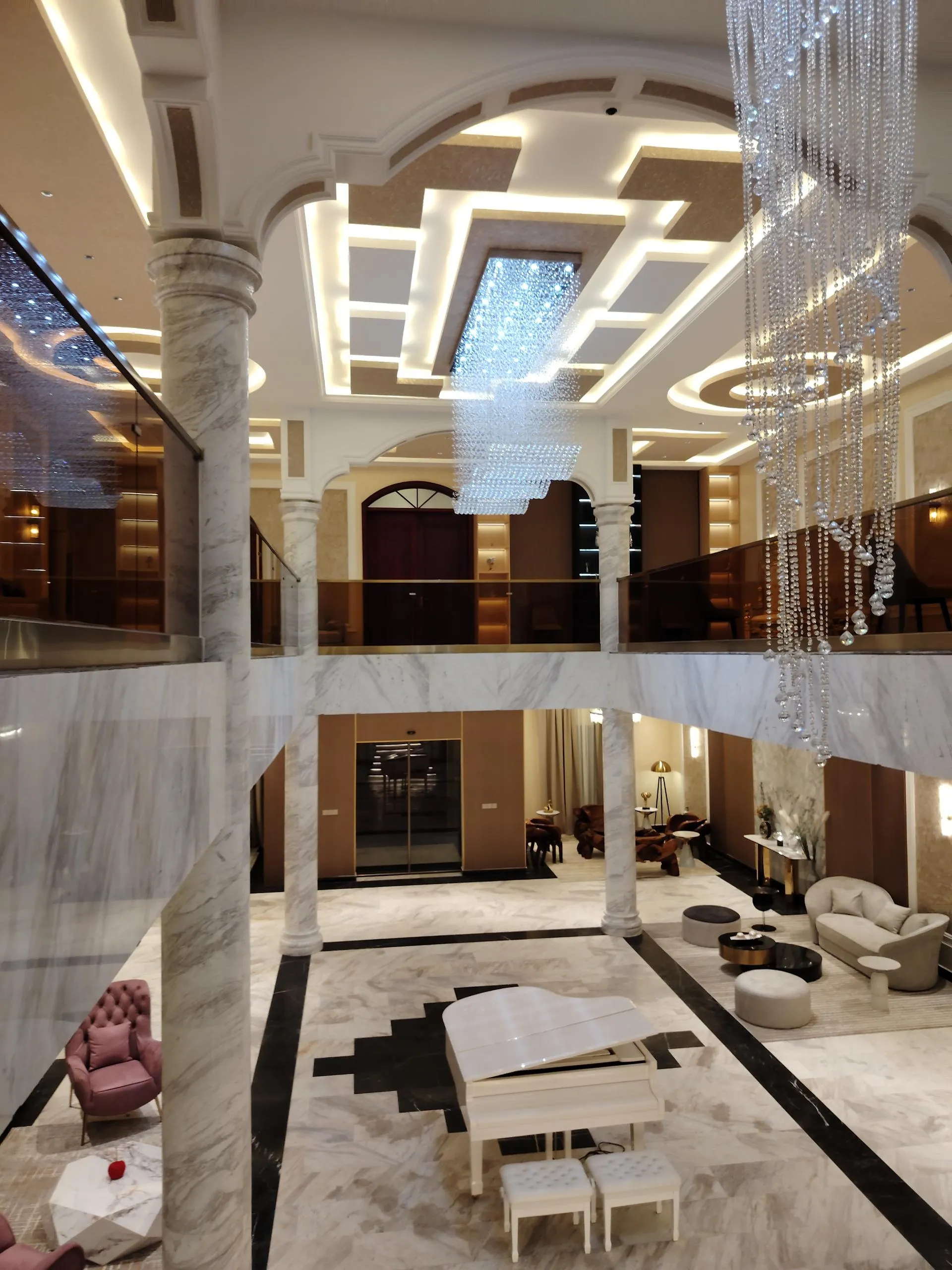
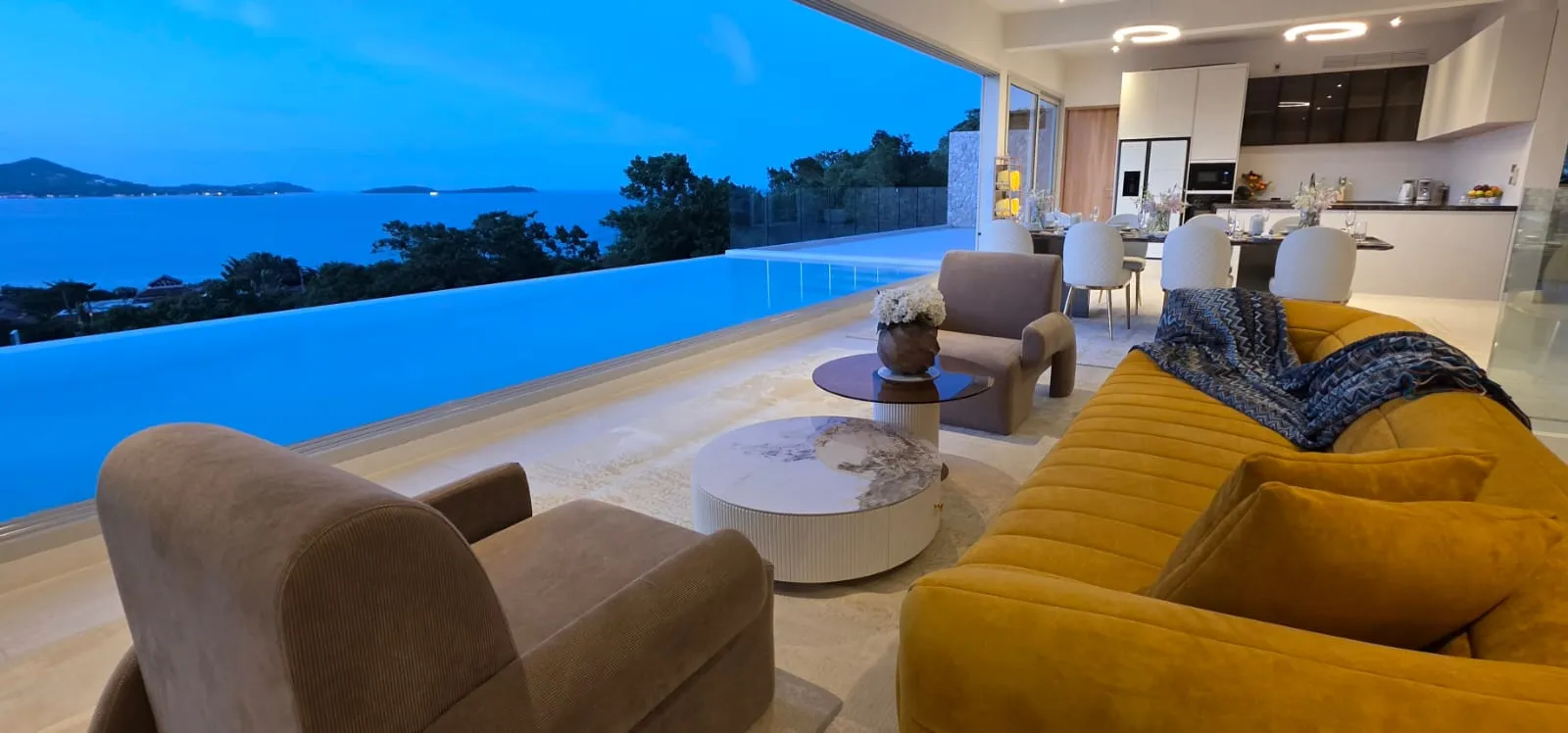
Based in Foshan, we support global homeowners, designers, builders, and renovation teams with full-house materials that include kitchens, wardrobes, bathrooms, doors, tiles, flooring, lighting, and wall panels. We also offer 3D design, coordinated style matching, export logistics, and after-sales support to help overseas clients build complete projects with consistent finishes and fewer suppliers.
White oak cabinetry stands out because it blends modern style with natural warmth. Its grain patterns, durability, and flexibility in finishes make it ideal for contemporary homes. It works well in bright kitchens, open layouts, and spaces that need clean surfaces with subtle detail.
White oak remains a top choice for 2025 because it fits many interior styles, supports durable construction, and offers strong long-term performance. Let’s explore why so many designers choose it for modern homes.
What Makes White Oak Cabinetry So Popular in 2025?
White oak cabinetry is popular because it offers a balance of warmth, strength, and modern simplicity. Its grain patterns, color stability, and finish options make it suitable for high-use kitchens.
White oak combines natural beauty with strong material properties. Its tight grain and medullary rays create a soft, linear look ideal for minimalist and Scandinavian kitchens. White oak also works well with matte, natural, and stained finishes. This makes it flexible for light, neutral, or warm palettes. Designers appreciate how white oak ages slowly and stays stable under daily use.
Why It Fits Modern Living
| Feature | Reason |
| Warm tone | Creates calm spaces |
| Tight grain | Matches minimalist design |
| Strong hardness | Supports heavy-use cabinets |
| Stable color | Works with light interiors |
| Versatile finish | Fits matte or natural looks |
The structure of white oak includes ray fleck patterns formed during tree growth, described in wood anatomy. These patterns give white oak its recognizable texture. How does this matter in real kitchens? It adds depth without visual clutter.
What Are the Benefits of White Oak Cabinets?
White oak cabinets offer durability, stability, and a naturally elegant appearance. They resist wear, accept finishes well, and provide long-term reliability.
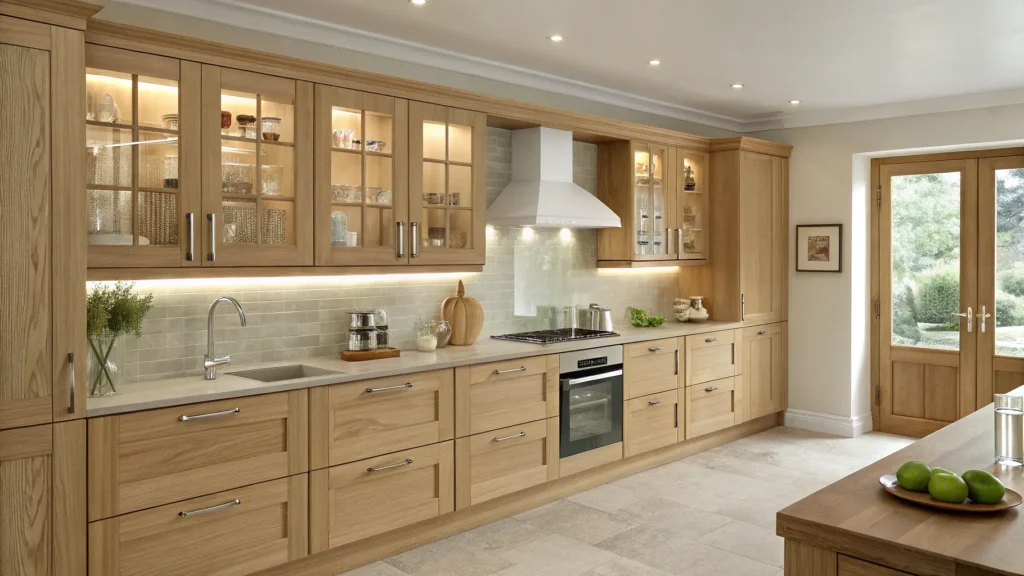
White oak has a high hardness rating, strong density, and excellent resistance to moisture. These qualities make it ideal for areas near sinks, dishwashers, or cooking zones. Its grain hides light scratches better than smooth woods. White oak also accepts surface treatments like oil, clear lacquer, or stain, each highlighting different shades of beige, honey, or taupe.
Core Benefits Overview
| Benefit | Description |
| Durability | Supports heavy doors and drawers |
| Moisture Resistance | Good for kitchens with humidity |
| Finish Flexibility | Works with clear, stained, or matte |
| Natural Texture | Adds depth to modern spaces |
| Aging Quality | Color matures slowly and evenly |
Here is what most homeowners do not know: white oak’s density improves screw-holding power, which increases the lifespan of door hinges and drawer runners. This structural stability supports long-term alignment.
How Does White Oak Compare to Other Woods?
White oak differs from maple, red oak, and walnut in texture, hardness, and appearance. It is more stable than red oak and warmer than maple.
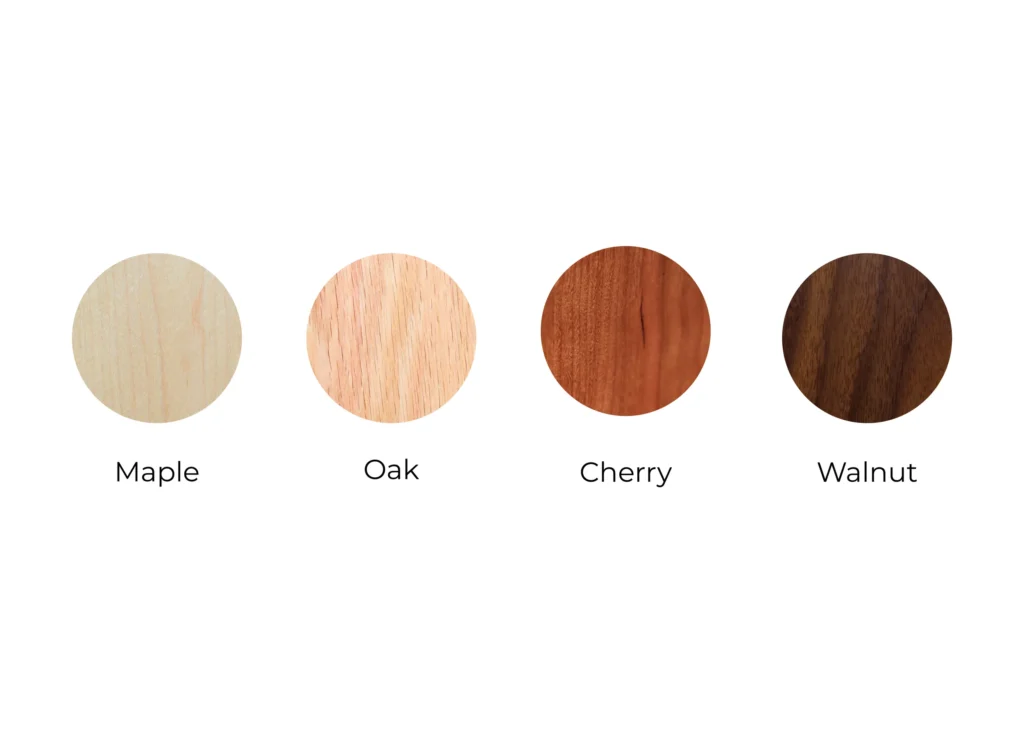
White oak has a Janka hardness around 1360, making it stronger than many common cabinet woods. Maple offers a smooth surface but lacks distinct grain. Walnut is rich and dark but often costly. Red oak is cheaper but has strong grain lines that may feel busy in modern interiors. White oak sits in the perfect middle: subtle texture, high durability, and adaptable color tone.
Comparison Table
| Wood Type | Grain Look | Hardness | Cost Level | Best Style |
| White Oak | Tight, linear | High | Medium | Modern, Scandinavian |
| Maple | Smooth, plain | High | Medium | Minimalist |
| Walnut | Dark, bold | Medium | High | Luxury |
| Red Oak | Strong grain | Medium | Low | Traditional |
White oak’s rift-cut and quarter-sawn options create uniform lines, which suit modern cabinetry. The cutting method changes the angle of growth rings, described in lumber. Here is why this matters: rift-sawn boards show cleaner grain and reduce warping.
For deeper comparisons, see our internal guide on cabinet door construction differences.
Which Design Styles Work Best With White Oak Cabinetry?
White oak cabinetry fits many design styles because of its warm tone and fine grain. It suits modern, Scandinavian, Japandi, organic, and transitional kitchens.
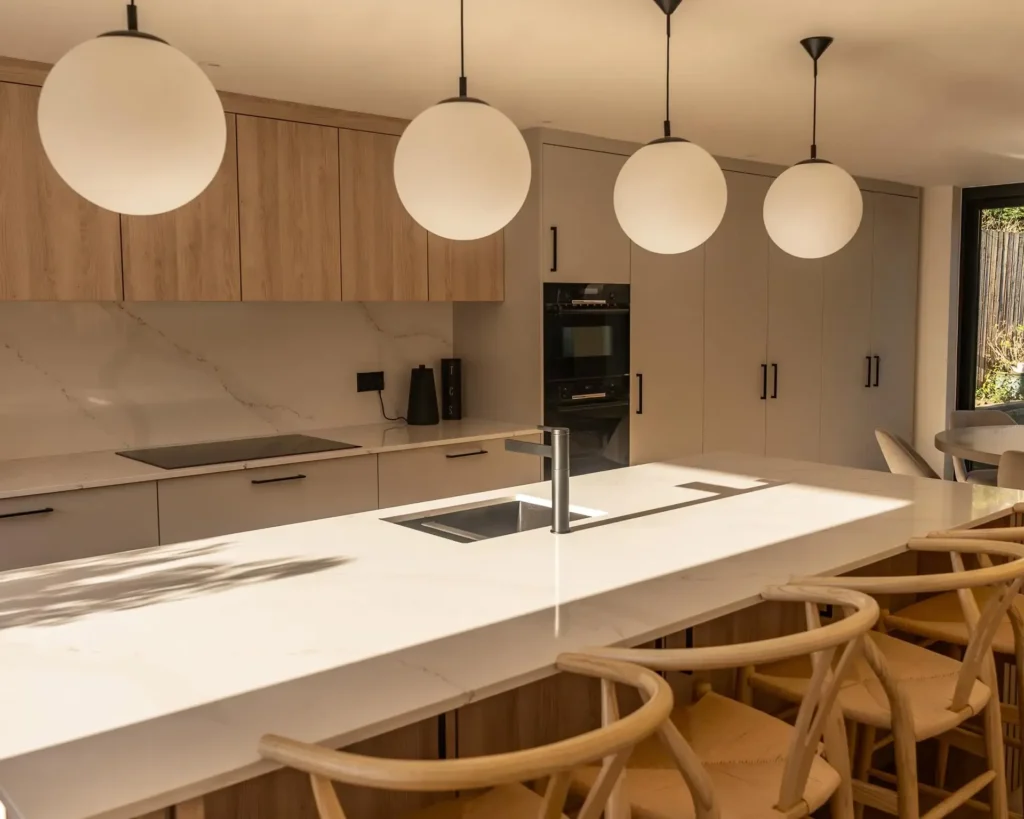
White oak supports soft minimalism because its grain adds gentle movement. Japandi design uses white oak for its balance of warmth and simplicity. Scandinavian kitchens benefit from its light color and natural feel. Transitional kitchens pair white oak with painted uppers. Organic modern spaces use white oak with stone or textured walls.
Design Match Breakdown
| Style | Why It Fits |
| Scandinavian | Light wood tone fits airy spaces |
| Japandi | Calm, earthy finishes |
| Modern Minimal | Linear grain supports clean lines |
| Transitional | Works with mixed materials |
| Organic Modern | Warms stone and metal |
Here is what most homeowners do not know: the linear grain of rift-cut white oak reduces visual noise in compact kitchens. This helps small spaces feel more open.
What Finishes Look Best on White Oak Cabinets?
White oak supports many finishes because its grain reacts well to stains and clear coatings. Natural matte finishes highlight texture, while light stains add depth.
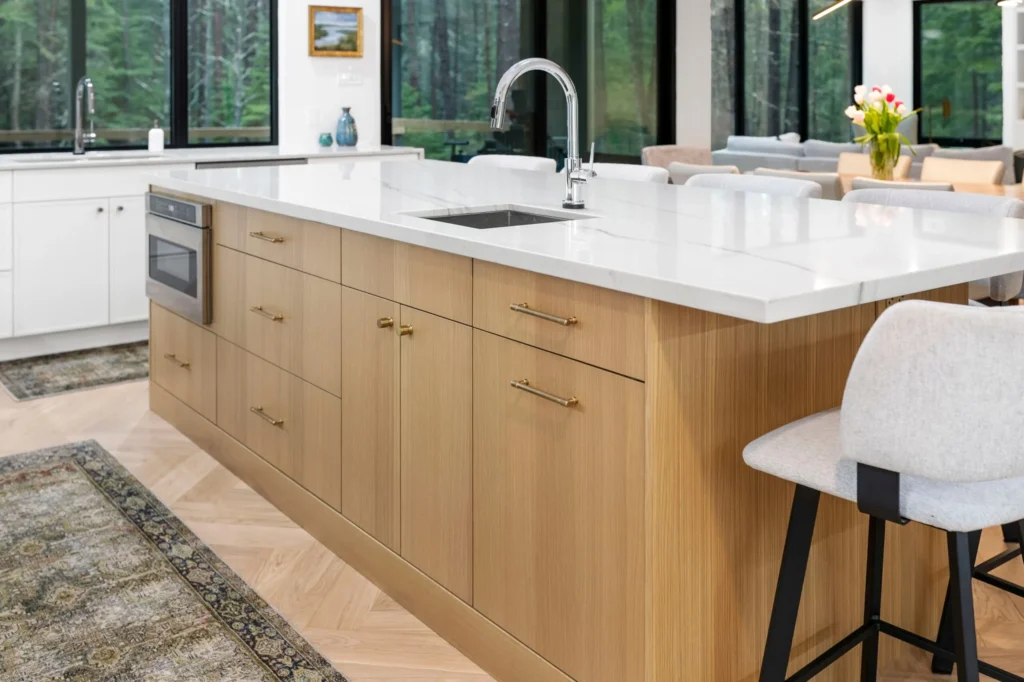
White oak looks best in natural, clear, or lightly stained surfaces. Clear lacquer preserves its pale, warm color. Light beige stains produce an elegant upscale look. Matte oil finishes add softness for organic-modern homes. Cerused finishes highlight grain with contrasting pigment.
Finish Guide
| Finish Type | Effect | Best Use |
| Natural Clear | Pure wood look | Minimalist |
| Light Stain | Warm and soft | Transitional |
| Matte Lacquer | Smooth and modern | Contemporary |
| Cerused | Visible grain contrast | Designer spaces |
Surface treatments like lacquer fall under the category of protective coatings described in coating. How does this help in kitchens? These coatings increase durability and offer stable color over time.
Is White Oak Durable Enough for Busy Kitchens?
White oak is highly durable and ideal for high-traffic home kitchens. Its hardness and moisture resistance protect it from daily wear.
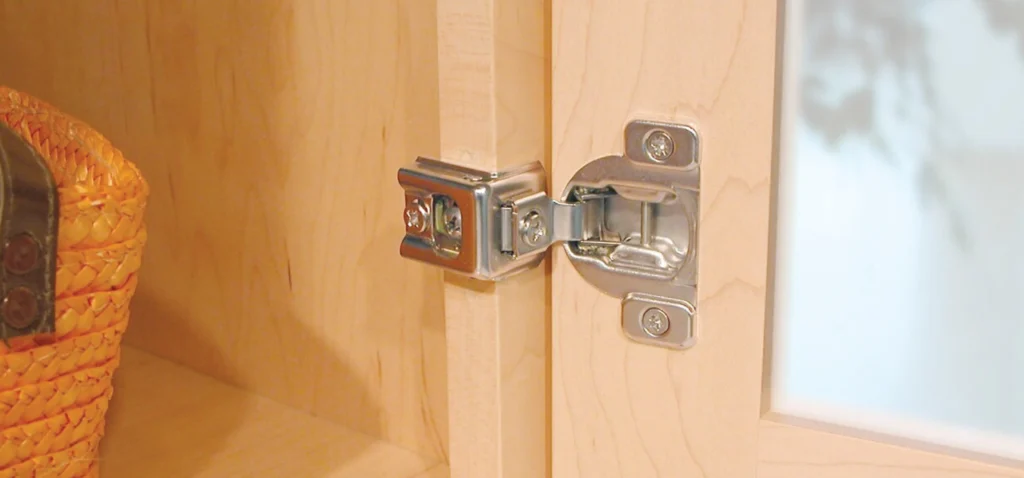
White oak resists dents better than many softwoods. It handles changes in humidity when properly sealed. Because white oak is dense, it supports hinge mechanisms and drawer runners with strong screw-holding performance. This keeps large cabinet doors aligned.
Durability Factors
| Factor | Importance |
| Hardness | Prevents surface dents |
| Stability | Keeps doors aligned |
| Moisture Resistance | Good near cooking zones |
| Screw Strength | Helps hardware last longer |
Here is what most homeowners do not know: white oak’s closed-cell structure reduces moisture absorption more effectively than many hardwoods, improving performance near sinks or dishwashers.
How Much Does White Oak Cabinetry Cost in 2025?
White oak cabinetry prices vary by grade, cut, finish, and construction method. In 2025, costs range from $180 to $450 per linear foot for finished cabinetry.

Price Ranges
| Category | Cost Range | Notes |
| Stock | $180–$250 | Limited customization |
| Semi-Custom | $250–$350 | More finish options |
| Custom | $350–$450+ | Rift/quarter-sawn options |
White oak’s price reflects its density, appearance, and milling cost. Rift-sawn lumber is more expensive due to waste during cutting. Finishes like matte lacquer increase labor steps.
Transportation, surface treatment, and construction mechanisms all influence the final cabinet price. For cost structure clarity, see our related guide on cabinet style pricing.
How Do You Choose the Right White Oak Cabinet Grade?
Choosing the correct grade depends on grain preference, color uniformity, and budget.

White oak comes in several grades and cuts. FAS grade provides the cleanest boards with minimal knots. Select grade offers good quality at lower cost. Rift-sawn boards show straight grain. Quarter-sawn boards reveal medullary rays. Plain-sawn boards show cathedral grain.
Grade Guide
| Grade / Cut | Look | Best Use |
| Rift-Sawn | Linear grain | Modern kitchens |
| Quarter-Sawn | Ray flecks | Designer spaces |
| Plain-Sawn | Cathedral patterns | Traditional homes |
| FAS Grade | Clean and premium | Luxury spaces |
| Select Grade | Good quality | Mid-budget |
How does this matter in real homes? The cut determines the cabinet’s visual flow. Linear grain creates calm modern lines. Cathedral grain adds more movement for traditional homes.
For more details on cabinet construction, see our internal guide on cabinet door construction methods.
Conclusion
White oak cabinetry offers natural texture, strong stability, and modern appeal. Its grain, durability, and finish options make it a leading choice for 2025 kitchens.
Share Your Plan, Get Ideas
If you are building a new kitchen or updating an existing one, share your floor plan with us. We can help match finishes, choose materials, and design storage layouts that fit your space.